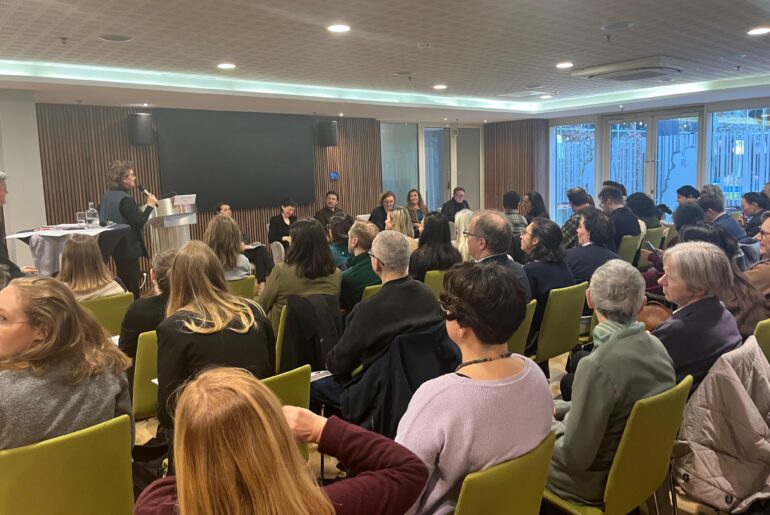
Reconnaître les mères et faire progresser les droits humains – MMM à la 61e session du Conseil des droits de l’homme
12.03.26
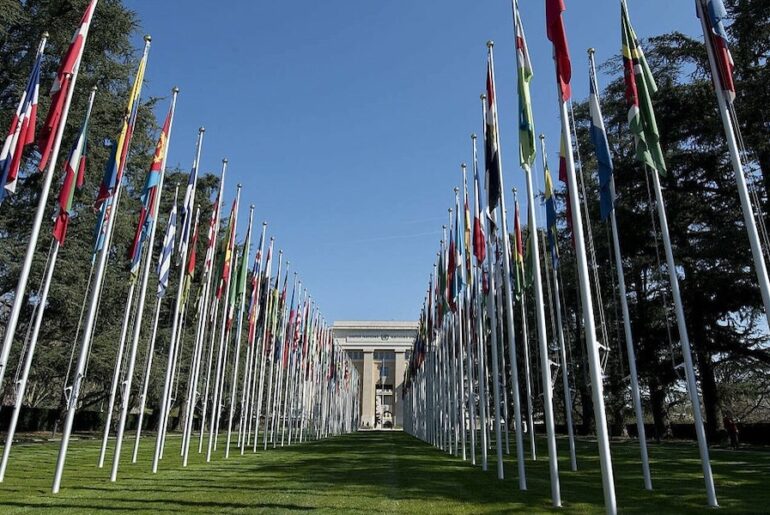
ONU Genève – ONU Genève – Le Conseil des droits de l’homme des Nations Unies est un espace essentiel pour porter des questions clés dans les discussions mondiales sur un large éventail de sujets et pour montrer comment la reconnaissance et le soutien aux mères peuvent contribuer à faire progresser les droits humains. Retour sur l'engagement de MMM lors de la 61ème Session.
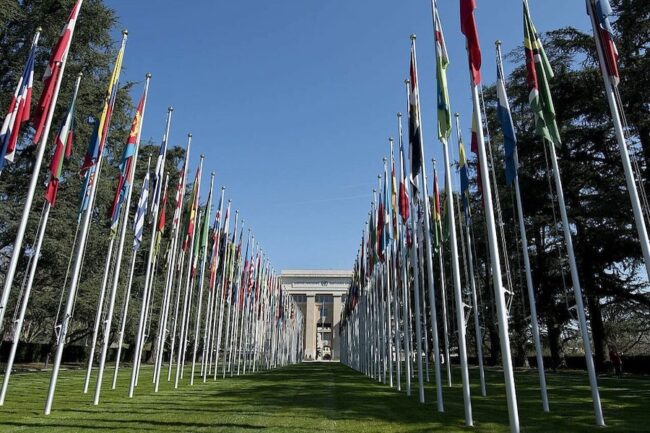
La paix commence au sein du foyer – Elle s’épanouit lorsque les mères sont soutenues et reconnues
Lors de la table ronde sur les droits humains et la culture de la paix, la représentante de MMM, Caroline Leroux-Hatt, a souligné que les mères, à travers les soins et l’attention qu’elles apportent au quotidien, sont des actrices fondamentales de la construction de la paix, car elles façonnent chez les enfants des attitudes d’empathie et de non-violence. Nous avons appelé à reconnaître, redistribuer et soutenir le travail de care, non seulement comme une question de responsabilité sociale, mais aussi comme un investissement stratégique pour une paix durable et le développement.
L’investissement en faveur des mères et du Care doit être une priorité centrale des décisions budgétaires et des politiques publiques
Lors de la table ronde sur le financement du développement durable conformément aux obligations relatives aux droits économiques, sociaux et culturels, la vice-présidente de MMM et responsable du plaidoyer auprès de l’ONU, Valérie Bichelmeier, a appelé à privilégier des investissements à long terme et à fort rendement, rappelant que le soutien aux mères constitue l’un de ces investissements, avec des effets multiplicateurs.
- Soutenir les mères en reconnaissant et en redistribuant plus équitablement le travail de soins non rémunéré permet de défier une cause profonde des inégalités de genre, de libérer la pleine participation économique et sociale des femmes et de faire progresser leurs droits
- Les mères sont les principales architectes du développement de la petite enfance. Offrir aux enfants les soins bienveillants dont ils ont besoin pour s’épanouir, oblige à soutenir les mères par une sécurité de revenu adéquate, des politiques publiques favorables et des ressources d’accompagnement à la parentalité.
Investir dans les mères, c’est investir à la fois dans les enfants – notre avenir commun – et dans l’égalité entre les femmes et les hommes, pierre angulaire du développement durable et d’une paix durable.
 Déclaration de MMM dans son intégralité
La protection des droits des enfants et des femmes face à la pollution de l’air ne peut plus être facultative.
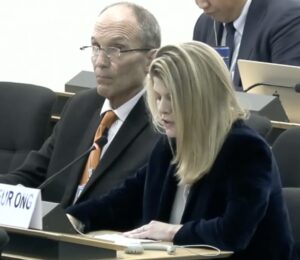
Commentant le rapport du Rapporteur spécial sur le droit humain à un environnement propre, sain et durable, Karen Thorsen, représentante de MMM à Genève, a souligné les conséquences indirectes de la pollution de l’air sur les mères et les autres personnes assurant des responsabilités de care. Ceux-ci incluent une charge supplémentaire de travail de care non rémunéré, un stress accru et des défis en matière de santé mentale – des points essentiels qui ont été négligés dans le rapport.
Karen a aussi souligné l’impact disproportionné et potentiellement mortel de la pollution atmosphérique sur les enfants, surtout pendant la grossesse et la petite enfance, avec des conséquences durables sur leur santé, leur développement, leur bien-être, leur éducation et leur potentiel futur. Elle a notamment mis en évidence le problème urgent de la pollution de l’air intérieur due à l’utilisation de combustibles polluants pour la cuisson, qui tue 500 000 enfants chaque année.
Les femmes ne devraient jamais être pénalisées du fait d’être mères.
MMM a profité du débat général sur les droits économiques, sociaux et culturels pour appeler à intégrer la question de la maternité dans toutes les discussions sur les droits des femmes, en soulignant que la répartition inégale du travail de soins non rémunéré et la pénalité liée à la maternité sont au cœur des inégalités de genre. Dans son message vidéo, la représentante de MMM à Genève, Mélanie Nédélec, a exhorté les gouvernements à reconnaître et à traiter les discriminations et les défis spécifiques auxquels les mères sont confrontées dans l’élaboration des politiques publiques, et à combler le manque de données en mesurant la pénalité liée à la maternité et en la rendant visible.
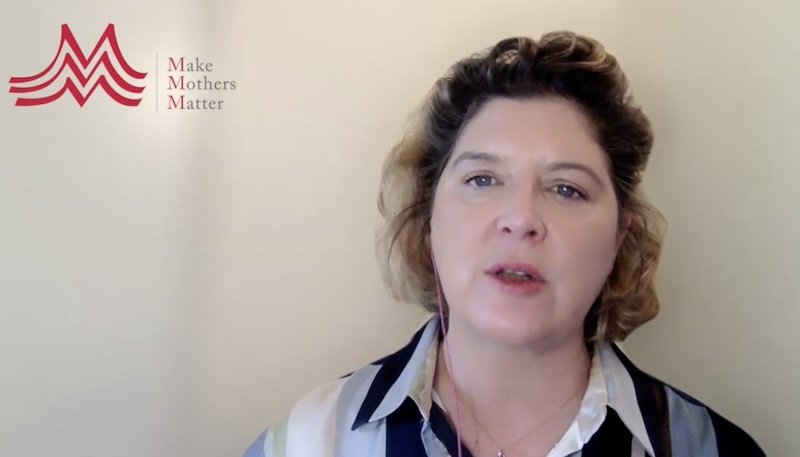
En ne mentionnant même pas le mot mères, nous gommons les discriminations spécifiques, les violations des droits humains et les obstacles systémiques auxquels elles font face.
Nous ratons aussi une opportunité essentielle – car autonomiser les mères ne consiste pas à enfermer les femmes dans un seul rôle, mais à veiller à ce que la maternité soit prise en compte dans les politiques qui favorisent une égalité réelle entre les femmes et les hommes – que ce soit sur le lieu de travail, dans la société ou en politique.
Déclaration de MMM dans son intégralité
Par son engagement à la 61ème session du C onseil des Droits de l’Homme MMM réaffirme que la promotion des droits humains des mères n’est pas une question marginale – elle est au cœur de la construction de la paix, de la promotion de l’égalité de genre et de la garantie d’un avenir durable pour tous.
En reconnaissant, en soutenant et en investissant dans les mères, nous pouvons lutter contre les inégalités systémiques, autonomiser la prochaine génération et créer des sociétés où le care, les opportunités et les droits humains vont de pair. Les mères ne sont pas seulement des personnes qui prennent soin des autres – elles sont des architectes du changement durable, et leurs droits doivent être au cœur de toutes les discussions politiques
 Partager
 Partager
 Imprimer
 Email
Email
L’Europe doit écouter les mères : présentation des résultats de notre enquête au Parlement européen
28.08.25
Le 22 septembre 2025, les voix des mères seront à l'honneur à Bruxelles. Pour la première fois, Make Mothers Matter (MMM) présentera les résultats de son enquête sur l'Etat de
Les mères : le chaînon manquant des discussions sur les droits de l’enfant ?
01.08.25
ONU New York – A la suite de la journée annuelle 2025 du Conseil des Droits de l'Homme consacrée aux enfants– qui était centrée sur le Développement de la petite
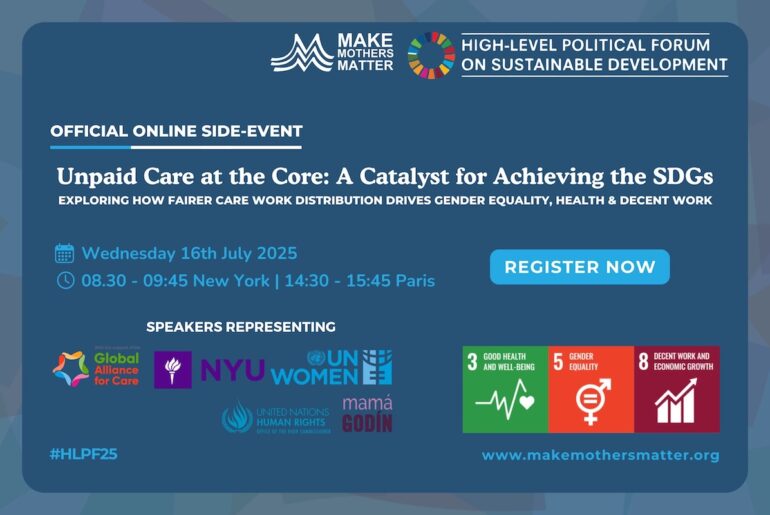
Les soins non rémunérés au cœur du système : Un catalyseur pour la réalisation des ODDs
06.07.25
ONU New York – Inscrivez-vous dès maintenant pour participer en ligne à notre événement parallèle du Forum politique de haut niveau.