Child poverty alleviation cannot be disassociated from support to parents
01.03.21
UN Geneva, Human Rights Council - Make Mothers Matter took advantage of the meeting on poverty alleviation and human rights to raise the issue of child poverty for the attention of the Council.
Globally, about 1 billion children are multidimensionally poor, with some of their basic human rights, including the right to food, clean water, healthcare or education, not satisfied, threatening their chance to survive and thrive.
Not only are children more likely to live in poverty than adults, they are also more vulnerable to its effects. In addition to suffering from poor living standards, the poorest children grow up less healthy, develop fewer skills, and earn lower wages later in life.
The intergenerational aspect of poverty must be broken. Addressing child poverty must therefore be a top priority for every government. It should also be seen as an investment – with potentially high returns. In this respect, MMM welcomes the EU’s commitment to develop a European Child Guarantee, which if adopted, would ensure that every child has access to health, housing, nutrition, education and childcare.
We want to stress however that child poverty alleviation cannot be disassociated from support to parents and caregivers, beginning with their right to work and to a decent standard of living.
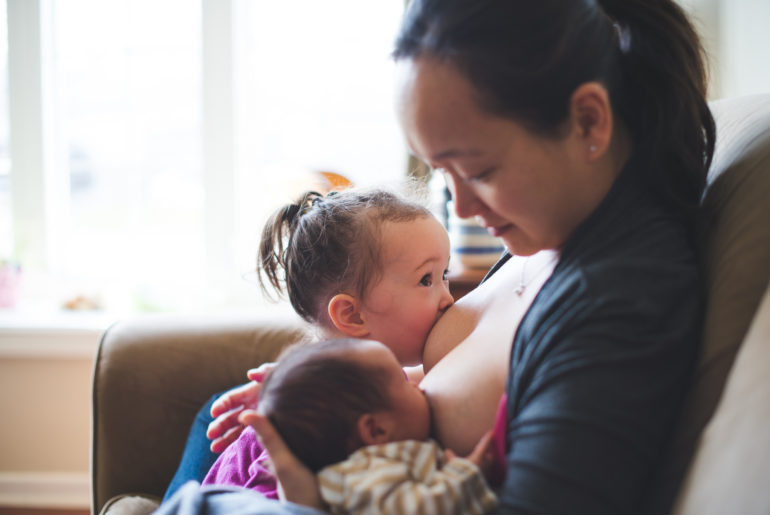
Among them, single parents merit specific attention. Even in Europe, around two fifths of single parent households are at risk of poverty or social exclusion – Most of them are lone mothers.
For them, the challenge of juggling care responsibilities and paid work is especially acute. Caring for and educating a child requires time – this unpaid yet essential work must be recognized for its positive impact on all society, and fully supported, particularly during a child’s critical early years. This means developing policies, structures and services to provide enough time, money and skills for parents.
Addressing child poverty is also working with and accompanying parents, especially mothers.

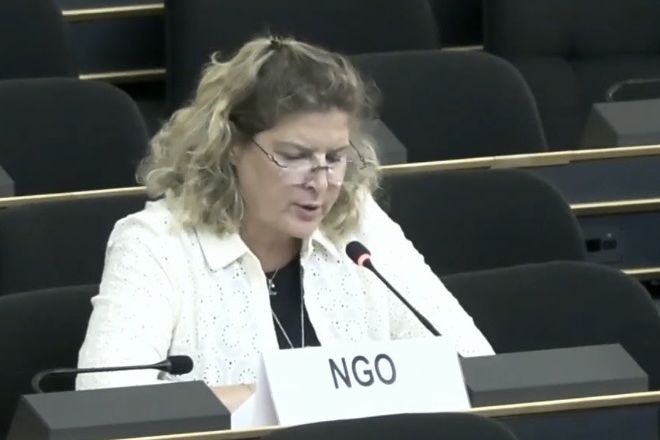
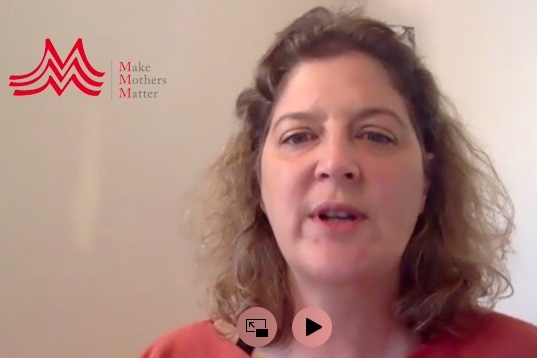
Mélanie Nédélec delivered this oral statement on behalf of MMM in a video message to the meeting on ‘Poverty alleviation and human Rights’, which took place on 26 March as part of the 46th (virtual) session of the Human Rights Council. (See recording of the session on UN Web TV – MMM intervention is at 1:15:55)
See also MMM’s joint contribution to the European Commission Public Consultation on the Child Guarantee
 Share
Share Share
Share Print
Print Email
Email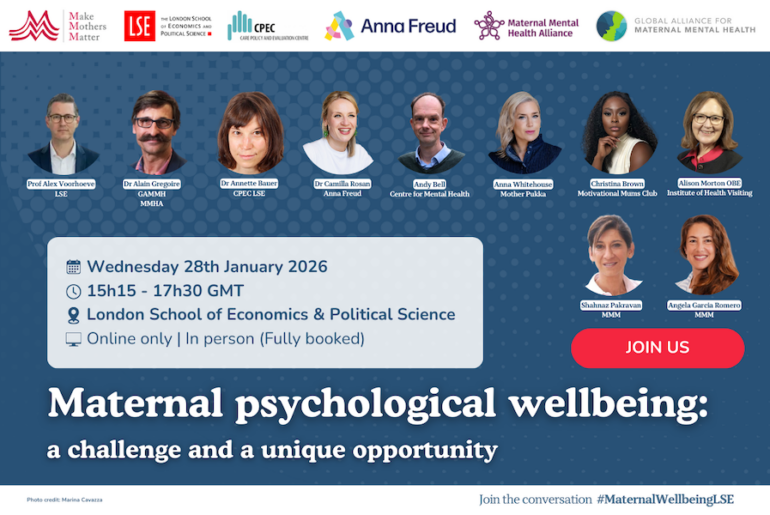
Maternal Psychological Wellbeing: A Challenge and a Unique Opportunity
13.01.26
Wednesday 28 January 2026 | 15:15 – 17:30 GMT London School of Economics & Political Science (LSE) – Live broadcast #MaternalWellbeingLSE Maternal mental health is one of the most pressing

Climate Change: A Maternal Physical and Mental Health Emergency
13.11.25
In the lead-up to the UN climate change conference in Belem, Brazil (COP30), MMM was delighted to collaborate with Dr. Saravanan Thangarajan, a Visiting Scientist & Faculty member at Harvard
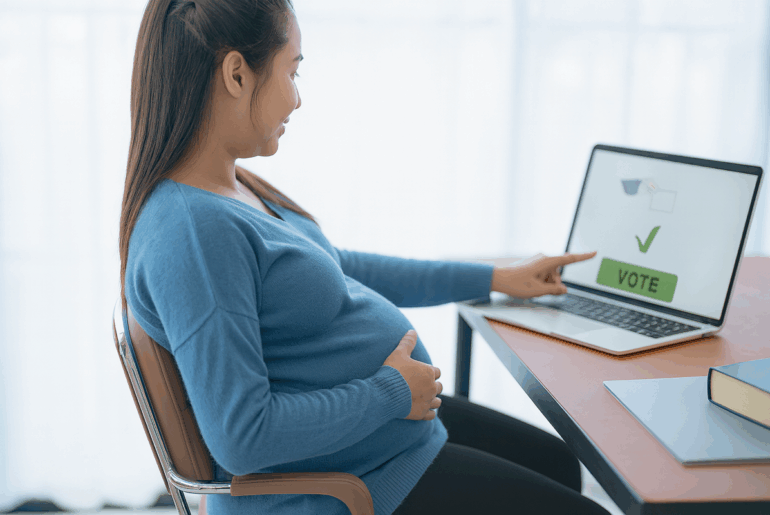
Democracy on Hold: The Hidden Penalty for Parliamentarians Who Become Mothers
27.11.25
The European Parliament adopted a legislative resolution on the amendment of the European Electoral act, allowing Members to vote in plenary by proxy voting during pregnancy and after giving birth.