Recognising Unpaid Care Work and addressing Its Unequal Distribution: A Key Step in Tackling Informal Employment
15.06.25
UN Geneva – At the 113th International Labour Conference (ILC), Make Mothers Matter (MMM) brought the perspectives of mothers and other unpaid caregivers to two key agenda topics: the transition to formal employment and the link between jobs, rights and growth.
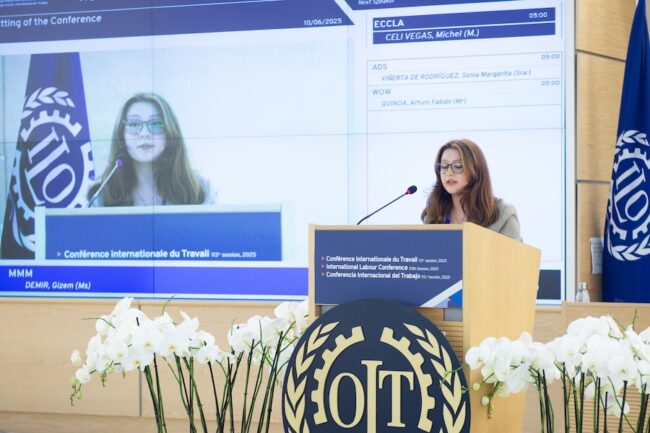
Organised every year by the International Labour Organisation (ILO), the International Labour Conference (ILC) brings together government, employer and worker delegates from its 187 Member States. As an International NGO, MMM is also able to actively participate and voice the challenges and concerns of mothers in the discussions that are most relevant to them.
Advancing toward formal employment: addressing informality and supporting decent work for women
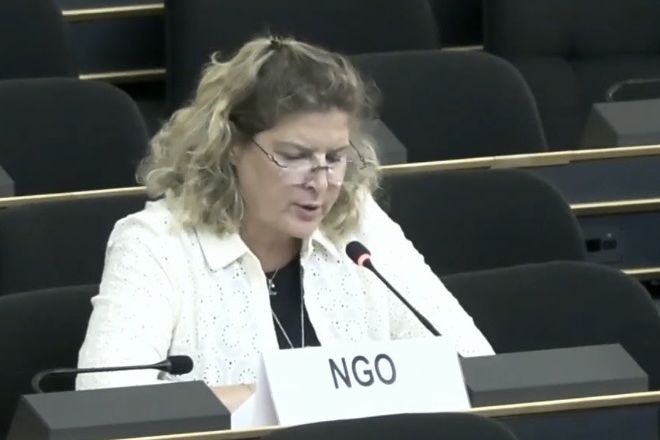
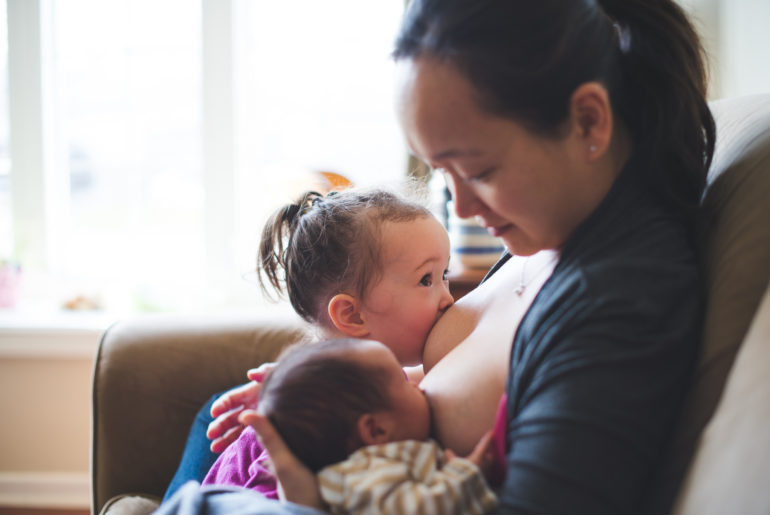
During the General Discussion on Addressing Informality and Promoting the Transition to Formality for Decent Work, Valerie Bichelmeier, Head of UN advocacy at MMM, highlighted the persistent gender imbalance in unpaid domestic and care work. She emphasised that this responsibility, particularly for mothers, often limits women’s access to formal employment. When women are able to engage in paid work, many opt for informal jobs due to the flexibility they offer, particularly important for those with caregiving responsibilities.
The 3 key messages we delivered:
- Recognising unpaid care work and tackling its unequal distribution are essential steps in addressing informality
- Universal social protection, including a social protection floor with maternity benefits, can serve as a pathway toward what might be considered semi-formality
- Employers have a crucial role to play in the transition towards formality by providing family-friendly policies that support unpaid caregivers, in particular mothers–a high return investment that benefits everyone
Our call was heard, at least partially: the outcome document of this discussion recognises that ‘Gender-responsive measures are essential components of formalisation strategies, as women are over-represented in the informal economy and often have limited access to resources and disproportionate care responsibilities’. The document also stresses the importance of ‘universal, comprehensive, sustainable, effective and adequate social protection’. It fails however to recognise the crucial role of work-life balance policies to facilitate the transition to formality.
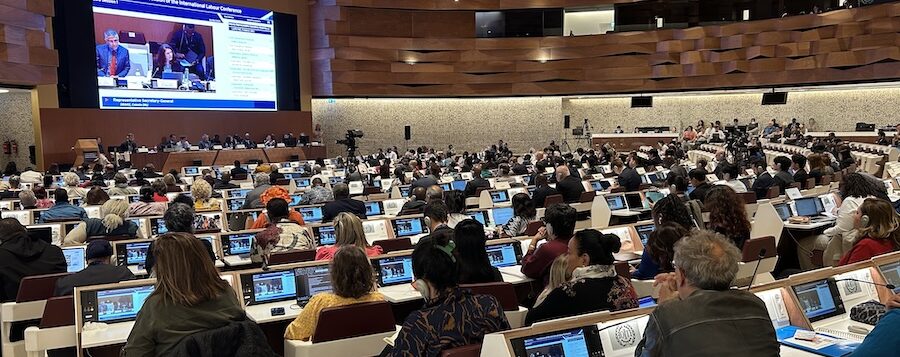
First meeting on the Committee on the General Discussion on Addressing Informality and Promoting the Transition to Formality for Decent Work, Palais des Nations in Geneva, Switzerland
Jobs, Rights and Growth
Gizem Demir Nirennold, MMM Representative at the UN in Geneva, also took the floor in plenary to respond to the ILO Director General’s report Jobs, Rights and Growth: reinforcing the connection, again taking a care-centred perspective.
We challenged the assumption that jobs and rights are inherently tied to GDP growth, questioning the continued reliance on GDP as the primary measure of economic progress. The report does not examine whether the current GDP-driven economic model can truly ensure decent work, protect rights, or respond to systemic challenges such as climate change, inequality, and demographic shifts.
We highlighted a major oversight: the invisibility of unpaid care work, especially that carried out by mothers. An estimated 708 million women are out of the labour force due to unpaid care responsibilities, which undermines their economic autonomy, career paths, and wellbeing—particularly mental health.
‘This vital contribution is ignored. It’s invisible in GDP. And it’s left out of most labour and economic policies.
Let’s be clear: care is not just a personal issue—it’s a public, structural issue of gender equality, economic justice, and human rights. Recognising, valuing, supporting and sharing this unpaid work is essential to creating a fairer future of work.’
We therefore called for a bold paradigm shift toward a “wellbeing economy” that places people and the planet above narrow measure of growth. Central to this vision is the formal recognition of unpaid care work, the fair redistribution of its responsibilities and costs, and a redefinition of economic success beyond GDP. We urged the ILO and its constituents to adopt a holistic understanding of work—one that equally values paid and unpaid labour—and to champion a new economic model that places care at the heart of resilient, inclusive and sustainable societies.

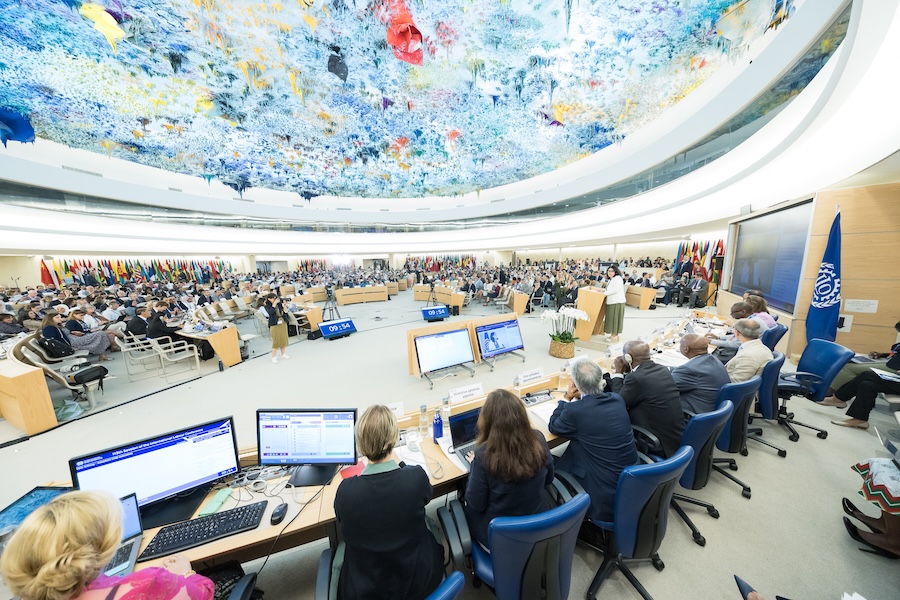
Conference Plenary Session. 113th International Labour Conference, Palais des nations, Geneva, Switzerland. Photo Pierre Albouy / ILO.
Forum of the Global Coalition on Social Justice
 The ILO-led Global Coalition for Social Justice, of which MMM is a member convened its Annual Forum as part of the ILC. The Forum spotlighted some thematic focuses and so-called Key Interventions where members work together to advance a specific topic linked to social Justice. MMM is part of 3 of these Key Interventions: A just transition towards environmentally sustainable economies and societies for all, human rights economy and Responsible business for inclusive and sustainable societies.
 Share
Share Share
Share Print
Print Email
Email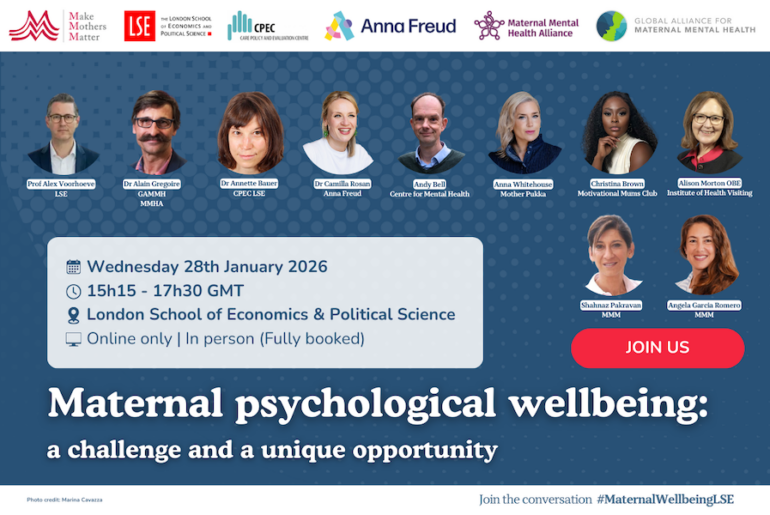
Maternal Psychological Wellbeing: A Challenge and a Unique Opportunity
13.01.26
Wednesday 28 January 2026 | 15:15 – 17:30 GMT London School of Economics & Political Science (LSE) – Live broadcast #MaternalWellbeingLSE Maternal mental health is one of the most pressing

Climate Change: A Maternal Physical and Mental Health Emergency
13.11.25
In the lead-up to the UN climate change conference in Belem, Brazil (COP30), MMM was delighted to collaborate with Dr. Saravanan Thangarajan, a Visiting Scientist & Faculty member at Harvard
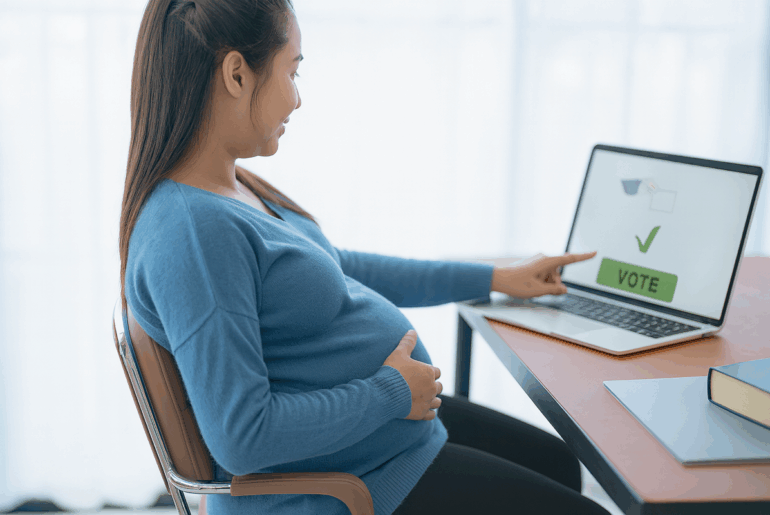
Democracy on Hold: The Hidden Penalty for Parliamentarians Who Become Mothers
27.11.25
The European Parliament adopted a legislative resolution on the amendment of the European Electoral act, allowing Members to vote in plenary by proxy voting during pregnancy and after giving birth.