Early Childhood interventions: crucial for the empowerment of mothers of children with disabilities
18.09.24
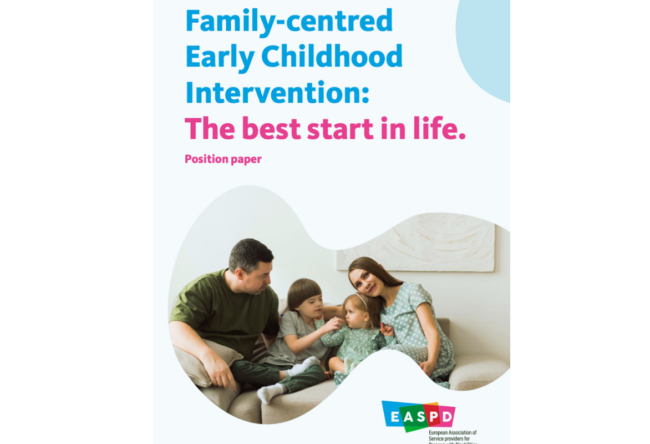
EASPD, in collaboration with various family rights networks, including MMM, has issued a position paper on “Family-centred Early Childhood Intervention” (ECI) for children with disabilities. This approach provides critical support for families, especially mothers, by addressing various challenges and empowering them in their caregiving roles. Designed to be easily accessible, family-centred ECI offers flexible services that emphasise emotional support for caregivers and normalcy within the home.
But why is it essential to take mothers into account during ECI? At the earliest stage of child development for children with disabilities, mothers are most vulnerable to psychological distress, such as perinatal and postnatal depression and anxiety. Symptoms of these disorders can be best supported through family-centred ECI, with personalised family support programmes, counselling, and infant-parent psychotherapy. This will strengthen the emotional connection between mother and child, which is crucial for their respective mental health, especially during challenging periods such as ECI.

By supporting families, ECI equips mothers with the skills and resources to care for their children effectively, thus alleviating some of the caregiving strain. Active participation and education in their child’s early development through specialised support programmes and other parental tools allow mothers to feel more confident, skilled, and resourceful. This also enables them to effectively understand and meet their child’s needs and ensure their family’s overall well-being.
Regular assessments and access to medical specialists for ongoing support foster a sense of partnership and participation for mothers in their child’s growth and development. It is essential that mothers feel equipped and supported during this time to fulfil their caregiving responsibilities.
 Share
Share Share
Share Print
Print Email
Email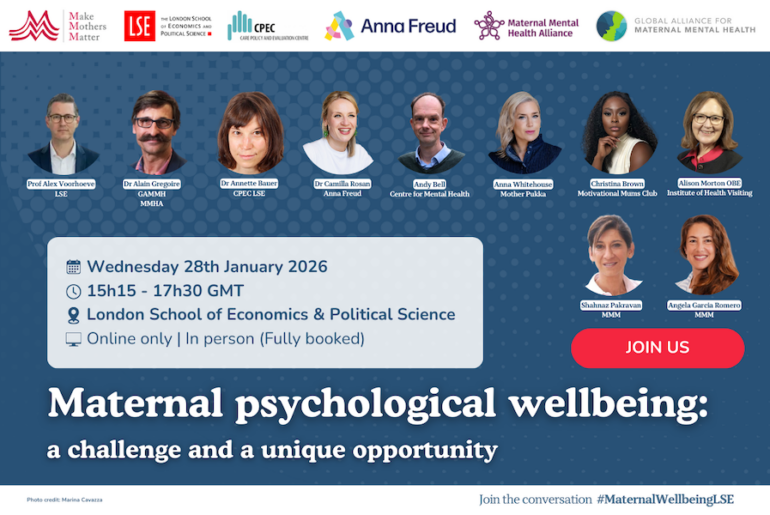
Maternal Psychological Wellbeing: A Challenge and a Unique Opportunity
13.01.26
Wednesday 28 January 2026 | 15:15 – 17:30 GMT London School of Economics & Political Science (LSE) – Live broadcast #MaternalWellbeingLSE Maternal mental health is one of the most pressing

Climate Change: A Maternal Physical and Mental Health Emergency
13.11.25
In the lead-up to the UN climate change conference in Belem, Brazil (COP30), MMM was delighted to collaborate with Dr. Saravanan Thangarajan, a Visiting Scientist & Faculty member at Harvard
Democracy on Hold: The Hidden Penalty for Parliamentarians Who Become Mothers
27.11.25
The European Parliament adopted a legislative resolution on the amendment of the European Electoral act, allowing Members to vote in plenary by proxy voting during pregnancy and after giving birth.