Harnessing digital technologies for family wellbeing: our collective responsibility
14.02.21
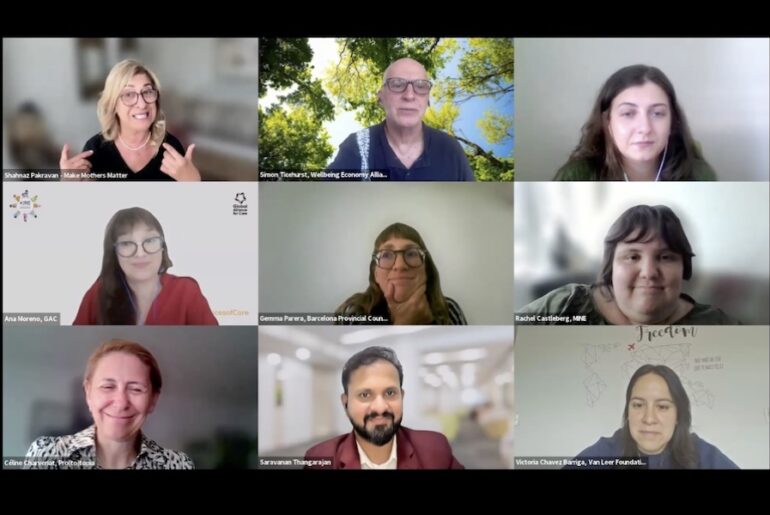
UN New York, CSocD59 - A look back at our virtual side-event that took place on February 12th to coincide with the 59th UN Commission on Social Development
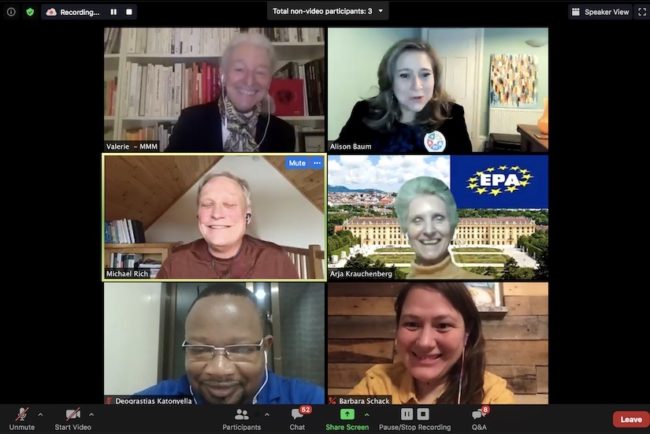
It is an understatement to say that the pandemic has given rise to digital technologies becoming central to our personal, family and professional lives, with all three often overlapping. The objective of the event was to address its impact on family wellbeing.
The first part of the virtual discussion covered the benefits, with a focus on the huge potential offered by maternal and child mobile health. Two mobile apps were presented: SAHFA’s JamboMama! and Best Beginnings’ Baby Buddy app. Both technologies are geared to empowering parents, mothers especially, with information and a communication tool to improve maternal and child health.
The event’s second part addressed the challenges that ‘connected parents’ face, especially under confinement as digital technologies invade their everyday lives, turning their homes into offices, their private lives into professional ones. Whether on telework, online distance learning or managing screen times and uses in their children’s lives, it was agreed that parents need both support and information/education on how to make the best use of these technologies to ensure the wellbeing of every family member.
It is now up to us to make digital technologies contribute to family wellbeing.
Full recording of the webinar
Speakers presentations
- Opening video – ‘Our global MMM grassroots network responds’: featuring testimonials from grassroots NGOs within the MMM network highlighting lasting impacts of the Covid-19 crisis and how they have creatively used digital technology to support mothers and families (with Ceprodih in Uruguay, Mame Pentru Mame in Romania, L’Heure Joyeuse in Morocco, amongst others)
Watch the video on YouTube
Part I – Practical examples of mobile technologies to improve mother and child health
- Laetitia van Haren, Founder & Director, SAHFA – Smart Access to Health For All Inventor/promotor JamboMama!
represented by
Deograstias Katonyella, representative, Tanzania and beyond, & Barbara Schack, Vice-President, SAHFA – Smart Access to Health For All on JamboMama!, SAHFA’s mobile app: smartly connecting (pregnant) mothers to health care providers
Powerpoint Presentation – Watch recording - Alison Baum, Founder and CEO, Best Beginnings (UK), on The Baby Buddy app, a mobile App for parents that supports Early Childhood Development
Powerpoint Presentation – Watch recording
Part II – Challenges faced by mothers / parents on the use of digital technology
- Short video featuring Roberto Martinez, Director of Fundacion Mas Familia, an MMM member organisation based in Spain which promotes the reconciliation of personal, family and professional life, on the advent of telework and the challenges it poses (from an interview conducted in Summer 2020 as part of the MMM Voices Covid-19 video series)
Watch the video on Youtube - Arja Krauchenberg, project-coordinator, European Parents’ Association (EPA), an MMM member association, on the challenges that families face with regards to online distance learning and telework
Powerpoint Presentation – Watch recording - Michael Rich, Founder and Director, Center of Media and Child Health, Harvard University on the impact of digital technology on children and how parents can be guided
Powerpoint Presentation – Watch recording
Other information

For background information, see also our invitation article
The webinar took place on the margins of the 59th session of the UN Commission on Social Development (8-17 February) with ‘Socially just transition towards sustainable development: the role of digital technologies on social development and well-being of all’ as the priority theme.
Our report of the event was also published on the UN Social Development Network (UNSDN) website.
Resources
JamboMama! – SAHFA’s mobile app connecting (pregnant) mothers to health care providers
The Baby Buddy app – Best Beginnings (UK)
Mediatrics
 Share
Share Share
Share Print
Print Email
Email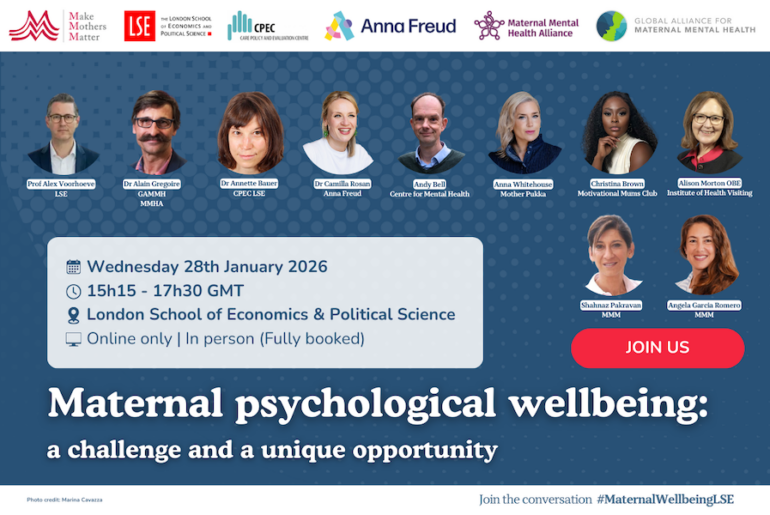
Maternal Psychological Wellbeing: A Challenge and a Unique Opportunity
13.01.26
Wednesday 28 January 2026 | 15:15 – 17:30 GMT London School of Economics & Political Science (LSE) – Live broadcast #MaternalWellbeingLSE Maternal mental health is one of the most pressing

Climate Change: A Maternal Physical and Mental Health Emergency
13.11.25
In the lead-up to the UN climate change conference in Belem, Brazil (COP30), MMM was delighted to collaborate with Dr. Saravanan Thangarajan, a Visiting Scientist & Faculty member at Harvard
Democracy on Hold: The Hidden Penalty for Parliamentarians Who Become Mothers
27.11.25
The European Parliament adopted a legislative resolution on the amendment of the European Electoral act, allowing Members to vote in plenary by proxy voting during pregnancy and after giving birth.