Invest in early childhood care and education for peace and tolerance
02.12.24
Responding to a call for input for a UN Report, MMM highlights how the early years of the child constitute a crucial period to act and foster peace and tolerance for all, and what needs to be done to support early childhood development.
The UN Office of the High Commissioner for Human Rights (OHCHR) is preparing a report to be presented at the June Session of the Human Rights Council on how to develop accessible, inclusive, equitable and quality education for peace and tolerance for every child.
In our submission to the call for input to inform this report, we stress that education begins already during the early years of the child, and that fostering a culture of peace and tolerance begins in the home.
Children develop a capacity to relate and adopt prosocial behaviour when they grow up in a nurturing family environment. In turn, a child that develops properly can meaningfully contribute to society and the economy as a citizen, worker, parent, etc., thereby contributing to building a more peaceful and cohesive society.
The State has a vital role to play in providing parents, in particular mothers, with the adequate means and support for their child to grow-up in a healthy and nurturing environment. Parents, whether they choose to stay at home with their child or to rely on formal early childhood education services, have to be supported. Today however, many parents do not have such choice: one child in four below the age of 5 has no access to pre-primary education.
Early Childhood Development (ECD) covers the physical, mental, spiritual and moral development of the child from the prenatal period until they reach 8 years of age. The first 1,000 days, which include pregnancy, are particularly important, not only for the child’s physical development, but also for the development of psychosocial, emotional and cognitive skills. The well-being and health of the mother heavily influences this early development. Providing families with optimal conditions prevents adverse consequences. Malnutrition and exposure to stress or violence do not affect solely the mother but also the child to-be. Addressing violent behaviours and social challenges is key to preventing the development of impaired stress regulation systems, and long lasting mental or physical health issues for the child. Families experiencing anxiety in relation to living in poverty, in areas of conflicts or exposed to climate change, are particularly vulnerable and require specific attention.
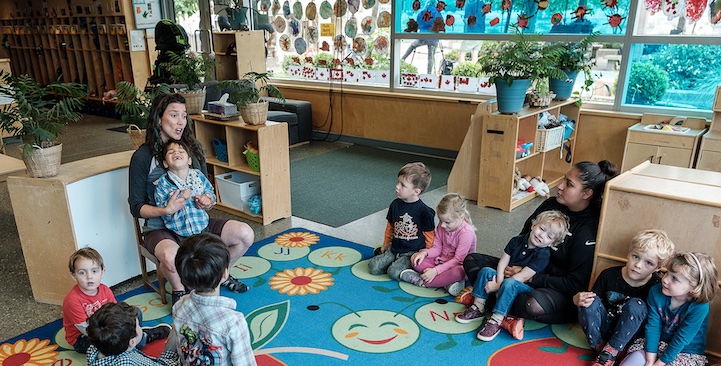
Quality Early Childhood Care and Education (ECCE) services enhance the development of socio-emotional skills and ensure children’s well-being and harmonious development to their full potential. They lay important foundations for the overall child development, which can later in life facilitate social mobility and economic productivity, and help break the cycle of inequality and poverty–thereby fostering peaceful societies.
MMM calls on OHCHR to address the question of early childhood development in its report on quality education for peace and tolerance.
- It is crucial to invest in quality early childhood care and education services through adequate public funding, and offer diverse, child-centred, quality and accessible services through appropriate partnerships and regulation of non-state actors. Children in situations of vulnerability need to be granted special attention to ensure equitable and inclusive services
- Support to parents and other unpaid caregivers must be reinforced, in particular through family friendly policies to help parents balance their care responsibilities, including adequate parental leave, family support programs, mental health services and flexible working arrangements
- Childminders and other ECD Professionals need to be properly trained and remunerated for their caregiving missions. Quality services are important both for children as beneficiaries but also for professionals and their daily working conditions.
 Read MMM’s full contribution here
 Share
Share Share
Share Print
Print Email
Email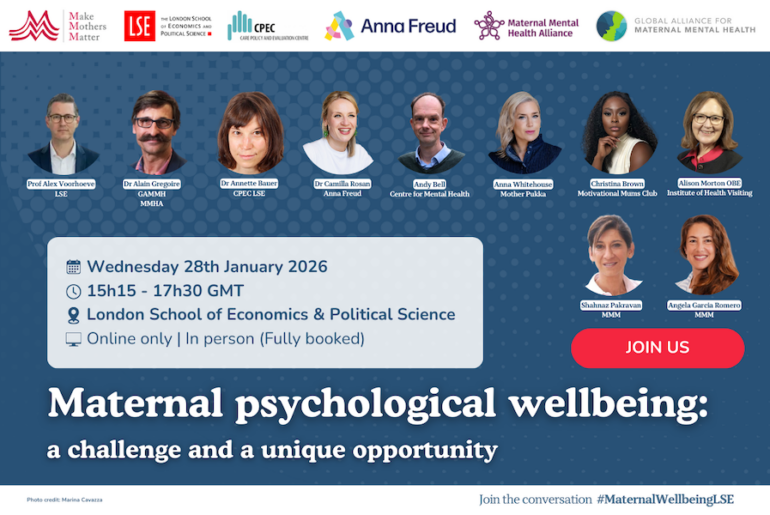
Maternal Psychological Wellbeing: A Challenge and a Unique Opportunity
13.01.26
Wednesday 28 January 2026 | 15:15 – 17:30 GMT London School of Economics & Political Science (LSE) – Live broadcast #MaternalWellbeingLSE Maternal mental health is one of the most pressing

Climate Change: A Maternal Physical and Mental Health Emergency
13.11.25
In the lead-up to the UN climate change conference in Belem, Brazil (COP30), MMM was delighted to collaborate with Dr. Saravanan Thangarajan, a Visiting Scientist & Faculty member at Harvard
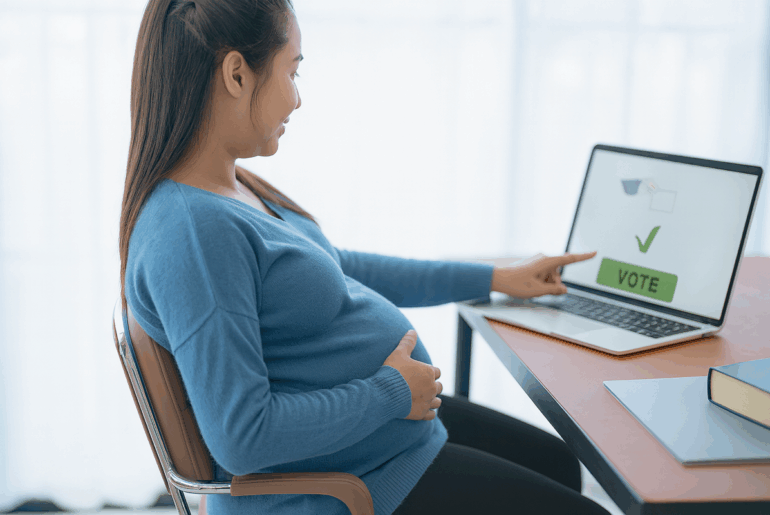
Democracy on Hold: The Hidden Penalty for Parliamentarians Who Become Mothers
27.11.25
The European Parliament adopted a legislative resolution on the amendment of the European Electoral act, allowing Members to vote in plenary by proxy voting during pregnancy and after giving birth.