Empowering Mothers, Advancing Rights: MMM at HRC59
14.07.25
UN Geneva - The UN Human Rights Council provides a crucial platform for advocacy and engagement on key human rights issues that affect mothers. This overview highlights MMM’s engagement at the 59th session of the Human Rights Council session, held from 16 June to 8 July in Geneva.
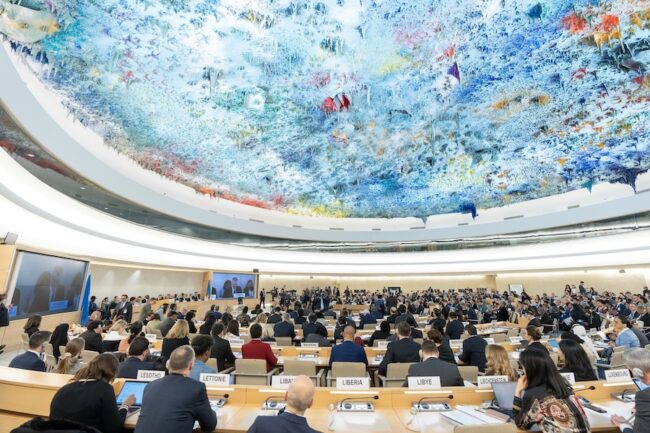
No just transition without a shift from a care-less to a care-full economy
Speaking at the Annual Discussion on Climate Change, which this year focussed on a just transition, we reminded the Council that climate change exacerbates existing gender inequalities, notably increasing the already disproportionate share of unpaid care work shouldered by women–in particular mothers. A just transition must therefore address this issue directly, recognising and valuing unpaid care work—particularly that done by mothers—as central to climate and economic policy. We at MMM support UNRISD and the Just Transition and Care Network in calling for care to be placed at the core of these policies.
We advocate for a care-centred just transition that reshapes economic and social systems to prioritise people, planet, and rights over profit.
Could families drive gender equality?
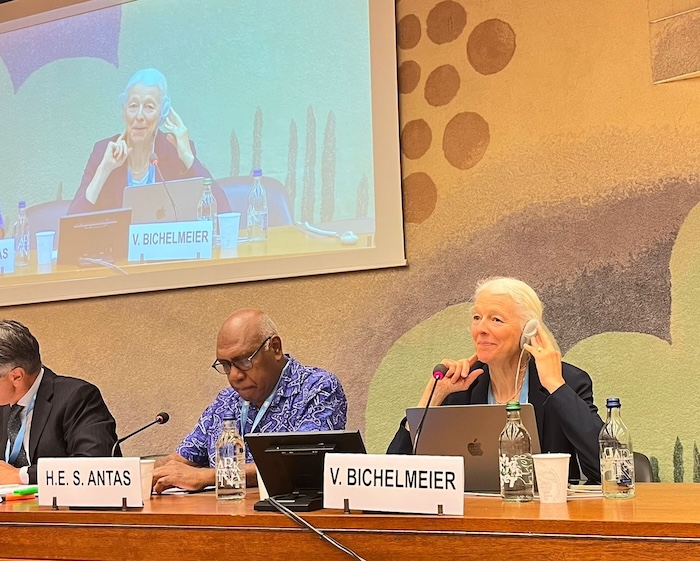 Speaking at a side-event organised by the Mission of Kyrgyzstan on The Family: Foundation of Society, Driver of Development and Human Rights, MMM Vice-President Valerie Bichelmeier focused on the role of families in promoting gender equality, particularly through the more equitable distribution of unpaid care work.
Valerie emphasised these key points:
- While families can be sites of gender-based violence and discrimination, they are also powerful spaces for transformative change when gender equality is promoted from within
- Globally, women perform significantly more unpaid care work than men—up to 10 times more in some countries. This care gap limits women’s economic independence and reinforces outdated gender norms
- Kyrgyzstan must be commended for conducting regular time-use surveys that track unpaid care work, aligning with SDG target 5.4
- Involving men, especially fathers, in caregiving is crucial. It improves child well-being, reduces stress and domestic violence, and sets positive examples for future generations
- Policy and cultural change needed: structural supports like paid parental leave, affordable childcare, and flexible work must be backed by societal change. Men must be encouraged to take an equal role in caregiving, and women must help enable this shift
- Single-parent households, which are single-mothers, face heightened vulnerability and need targeted support as part of broader efforts toward co-responsibility for care
So yes, gender equality begins at home. It begins when men step up as caregivers, when women are supported in pursuing their own aspirations, and when care is treated as a collective responsibility—shared by families, communities, governments, and the private sector.
Other speakers participating in the event included representatives from the Permanent mission of Vanuatu and LDS Charities. They reaffirmed the central role of families in promoting human rights, social protection, and inclusive development, examined intersections between family policy, human rights obligations, and SDGs, and shared examples of good practices and policy to empower families.
Impact: MMM’s Input reflected in UN Report
The last report of the UN Working Group on Discrimination against Women and Girls, which was presented at this session and focuses on Care, includes many of the points and recommendations we made when answering to the WG’s call for input last November.
In particular the report states: ‘Once women and girls become mothers, their unpaid care work and financial and care needs increase, but their earnings decrease due to the motherhood penalty’.
It also directly refers to our work where we connect time poverty and the motherhood penalty
Lastly, we are delighted that the report includes, among its recommendations, the ‘recognition of the value of skills developed through care work in recruitment policies’ – a proposal we at MMM have long advocated for as part of our efforts to acknowledge unpaid care work by mothers and to support their participation in the labour market, including re-entry after maternity or parental leave.
HRC resolution recognises pregnancy and maternity-related discriminatory practices and barriers
MMM actively participated in the informal negotiations of a resolution on Accelerating efforts to achieve women’s economic empowerment (A/HRC/RES/59/18), which was adopted by consensus at the end of the session.
Although it does not explicitly mention the motherhood penalty as we had advocated, the resolution does recognise ‘discriminatory practices by employers, such as denial of employment and dismissal due to pregnancy or breast-feeding, or requiring proof of contraceptive use, as well as barriers for pregnant women, women on maternity leave or women re-entering the labour market after childbearing’–a point which was not in the initial draft, and a small victory for MMM.
Looking ahead
Human Rights Council Sessions offer valuable opportunities to bring our key issues into global discussions across a range of topics. Looking ahead, MMM will continue to advocate for policy changes that advance the human rights of mothers and ensure the recognition, support and fair redistribution of their essential unpaid care work.
 Share
Share Share
Share Print
Print Email
Email
Maternal Psychological Wellbeing: A Challenge and a Unique Opportunity
13.01.26
Wednesday 28 January 2026 | 15:15 – 17:30 GMT London School of Economics & Political Science (LSE) – Live broadcast #MaternalWellbeingLSE Maternal mental health is one of the most pressing

Climate Change: A Maternal Physical and Mental Health Emergency
13.11.25
In the lead-up to the UN climate change conference in Belem, Brazil (COP30), MMM was delighted to collaborate with Dr. Saravanan Thangarajan, a Visiting Scientist & Faculty member at Harvard
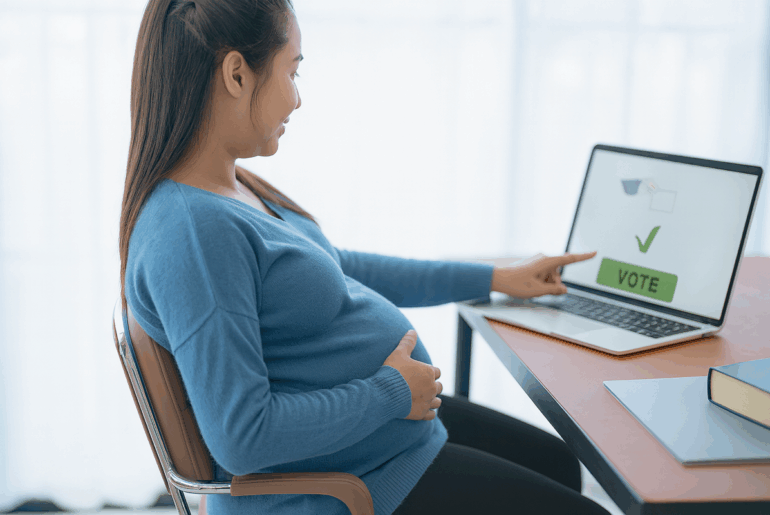
Democracy on Hold: The Hidden Penalty for Parliamentarians Who Become Mothers
27.11.25
The European Parliament adopted a legislative resolution on the amendment of the European Electoral act, allowing Members to vote in plenary by proxy voting during pregnancy and after giving birth.