Supporting parents and families essential to the realization of children rights
02.10.19
UN Geneva - Make Mothers Matter seized the occasion of the 2019 Social Forum to remind Member States that promoting and protecting the rights of children and youth through education - the theme of the Forum - also requires supporting families and parents as the primary educators of their children.
The Incheon Declaration and Framework for Action for the implementation of SDG 4 explicitly calls for the support of families as the primary caregivers of children, particularly during early childhood.
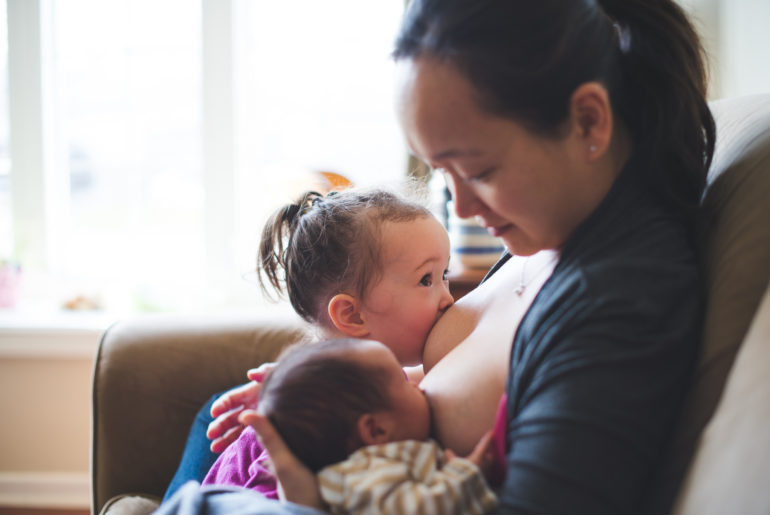
Family structures have been greatly affected as our societies have undergone rapid change. The models of extended and nuclear families have gradually given way to more diverse units. Single-parent families in particular – which are mostly single-mother families – are the result of not only parental separation or divorce, but also from migration or emergency situations such as conflict or natural disasters.
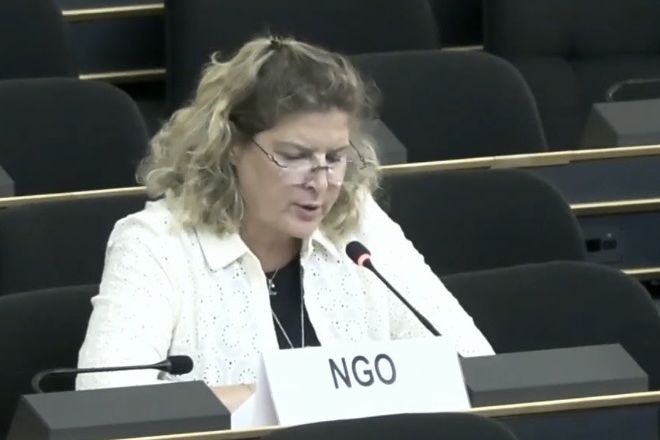
Valerie Bichelmeier, Head of the UN Delegation, delivering the Statement at the 2019 Social Forum
Social issues like unemployment, income inequality, imbalances between work and family life and lifestyle changes related to urbanization also carry health consequences with new risks of illness, increase in drug addiction and psychological difficulties related to daily stress. In addition, technology has impacted human relationships and behaviour, especially within families.
As traditional structures disappear, new parenting difficulties are emerging. Concerted efforts are therefore needed to help parents play their role.
A 2015 UNESCO report on early childhood education and care indicates that more than half of young children risk being deprived of quality parental support in areas deemed as essential.
There is an urgent need to analyse and examine the reasons why some parents do not invest in or are unable to fulfill their parental educational responsibilities. Social and family policies play a determining role in parenting practices and the functioning of families. But more needs to be done by providing parents with access to education and support programs.
In conclusion, MMM stressed that parental education and support not only benefit families and children, contributing in particular to the realization of their rights. But communities and the entire country. they are thefore essential to face our global challenges and realize the SDGs.
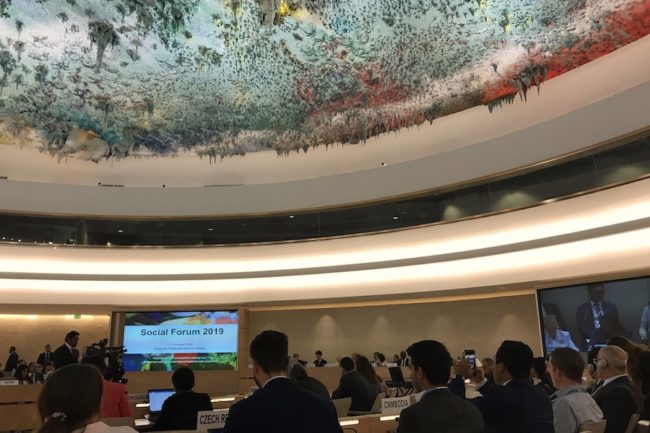
The Social Forum is an annual meeting convened by the Human Rights Council where a specific theme is discussed. In 2019 the Social Forum, which took place on 1-2 October in the context of the 30th Anniversary of the UN Convention of the Right of the Child, focussed on “the promotion and protection of the rights of children and youth through education”.
MMM delivered its statement as part of the general discussion that took place after the opening Keynote panel on The transformative power of education for young people. Stefania Giannini, UNESCO Assistant-Director General for Education, set the tone:
“We face no less than an education emergency. According to our most recent projections, 12 million primary school children will never see the inside of a classroom, of whom 9 million are girls. And 220 million children and youth will still be out of school in 2030. Four in ten will not complete secondary education.
Every day, conflict, crisis and natural disasters are disrupting education for the world’s most vulnerable young populations. This is an intolerable violation of the right to education, of human dignity. It is entrenching inequalities and poverty within and between countries, and seriously jeopardizing progress across the entire development spectrum.
This crisis ignores the irrefutable evidence on the transformative power of education – for people, prosperity and the planet Simply put, the starting point for building more inclusive, resilient and sustainable societies is to invest in education from the youngest age and throughout life.”
 MMM Statement at the 2019 Social Forum
 Share
Share Share
Share Print
Print Email
Email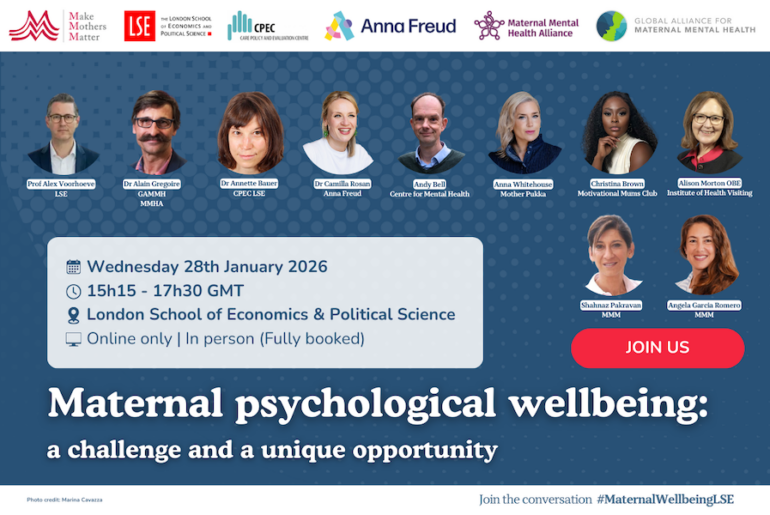
Maternal Psychological Wellbeing: A Challenge and a Unique Opportunity
13.01.26
Wednesday 28 January 2026 | 15:15 – 17:30 GMT London School of Economics & Political Science (LSE) – Live broadcast #MaternalWellbeingLSE Maternal mental health is one of the most pressing

Climate Change: A Maternal Physical and Mental Health Emergency
13.11.25
In the lead-up to the UN climate change conference in Belem, Brazil (COP30), MMM was delighted to collaborate with Dr. Saravanan Thangarajan, a Visiting Scientist & Faculty member at Harvard
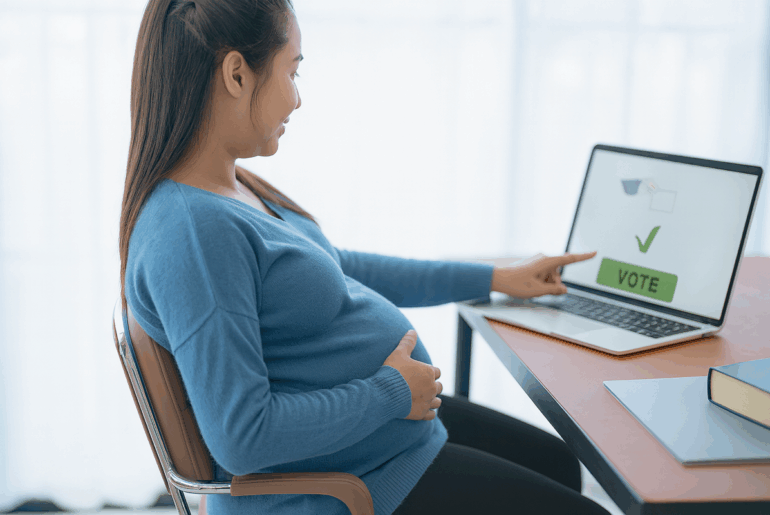
Democracy on Hold: The Hidden Penalty for Parliamentarians Who Become Mothers
27.11.25
The European Parliament adopted a legislative resolution on the amendment of the European Electoral act, allowing Members to vote in plenary by proxy voting during pregnancy and after giving birth.