Milestones for Mothers: First Oral Statement and Landmark UN Recognition at CSW69
17.04.25
UN New York – At this year's 69th session of the Commission on the Status of Women (CSW69), two significant moments highlighted our ongoing fight for mothers' rights. We emphasised how mothers continue to face discrimination in the workforce, often leading to career setbacks and wage disparities–the "Motherhood Penalty". In a separate but equally impactful development, the CSW concluded with a formal recognition of maternity-based discrimination, marking a pivotal step toward acknowledging and addressing the systemic challenges that mothers face in both professional and societal contexts.
Making Motherhood Visible: Confronting the Motherhood Penalty
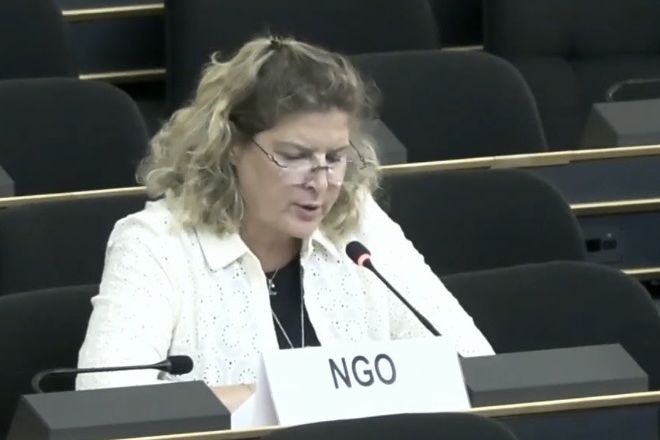
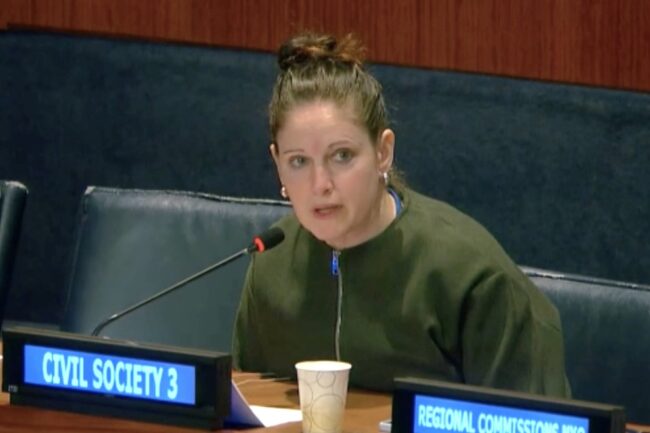
We took a stand on a crucial but often overlooked issue: the Motherhood Penalty. For the first time ever, MMM was invited to deliver an oral statement at the UN CSW, marking a significant milestone in our advocacy journey. In our statement, we emphasised that thirty years after the Beijing Platform for Action, mothers continue to bear the brunt of unpaid domestic and care work, often at the expense of their financial autonomy, career progression, and long-term security.
We highlighted the stark reality: in many parts of the world, becoming a mother still means risking one’s life. A recent MMM survey revealed that 50% of mothers in Europe report suffering from mental health conditions. Yet, time and again, discussions on gender equality fail to acknowledge mothers, their struggles, and the systemic discrimination they face.
Our statement was clear: failing to recognise the Motherhood Penalty means perpetuating gender inequality. We urged governments to acknowledge the unique discriminations and barriers faced by mothers, close the data gap, and make the Motherhood Penalty visible.
CSW69 Outcome: A Breakthrough on Maternity-related Discrimination
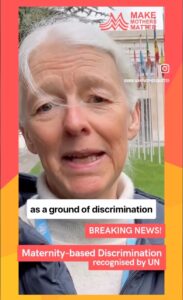
Our advocacy did not go unheard. The outcome document adopted at CSW69, the Political declaration on the occasion of the 30th anniversary of the Fourth World Conference on Women (Beijing+30), included, for the first time, explicit recognition that maternity is a ground for discrimination. This is a monumental step forward—the first time maternity-based discrimination has been recognised in a UN-negotiated text. Member States are now called upon to take effective action against all forms of discrimination, including those based on maternity.
This recognition is more than just words—it is a powerful tool. By securing this acknowledgement in an adopted text we have paved the way for stronger policies that protect mothers in the workplace and beyond. The fight against maternity-based discrimination now has a formal, global framework for action.
Linking Advocacy to Results
The inclusion of maternity-related discrimination in the CSW69 outcome document is a direct result of Make Mothers Matter’s persistent advocacy. Our oral statement shone a light on the economic and social costs of the Motherhood Penalty, making the case for greater recognition of the challenges faced by mothers.
But our work is not over. Recognition is only the first step—now, we must push for concrete policy changes to ensure that no mother is penalised for having a child.
At MMM, we believe that when mothers thrive, society thrives. There will be no progress on gender equality if we don’t take motherhood into account and make mothers and their challenges visible.
 Read our full statement and CSW69 outcome document
See also:
→ MMM written statement to the 69th Commission: Motherhood, the unfinished business of Beijing
 Share
Share Share
Share Print
Print Email
Email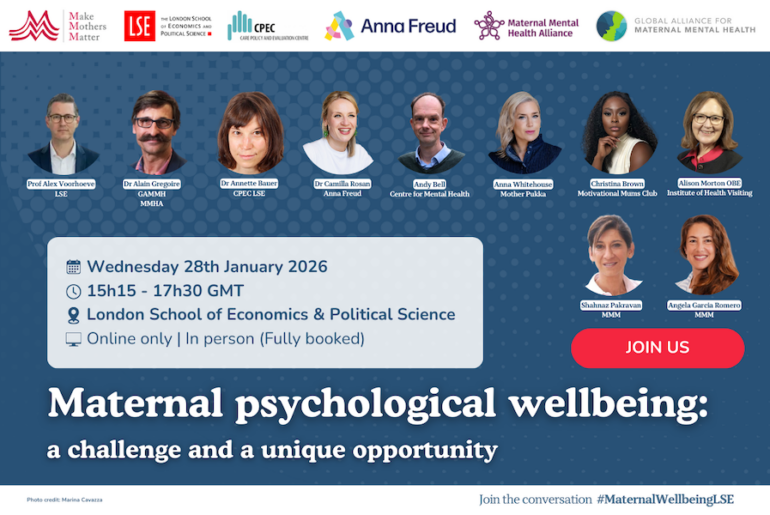
Maternal Psychological Wellbeing: A Challenge and a Unique Opportunity
13.01.26
Wednesday 28 January 2026 | 15:15 – 17:30 GMT London School of Economics & Political Science (LSE) – Live broadcast #MaternalWellbeingLSE Maternal mental health is one of the most pressing

Climate Change: A Maternal Physical and Mental Health Emergency
13.11.25
In the lead-up to the UN climate change conference in Belem, Brazil (COP30), MMM was delighted to collaborate with Dr. Saravanan Thangarajan, a Visiting Scientist & Faculty member at Harvard
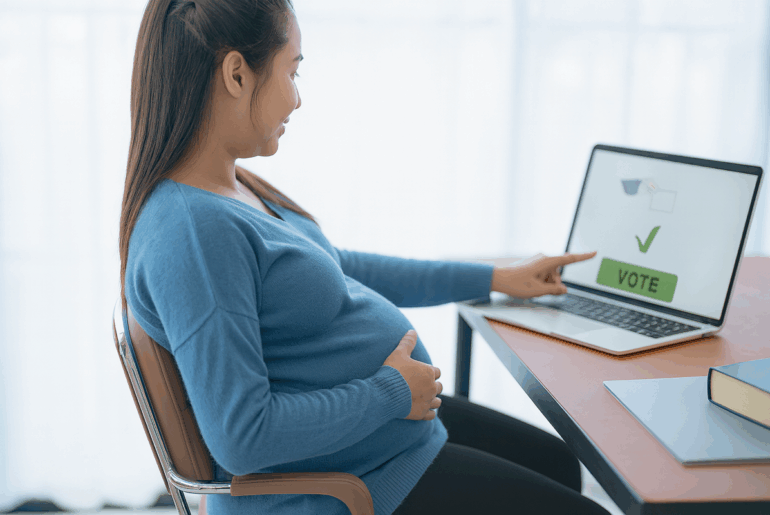
Democracy on Hold: The Hidden Penalty for Parliamentarians Who Become Mothers
27.11.25
The European Parliament adopted a legislative resolution on the amendment of the European Electoral act, allowing Members to vote in plenary by proxy voting during pregnancy and after giving birth.