Parents, key stakeholders for child rights in the digital environment
10.03.23
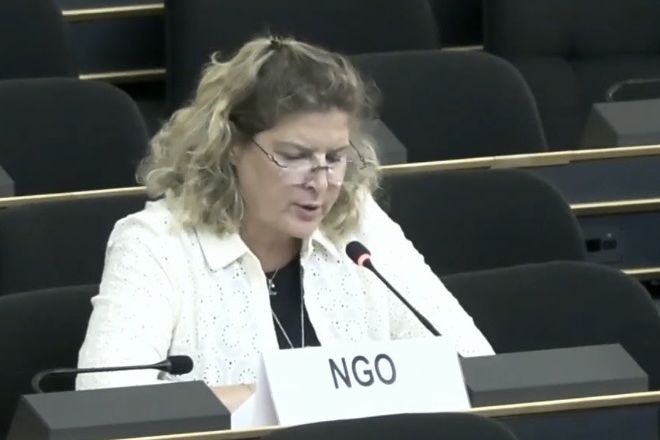
UN Geneva, Human Rights Council - At the annual day on the rights of the child, which focused on child rights in the digital environment, MMM reaffirmed the importance of considering parents as key stakeholders. We also drew attention to the negative impacts that parents' own use of digital technologies can have on children, and highlighted the need for awareness raising and education of parents.
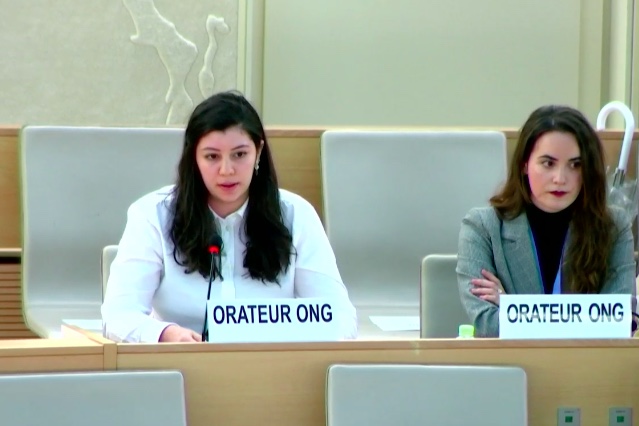
The following is the full statement delivered by our UN Representative, Melissa Barbottin, as part of the discussions on the rights of the child and the digital environment.
In an ever-changing world, digital technologies have undergone rapid transformation and children have not escaped these changes. Unfortunately, despite its many positive effects on our lives, the digital environment also presents serious risks for children.
 We at MMM strongly believe that including, educating and supporting parents in the process of helping children navigate the digital environment safely and responsibly is key to mitigate these risks and preserve a child’s physical and mental integrity. In particular, as they assume most of the unpaid work of caring for and educating children, mothers should be equipped to guide and interact with their children about their use of digital technologies.
This means that parents themselves need to be educated on the risks and dangers of the digital world, and how they can provide age and gender appropriate guidance to their children to alleviate the risks while taking advantage of the benefits.
Parents must also be made aware of the impacts on their children of their own use of digital technologies. Not only does their own usage patterns influence their children’s but their overuse of screens reduces their interactions with their children. This can be particularly harmful for early childhood development.
Our recommendations:
- Equip parents with digital parenting skills by providing information, workshops or training, parenting resources, and fostering communication
- Encourage parents to have open communication with their children about their digital lives, so that they discuss the risks and benefits of technology, set rules and boundaries together, and establish a culture of trust and respect
Children have the right to access information, communicate, and express themselves online, but they also have the right to be protected from all forms of online violence and other indirect harm induced by the use of digital technologies. For these rights to be fulfilled, parents must be considered as key stakeholders, and adequately educated and supported.

MMM oral statement for download
The Annual Day on the Rights of the Child was part of the 52nd session of the Human Rights Council.
 Share
Share Share
Share Print
Print Email
Email
Maternal Psychological Wellbeing: A Challenge and a Unique Opportunity
13.01.26
Wednesday 28 January 2026 | 15:15 – 17:30 GMT London School of Economics & Political Science (LSE) – Live broadcast #MaternalWellbeingLSE Maternal mental health is one of the most pressing

Climate Change: A Maternal Physical and Mental Health Emergency
13.11.25
In the lead-up to the UN climate change conference in Belem, Brazil (COP30), MMM was delighted to collaborate with Dr. Saravanan Thangarajan, a Visiting Scientist & Faculty member at Harvard

Democracy on Hold: The Hidden Penalty for Parliamentarians Who Become Mothers
27.11.25
The European Parliament adopted a legislative resolution on the amendment of the European Electoral act, allowing Members to vote in plenary by proxy voting during pregnancy and after giving birth.