Economic systems failing mothers’ rights
16.07.24
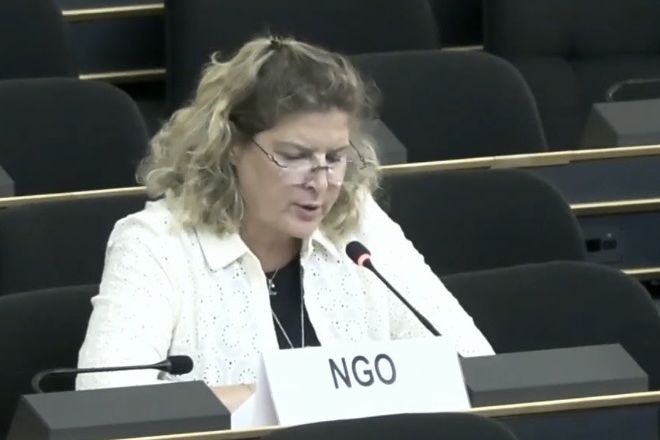
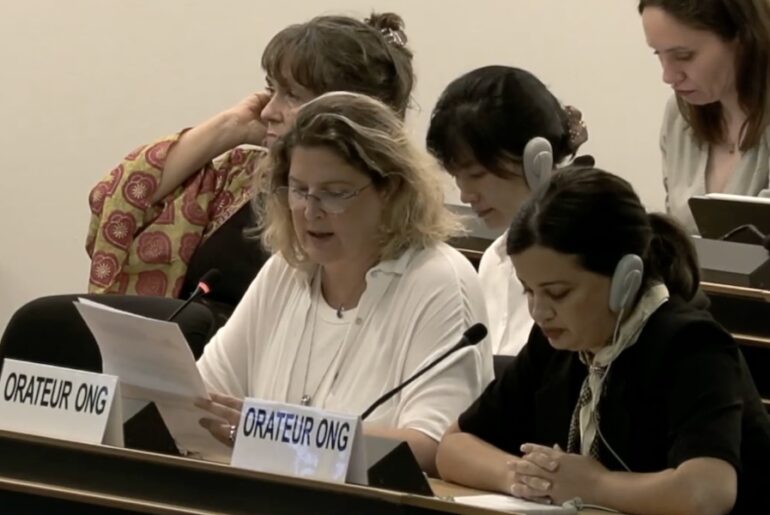
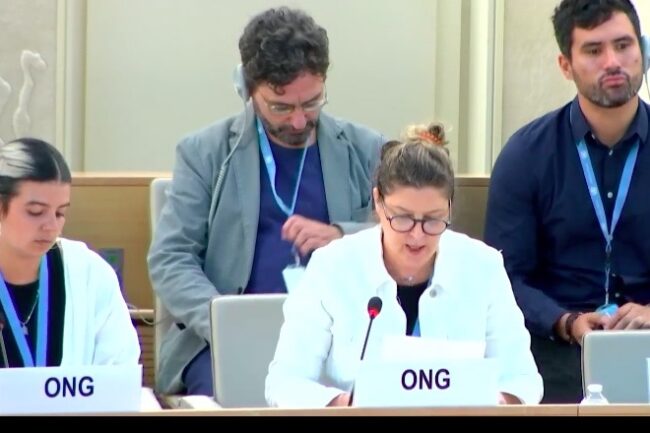
UN Geneva - As the 56th session of the Human Rights Council wraps up, we take a look back at our contributions to different discussions. Our oral statements all denounced the inadequacy and failure of our current economic system to deliver on the human rights of women – in particular when they are mothers, and called for systemic changes to our economy.
MMM fully supports the call of Olivier de Schutter, the UN Special Rapporteur on extreme Poverty and human rights, to abandon “growthism” and to reshape our economy.
One of our statements highlighted the gendered dimension of the problem: “our current economy is based on masculinist assumptions – that economic reasoning mostly involves rational calculation; that real work takes place in factories and offices, not in households, schools or hospitals, nor in farms; and that value is created there and not in communities and the environment”.
As Feminist economist Nancy Folbre says: “Not all the inputs and outputs come with price tags attached. Somewhere along the way, babies are conceived, nurtured, educated, and launched into adulthood in a process that requires considerable time and effort as well as money.” Indeed, our current economy completely ignores the unpaid domestic, care and educational work done in households, by mothers in particular.
The same goes for nature. Most of the social and environmental global crises we face – climate change, environmental damage, loss of bio-diversity, rising inequalities – all have their roots in an extractive economic system that prospers at the expense of both women – mothers in particular – and nature, considering them as unlimited and free resources.
In fact, the multiple and intersecting crises we face have also contributed to the backlash against women’s rights denounced in the report presented by UN Working group on discriminations against women. Again, the common thread is that most of these crises increase women’s already disproportionate share of unpaid care work, further weakening their economic and political participation, and exacerbating patriarchal power structures.
We therefore stressed the urgency of turning all this around, and called for repurposing our economy, so that it first serves life, human rights, and the wellbeing of people and the planet – not the other way around.
Recognising, redistributing and adequately supporting care, in particular the unpaid domestic, care and educational work performed by mothers, should be part of this agenda – at every level.
We also reaffirmed our commitment to make this happen.
➔ MMM’s full statements for download:
 Session with the UN Special Rapporteur on Extreme Poverty and Human Rights
Panel on ‘Human rights economy and women human rights’, annual full-day discussion on the human rights of women
Session with the UN Working Group on Discriminations against Women and Girls
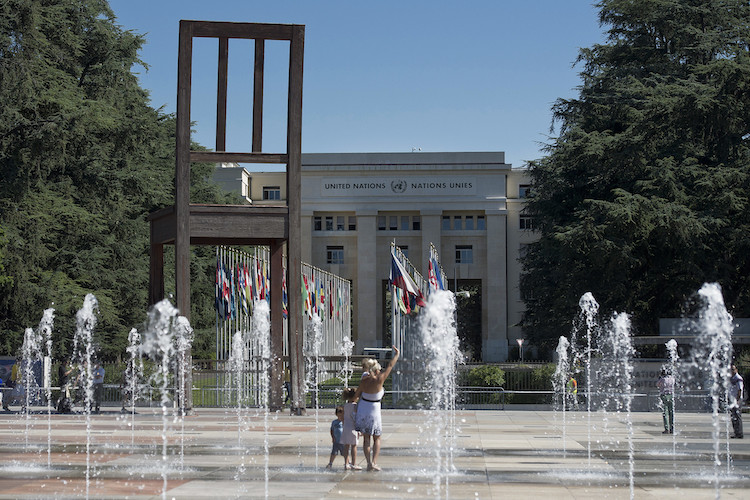
The 56th session of the UN Human Rights Council took place from 18 June to 12 July 2024 at the Palais des Nations in Geneva.
 Share
Share Share
Share Print
Print Email
Email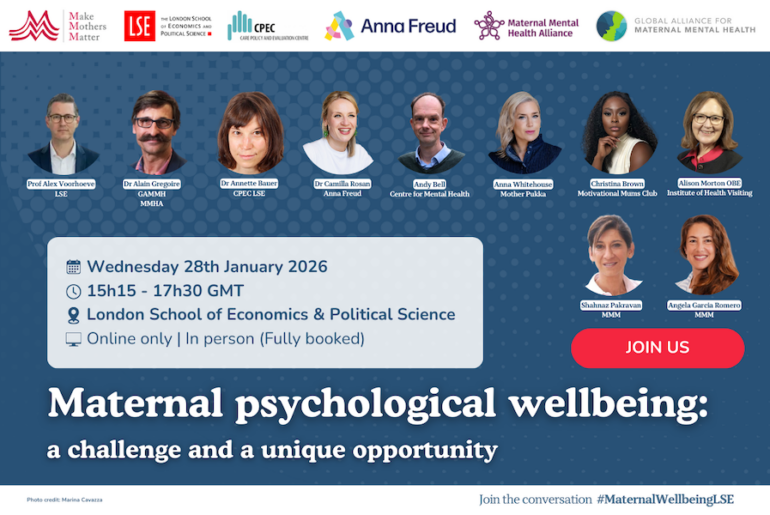
Maternal Psychological Wellbeing: A Challenge and a Unique Opportunity
13.01.26
Wednesday 28 January 2026 | 15:15 – 17:30 GMT London School of Economics & Political Science (LSE) – Live broadcast #MaternalWellbeingLSE Maternal mental health is one of the most pressing

Climate Change: A Maternal Physical and Mental Health Emergency
13.11.25
In the lead-up to the UN climate change conference in Belem, Brazil (COP30), MMM was delighted to collaborate with Dr. Saravanan Thangarajan, a Visiting Scientist & Faculty member at Harvard
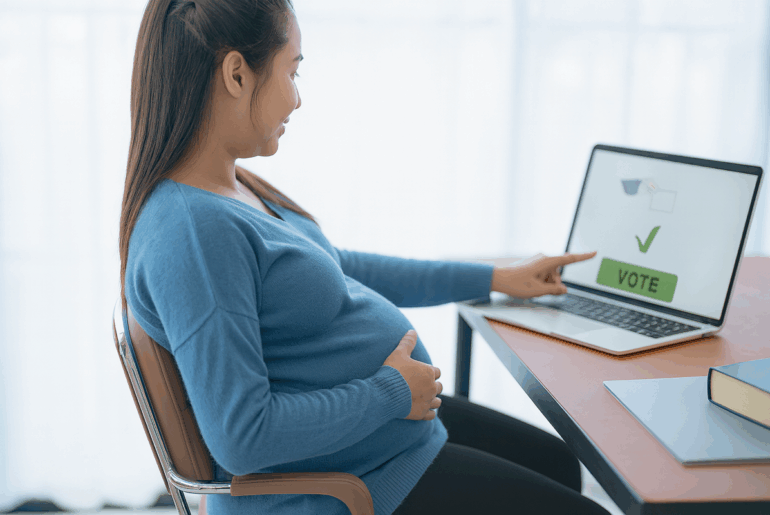
Democracy on Hold: The Hidden Penalty for Parliamentarians Who Become Mothers
27.11.25
The European Parliament adopted a legislative resolution on the amendment of the European Electoral act, allowing Members to vote in plenary by proxy voting during pregnancy and after giving birth.