Sharing is caring:
equal parenting, a path to social cohesion?
27.01.25
UN New York, UN Commission on Social Development – Register now to our virtual side-event for a discussion on how a more equal sharing of unpaid care and domestic work can contribute to social cohesion and social development.
📆 February 12 – 10:00-11:15 am New York / 16:00-17:15 pm Paris
📍 Online – REGISTER HERE
The event will be held in English, but interpretation in French and Spanish will be provided.
Families in all their diversity are the cornerstones of human development and the most immediate environment where individuals learn to navigate social relationships, solidarity, conflicts and responsibilities, as well as caring for each other. Families also nurture the values, attitudes, and behaviours that extend into communities and societies. Fostering solidarity, social inclusion, and social cohesion therefore begins in the home.
Promoting shared caregiving responsibilities and creating an inclusive culture of care in families emerge as a transformative pathway toward achieving the commitments of the 1995 Copenhagen Declaration on Social Development, the Programme of Action of the World Summit for Social Development, and the 2030 Agenda for Sustainable Development – particularly SDG 5 (gender equality), SDG 10 (reduced inequalities), and SDG 16 (peaceful and inclusive societies).
This side-event proposes to look at families as a critical starting point for social development, with a particular focus on equal parenting and the involvement of fathers/men in caregiving as a pathway to building a society that values care and fosters solidarity, social inclusion and social cohesion.

Speakers

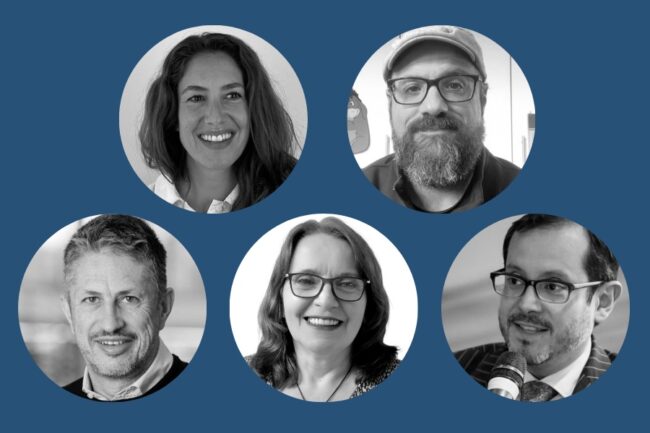
- Emilienne de León Aulina, Senior Advisor, Global Alliance for Care (Moderator)
- Angela Garcia, Projects Director, Make Mothers Matter – on what the MMM 2024 EU survey reveals about the distribution of unpaid care and domestic work and responsibilities within European families, and the wellbeing of mothers – or lack thereof
- Wessel van den Berg, Senior Advocacy Officer, Equimundo – on why equal parenting matters for family and societal wellbeing, and policies and practices that promote men/fathers taking greater responsibility for domestic and care work
- Markus Sandmayr, Vice-President and Co-Founder, Be Family – on the role of the private sector to support equal parenting
- Francisco Cos-Montiel, Senior Research Coordinator, United Nations Research Institute for Social Development (UNRISD) – on the connections between the recognition and redistribution of care and social development
Objectives
The main purpose of our side-event is to frame equal parenting as a ‘bottom-up’ approach to social development, where the wellbeing of mothers and families, and a culture of shared caring responsibilities is at the heart of social and economic policies and practices.
Our objectives:
- Denounce the current imbalances within families, which generate injustice, stress, or even violence – with negative impacts on family members; and highlight in particular the challenges faced by mothers as primary caregivers, including the impact on their physical and mental health, as well as on their economic prospects (motherhood penalty)
- Raise awareness of the positive impacts that equal parenting has on the wellbeing of families and its members, its ripple effects on communities and societies, and how it connects to the Copenhagen commitments
- Showcase examples of effective practices, programs and policies, that address gender stereotypes and cultural norms, foster a greater engagement of men in unpaid family care and domestic work, and support equal parenting as a key strategy for a more equitable society
- Call governments to action: to develop and implement cross-sectoral policies that promote and support a more equitable distribution of unpaid care and domestic work within families, thereby laying the foundations for a care society
This webinar is an online side-event to the 63rd UN Commission on Social Development, which will take place 10-14 February 2025 at the UN headquarters in New York. This year’s theme: ‘Strengthening solidarity, social inclusion and social cohesion to accelerate the delivery of the commitments of the Copenhagen Declaration on Social Development and Programme of Action of the World Summit for Social Development as well as the implementation of the 2030 Agenda for Sustainable Development’.
 Share
Share Share
Share Print
Print Email
Email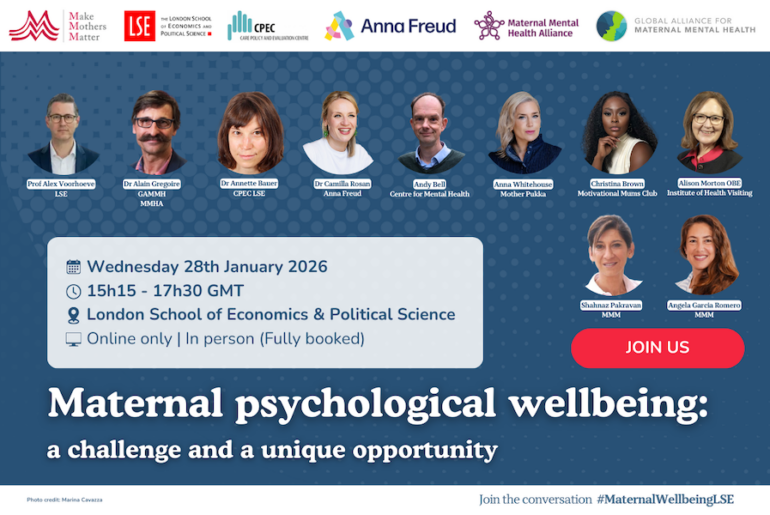
Maternal Psychological Wellbeing: A Challenge and a Unique Opportunity
13.01.26
Wednesday 28 January 2026 | 15:15 – 17:30 GMT London School of Economics & Political Science (LSE) – Live broadcast #MaternalWellbeingLSE Maternal mental health is one of the most pressing

Climate Change: A Maternal Physical and Mental Health Emergency
13.11.25
In the lead-up to the UN climate change conference in Belem, Brazil (COP30), MMM was delighted to collaborate with Dr. Saravanan Thangarajan, a Visiting Scientist & Faculty member at Harvard
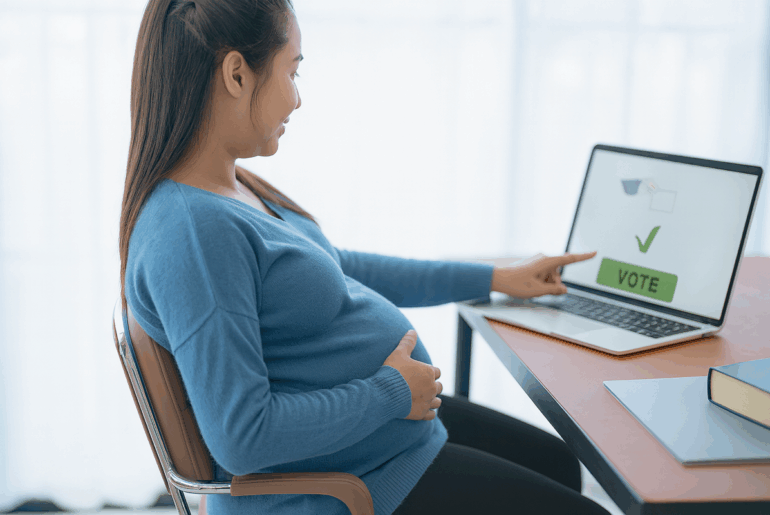
Democracy on Hold: The Hidden Penalty for Parliamentarians Who Become Mothers
27.11.25
The European Parliament adopted a legislative resolution on the amendment of the European Electoral act, allowing Members to vote in plenary by proxy voting during pregnancy and after giving birth.