22 countries do not allow mothers to pass their citizenship on to their children
17.07.16
The right of mothers to pass their citizenship on to their children has dramatic consequences on the civil and political rights, as well as economic, social and cultural rights of their children - beginning with their right to a nationality. And this only one among the many discriminations against women in the Law that still exists in countries around the world.
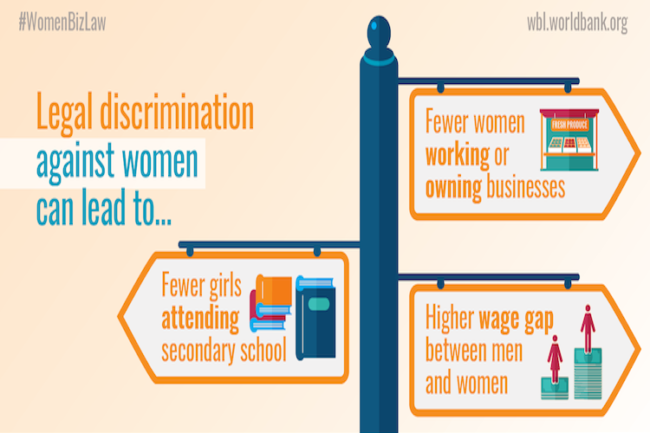
According to the Worldbank’s report Women, Business and the Law 2016, the following countries do not allow married mothers to pass citizenship on to their children as fathers can:
Bahamas, Bahrain, Barbados, Brunei Darussalam, Guinea, Iran, Iraq, Jordan, Kuwait, Lebanon, Madagascar, Malaysia, Mauritania, Nepal, Oman, Qatar, Saudi Arabia, Sudan, Swaziland, Syria, United Arab Emirates, West Bank and Gaza.
In addition to being discriminatory, the unequal treatment of women in Nationality laws is an obstacle to the realization of other rights for them and their children, including:
- the right to a citizenship, freedom from statelessness, freedom of movement
- the right to equality in the family
- the ability to participate equally in public and political life
- access to public services, access to the labour market
- the rights to housing, health, education, among other economic, social and cultural rights.
In 2015, MMM, in cooperation with MMM Liban, has participated in the Universal Periodic Review (UPR), a mechanism of the UN Human Rights Council where the human rights situation of each member State is periodically assessed by other member States. MMM has called for a change in the Lebanese Nationality Law.
 Share
Share Share
Share Print
Print Email
Email
Maternal Psychological Wellbeing: A Challenge and a Unique Opportunity
13.01.26
Wednesday 28 January 2026 | 15:15 – 17:30 GMT London School of Economics & Political Science (LSE) – Live broadcast #MaternalWellbeingLSE Maternal mental health is one of the most pressing

Climate Change: A Maternal Physical and Mental Health Emergency
13.11.25
In the lead-up to the UN climate change conference in Belem, Brazil (COP30), MMM was delighted to collaborate with Dr. Saravanan Thangarajan, a Visiting Scientist & Faculty member at Harvard

Democracy on Hold: The Hidden Penalty for Parliamentarians Who Become Mothers
27.11.25
The European Parliament adopted a legislative resolution on the amendment of the European Electoral act, allowing Members to vote in plenary by proxy voting during pregnancy and after giving birth.