Affordable Housing for Mothers: A Key to Ending Poverty and Inequality in Europe
06.11.25
Make Mothers Matter (MMM) has submitted its contribution to the European Commission’s consultation on the European Affordable Housing Plan, calling for stronger recognition of mothers’ specific housing vulnerabilities and the need for gender-sensitive policies.
Mothers – particularly single mothers, migrant mothers, and mothers with disabilities – face unique barriers to accessing safe, adequate, and affordable housing. With 10% of EU households spending more than 40% of their income on housing, mothers and their children are disproportionately affected by housing insecurity, hidden homelessness, and inadequate living conditions that harm both their physical and mental health.
Addressing the Hidden Realities of Mothers’ Housing Challenges
MMM stresses that affordable housing must also mean adequate housing. Poor living conditions such as dampness, mould, lack of ventilation, or exposure to toxins have severe consequences for health and well-being. Yet for many mothers, especially those with low incomes, moving to better housing is simply not an option.
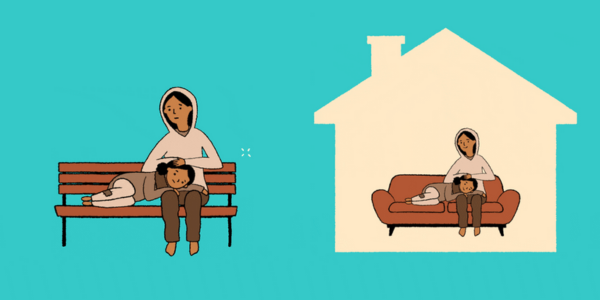
Women’s homelessness is often invisible: many mothers avoid shelters and instead “sofa surf” or temporarily rely on family and friends — keeping them out of official statistics. This form of hidden homelessness, often accompanied by risks of exploitation and violence, calls for gender-sensitive housing policies and women-only support services across Europe.
Single Mothers: Facing the “Double Penalty”
Single mothers are among those hit hardest by the housing crisis. They face discrimination in rental markets, limited financial resources, and the constant risk of over-indebtedness. MMM highlights positive examples from across Europe, such as the French municipality of Ris-Orangis, that has introduced tailored housing and social support programmes for single parents — promising models that could inspire EU and national policies.
MMM also warns that support measures must avoid creating additional barriers for mothers in vulnerable situations. Restrictive debt management procedures, for instance, can leave families with little autonomy or financial control. Housing policies should therefore be designed with accessibility, simplicity, and dignity at their core, ensuring that mothers and families in need can fully benefit and rebuild their stability and independence.
A Call for Integrated, Accessible Support Systems
Access to housing is deeply connected to social protection. MMM highlights the issue of non-take-up — when mothers do not access existing benefits due to shame, stigma, or complex application processes. To tackle this, MMM advocates for simpler, more dignified systems and integrated “one-stop shops” or family hubs, where mothers can access housing, social, and childcare services in one place.
Initiatives such as EurofamNet, of which MMM is a member, demonstrate the potential of cross-sectoral collaboration in supporting families holistically.
 Recommendations to the EU and Member States
To make the European Affordable Housing Plan truly inclusive, MMM recommends:
- Embedding a gender-sensitive, motherhood-focused policy approach across all housing and social policies.
- Expanding women-only homelessness services and integrating them into broader social systems.
- Supporting family hubs that provide coordinated access to housing, health, and social support.
- Promoting affordable housing schemes that address the needs of single and low-income mothers.
- Ensuring adequacy and accessibility, not just affordability, in all housing policies.
If we want to stop women, and especially mothers, from being the shock absorbers of poverty and inequality, we must invest in and support mothers.
Adequate and affordable housing is essential for mothers’ well-being and children’s rights. The European Affordable Housing Plan must address mothers’ specific needs through coordinated, cross-sectoral approaches that ensure safe, dignified, and inclusive living conditions for all families in Europe.
 Share
Share Share
Share Print
Print Email
Email
Maternal Psychological Wellbeing: A Challenge and a Unique Opportunity
13.01.26
Wednesday 28 January 2026 | 15:15 – 17:30 GMT London School of Economics & Political Science (LSE) – Live broadcast #MaternalWellbeingLSE Maternal mental health is one of the most pressing

Climate Change: A Maternal Physical and Mental Health Emergency
13.11.25
In the lead-up to the UN climate change conference in Belem, Brazil (COP30), MMM was delighted to collaborate with Dr. Saravanan Thangarajan, a Visiting Scientist & Faculty member at Harvard
Democracy on Hold: The Hidden Penalty for Parliamentarians Who Become Mothers
27.11.25
The European Parliament adopted a legislative resolution on the amendment of the European Electoral act, allowing Members to vote in plenary by proxy voting during pregnancy and after giving birth.