Families as active rights holders:
Quality Family Support in Spain and Europe
15.06.26
On 11 June 2026, Madrid hosted a major national conference dedicated to strengthening quality family support for positive parenting in Spain.
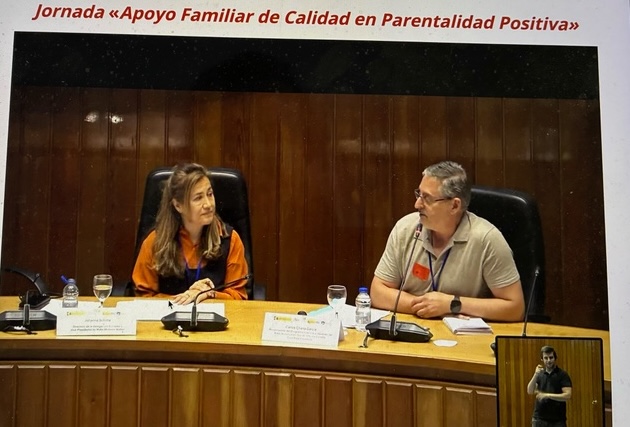
Organised within the framework of the P+Garant[IA] Network and co-hosted by the Spanish Ministry of Social Rights, Consumer Affairs and Agenda 2030 and the Spanish Federation of Municipalities and Provinces, the hybrid event brought together policymakers, researchers, practitioners, local authorities, and civil society organisations committed to improving support systems for children, adolescents, and families.

The event focused on advancing the implementation of the EurofamNet (European Family Support Network) Quality Assurance Protocol across Spain. It provided an opportunity to review progress, identify priorities for improvement, and discuss future actions. Participants shared experiences from different regions and sectors, highlighting both achievements and persistent challenges in delivering high-quality family support services.
As members of EurofamNet, Make Mothers Matter was invited to contribute as a speaker at the conference. This provided an opportunity to present a European perspective on quality assurance in family support systems and to explore how Spain’s experience connects with wider developments across Europe. Our contribution highlighted the importance of evidence-informed practice, meaningful family participation, and cooperation among stakeholders in strengthening family support systems.
A European Commitment to Quality Family Support
Across the European Union, significant efforts have been made to identify, consolidate, and promote common principles to guide policies and services for children, young people, and families, particularly those facing situations of social vulnerability. These developments reflect a gradual shift towards a rights-based approach that places the best interests of the child and family wellbeing at the centre of public policy.
Within this framework, public action is no longer viewed solely as a response to social needs, but as a system of support designed to promote development, social inclusion, and equity.
Despite this progress, assessing the quality of family support systems remains a significant challenge. While the European Union has promoted instruments such as the Voluntary European Quality Framework for Social Services, implementation has varied considerably across countries, limiting its impact in many national contexts. As a result, European institutions have increasingly highlighted the need to strengthen quality assurance mechanisms and develop tools capable of systematically assessing the effectiveness, coherence, and quality of services provided to children, families, and communities.
The work undertaken through EurofamNet and the application of the Quality Assurance Protocol in Spain respond directly to this need. Together, they provide a structured framework for evaluation, comparison, and continuous improvement while supporting mutual learning across European countries.
Key Findings from the Spanish National Report
The Spanish National Report was developed through a multidisciplinary assessment of professional practices, family support services, and the use of scientific evidence in policy and practice. The evaluation identified both strengths and areas for improvement within Spain’s family support system.
The findings show that Spain performs strongly in protecting children’s rights, providing a wide range of support services, promoting evidence-informed professional training, and fostering collaboration between research, policy, and practice. These strengths place Spain in a favourable position within the European context and reflect a strong commitment to rights-based family support.
At the same time, the report identifies several priorities for further development, including strengthening family participation in decision-making, ensuring that research evidence is effectively translated into policy and practice, improving financial support for families, enhancing work-family reconciliation measures, reinforcing coordination between services, and strengthening quality evaluation systems.

Many of these challenges are shared across Europe, particularly in relation to sustainable funding, quality assurance, and the effective use of evidence. The application of the EurofamNet Quality Assurance Protocol has therefore provided not only a national assessment, but also a valuable framework for comparison, mutual learning, and continuous improvement across countries.
Beyond Results: The Importance of the Process
During our intervention, we emphasised that one of the project’s most significant contributions lies not only in its findings but also in the process itself.
The creation of a national working group involving representatives from government, academia, service providers, and civil society established a valuable space for dialogue and collaboration. This process helped build a shared understanding of quality and encouraged collective ownership of improvement priorities.
The experience demonstrates that quality assurance is not simply a technical exercise based on indicators and evaluation tools. It also depends on continuous reflection, cooperation, and meaningful engagement among all those involved in supporting children and families.
Most importantly, it reminds us that improving support services for children, adolescents, and families is an ongoing process rather than a final achievement.
A European Perspective
One of the greatest strengths of this work is its European dimension. The fact that many of the challenges identified in Spain are also present in other countries demonstrates that we are facing shared issues that require coordinated responses and continued collaboration.
For this reason, the value of initiatives such as EurofamNet lies not only in evaluating national systems but also in facilitating collective learning and supporting the gradual development of common quality standards across Europe. By creating opportunities for exchange and comparison, these initiatives help countries learn from one another while adapting solutions to their own contexts.
We particularly welcome the report’s alignment with broader European trends that promote a rights-based approach to children, young people, and families. This perspective recognises children and families not simply as beneficiaries of services, but as active rights holders whose voices, experiences, and aspirations should inform the design and delivery of support systems.
For organisations working directly with families, such as Make Mothers Matter, this shift is especially significant. It acknowledges families’ capacity to participate in decision-making processes, contribute to solutions, and share responsibility in achieving positive outcomes. Strengthening participation is therefore not only a matter of service quality but also a fundamental component of respecting rights, promoting inclusion, and fostering more responsive and effective support systems.
The central message emerging from both the report and the conference is clear: quality is built through ongoing learning, collaboration, and continous improvement. Maintaining this commitment will be essential to strengthening family support systems and safeguarding the wellbeing and rights of children and families across Spain, while contributing to the wider European effort to advance high-quality, rights-based family support.
 Share
Share Share
Share Print
Print Email
Email
Maternal Psychological Wellbeing: A Challenge and a Unique Opportunity
13.01.26
Wednesday 28 January 2026 | 15:15 – 17:30 GMT London School of Economics & Political Science (LSE) – Live broadcast #MaternalWellbeingLSE Maternal mental health is one of the most pressing

Climate Change: A Maternal Physical and Mental Health Emergency
13.11.25
In the lead-up to the UN climate change conference in Belem, Brazil (COP30), MMM was delighted to collaborate with Dr. Saravanan Thangarajan, a Visiting Scientist & Faculty member at Harvard
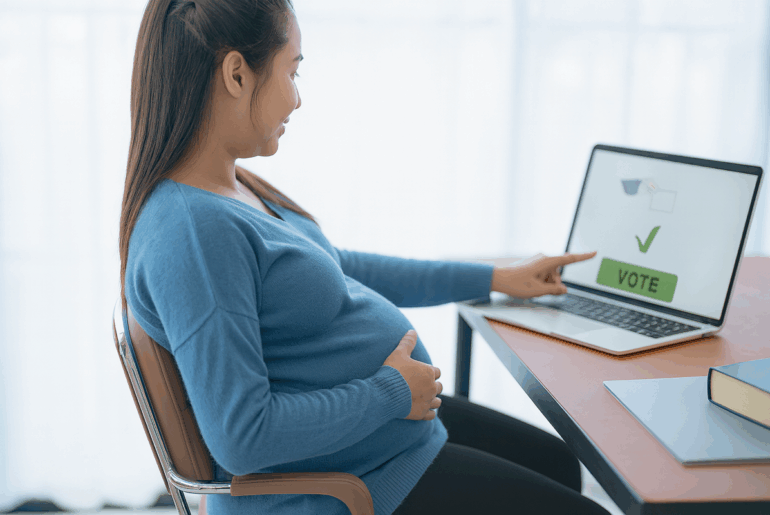
Democracy on Hold: The Hidden Penalty for Parliamentarians Who Become Mothers
27.11.25
The European Parliament adopted a legislative resolution on the amendment of the European Electoral act, allowing Members to vote in plenary by proxy voting during pregnancy and after giving birth.