Breaking the intergenerational cycle of poverty by investing in children and their families
07.05.24
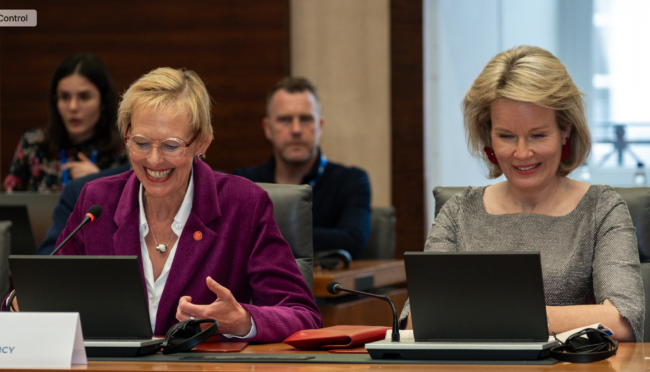
Make Mothers Matter participated in the conference “Investing in an inclusive and fair future for Europe. European Child Guarantee: from engagement to reality“, organised within the framework of the Belgian presidency of the Council of the European Union at the Egmont Palace in Brussels on May 2nd and 3rd, 2024. It was inaugurated by the Belgian Minister for Social Integration and Poverty Alleviation, Karine Lalieux. The presence and participation of Her Majesty Queen Mathilde of Belgium, underscored the conference’s significance in combating child poverty across Europe.
Three years after the adoption of the European Child Guarantee in June 2021, by the EU Council, stakeholders assessed the progress of its execution. The discussion centered on Member States’ initiatives to ensure access to quality education, healthcare, adequate nutrition, and housing.
The event included representatives of the EU Commission, the EU Parliament, the European Child Guarantee national coordinators, and NGOs (specifically, members of the Alliance for investing in children of which MMM is a member).
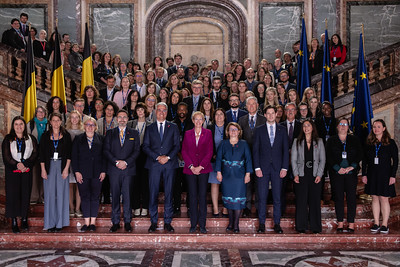 The conference presented the Member States’ advancements in tackling child poverty, given the alarming statistics: nearly 20 million children face poverty or social exclusion in the EU1.
The Alliance for Investing in Children presented its joint statement on this occasion. The statement emphasises the pivotal role of national social safety nets and the European Child Guarantee in combating child and family poverty.
The challenges encountered by European Child Guarantee coordinators and their mitigation strategies, along with the mid-term reporting process, were pivotal topics during the afternoon discussions. A considerable number of European coordinators shared insights and explored pertinent evaluation tools, underscoring the necessity for coordination and communication for effective implementation.
Here are some of the key points of the joint statement that the Alliance brought to the table:
- Over the last few years, child poverty has been exacerbated and disproportionately affected vulnerable families and children.
- Children from marginalised groups, including Roma and other racialised children, those in institutional care, single-parent households, children with disabilities, and children with a migrant background, are particularly vulnerable to poverty and its consequences.
- While the Child Guarantee presents unique opportunities, significant challenges remain in Member States to identify and reach the most vulnerable.
- We still lack adequate funding, robust and disaggregated data collection, integration with broader EU instruments, and stakeholder engagement.
- Some of the National plans submitted to the European Commission by the member states only catalogue pre-existing programmes and some Member States have not yet started implementing the planned measures.
- Civil society organisations face significant hurdles in engaging with this process due to the lack of formalised procedures.
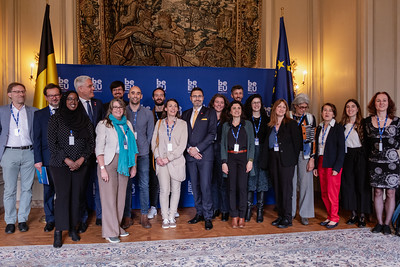 The Alliance recalled that investing in children and their families to lift them out of poverty is crucial for several reasons. In particular to:
- Break the intergenerational cycle of poverty by investing in children and their families today.
- To create a more cohesive society by ensuring that all children and their households have access to a core set of essential services including quality education, postnatal care and social support.
Access the full statement
1 UNICEF 2024 Report: The State of Children in the European Union.
 Share
Share Share
Share Print
Print Email
Email
Maternal Psychological Wellbeing: A Challenge and a Unique Opportunity
13.01.26
Wednesday 28 January 2026 | 15:15 – 17:30 GMT London School of Economics & Political Science (LSE) – Live broadcast #MaternalWellbeingLSE Maternal mental health is one of the most pressing

Climate Change: A Maternal Physical and Mental Health Emergency
13.11.25
In the lead-up to the UN climate change conference in Belem, Brazil (COP30), MMM was delighted to collaborate with Dr. Saravanan Thangarajan, a Visiting Scientist & Faculty member at Harvard

Democracy on Hold: The Hidden Penalty for Parliamentarians Who Become Mothers
27.11.25
The European Parliament adopted a legislative resolution on the amendment of the European Electoral act, allowing Members to vote in plenary by proxy voting during pregnancy and after giving birth.