Final adoption of the Work-life balance Directive
22.07.19

Following its adoption by the Council of the EU and the European Parliament, the Work-life balance Directive has been finally published in the Official Journal on the 12th of July 2019. The Directive sets a number of minimum standards at EU level for parental, paternity and carer’s leave, and the right to request flexible working arrangements (telework, flexible schedules and reduction of working time.
After two years of intensive work, MMM is glad that this directive has been adopted and that MMM has been able to participate in the legislative process to convey the needs of families.
All Members States have until August 2022 to comply with this new Directive and the European Commission will closely follow its transposition at national level.
MMM calls on the European Commission to continue its work on work-life balance and notably to focus on the provision of time, choice on childcare and long term care, recognition of unpaid care work, services to families and financial resources for all European families. In particular, we believe the next step should be the revision of the maternity leave Directive.
 Share
Share Share
Share Print
Print Email
Email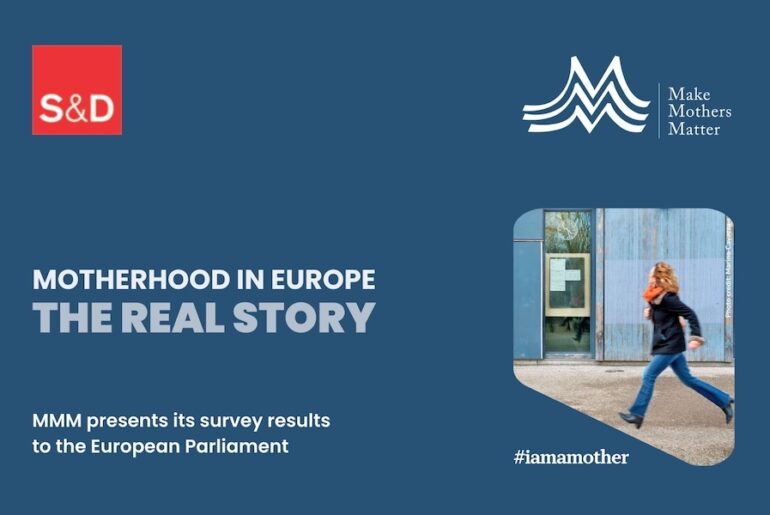
Europe Must Listen to Mothers: Our landmark report heads to the European Parliament
28.08.25
On 22 September 2025, the voices of mothers will take centre stage in Brussels. For the first time, Make Mothers Matter (MMM) will present its State of Motherhood in Europe

Belgian Mothers Face Alarming Rates of Burnout and Perinatal Depression, New EU Survey Finds
03.07.25
Belgian mothers are facing a mental health crisis. According to the State of Motherhood in Europe 2024 survey by Make Mothers Matter (MMM) and Kantar, Belgium reports the highest rates

Parental Mental Health Takes Centre Stage at the French National Assembly
02.04.25
Paris, France – On April 2nd, Make Mothers Matter was honoured to have key findings from its State of Motherhood in Europe 2024 report cited at the French National Assembly