MMM calls for placing Motherhood at the centre of gender equality
17.01.25
On the occasion of the 30th anniversary of the Beijing Declaration and Platform for Action (1995), MMM was invited to participate in an expert’s hearing organised by the European Economic and Social Committee (EESC).
The event, titled “EESC contribution to the EU’s priorities at the UNCSW69,” aimed at gathering perspectives from international organisations, civil society, researchers, and women in leadership. The goal was to review the state of play of gender equality initiatives, to share best practices, and to identify impactful actions for the future.
The EESC’s recommendations from this hearing will inform the European Commission and Council in preparing the EU’s priorities for the Sixty-ninth session of the UN Commission on the Status of Women – CSW69- . These insights will also guide the EESC’s contributions to discussions at side events and interactions with UN representatives, EU institutions, and other stakeholders.
MMM’s intervention focused on explaining why Motherhood remains a central yet undervalued issue in gender equality, as highlighted by our recent survey of mothers in the EU, conducted in colaboration with leading research and data analytics company Kantar.
Women, particularly mothers, shoulder the majority of unpaid care work, which is essential for the functioning of families, communities, and economies. However, this work remains unrecognised and undervalued, perpetuating economic and social injustices for mothers, often referred to as the Motherhood Penalty.

Some of the key challenges that remain :
1 Unequal distribution of care work :
- 79% of women do daily housework, compared to 36% of men
- Care responsibilities fall disproportionately on mothers (49% of women vs. 6% of men)
2 Economic impacts :
- Gender pay gap (GPG) in the EU stands at 12.7%; the pension gap is 29%, leaving women more vulnerable to poverty, especially in old age
- Gaps often originate with the birth of the first child and worsen with more children
- Even in countries with strong childcare systems (e.g., France, Sweden), the GPG remains significant
3 Financial dependency :
- Many women, especially mothers, lack financial independence
- 21% of women living in the EU as a couple depend on a single-earner partner compared to 6% of men
- Vulnerable groups like single mothers and migrant or rural mothers face heightened risks of poverty
4 Social and career barriers :
- Mothers often take precarious, part-time, or informal jobs to accommodate caregiving, impacting career progression, skills development, and health
Positive Aspects :
- Care work fosters valuable soft skills like empathy, multitasking, and problem-solving, which can enhance social inclusion and employability. However, these skills are undervalued and unrecognized

MMM’s recomendations :
- Recognise unpaid care work as essential to society and the economy. Introducing for example, “care credits” to fairly account for employment breaks due to caregiving; adoptig a life cycle approach for carers; recognising and validating caregiving skills; promoting female entrepreneurship and business ownership as a strategic investment
- Reduce the amount of unpaid care work through policies like affordable childcare, generous and wellpaid parental leaves, and flexible working arrangements
- Redistribute care work more equally between genders and within society. Supporting for example family-friendly policies in companies
- Time poverty. Unpaid care work leads to “time poverty,” depriving women of opportunities for decent work, financial autonomy, and participation in community life
- Learning from Nordic countries. While Nordic countries provide strong childcare infrastructure and progressive leave policies, persistent gender pay gaps and unequal care responsibilities highlight the limitations of current systems. Systemic change is necessary to deconstruct gender norms and redefine economic systems
- Wellbeing Economy. Redesigning economic systems around care and wellbeing would improve health, equity, and sustainability while addressing the patriarchal roots of current models. Wellbeing must become central to economic priorities, focusing on care for people and the planet
MMM believes that supporting caregiving roles—especially those carried out by mothers—is not an expense but a vital investment, and the only way to ensure gender equality.
 Share
Share Share
Share Print
Print Email
Email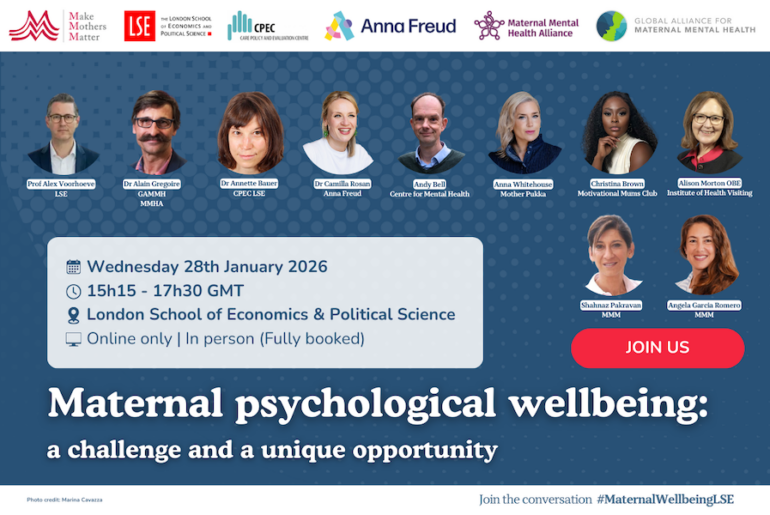
Maternal Psychological Wellbeing: A Challenge and a Unique Opportunity
13.01.26
Wednesday 28 January 2026 | 15:15 – 17:30 GMT London School of Economics & Political Science (LSE) – Live broadcast #MaternalWellbeingLSE Maternal mental health is one of the most pressing

Climate Change: A Maternal Physical and Mental Health Emergency
13.11.25
In the lead-up to the UN climate change conference in Belem, Brazil (COP30), MMM was delighted to collaborate with Dr. Saravanan Thangarajan, a Visiting Scientist & Faculty member at Harvard
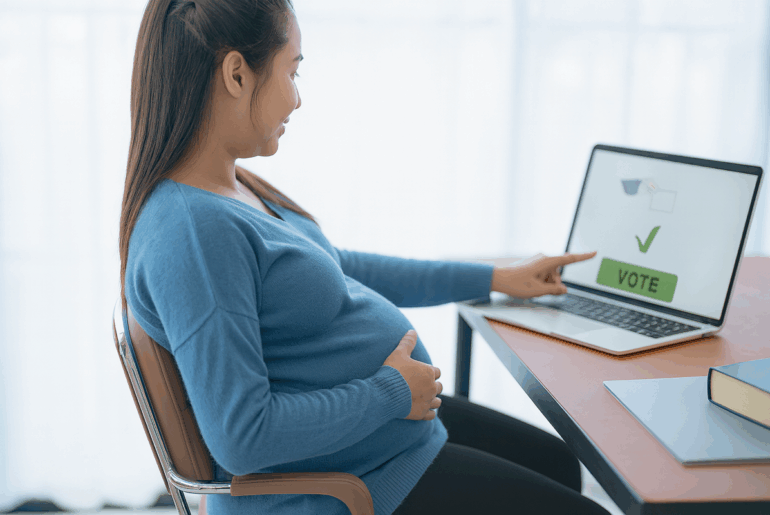
Democracy on Hold: The Hidden Penalty for Parliamentarians Who Become Mothers
27.11.25
The European Parliament adopted a legislative resolution on the amendment of the European Electoral act, allowing Members to vote in plenary by proxy voting during pregnancy and after giving birth.