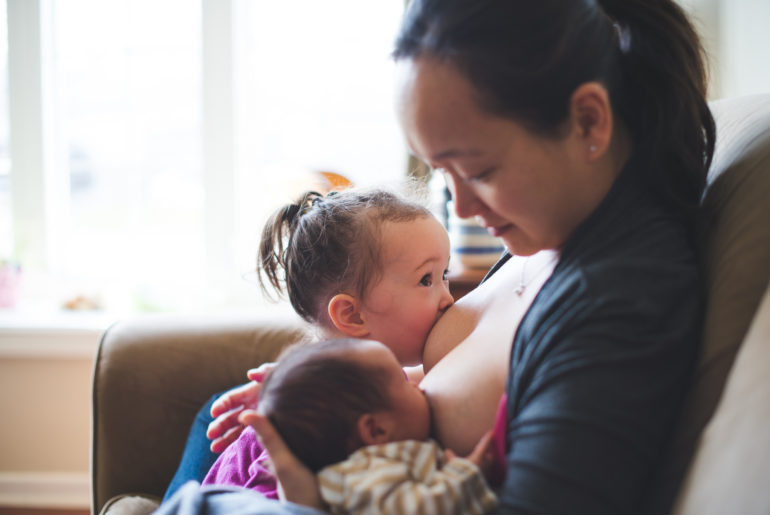
Mothers must be recognised and supported as essential drivers of social development
08.01.25
UN New York - Thirty years after the first World Summit on Social Development in Copenhagen, where Member States committed to prioritise the eradication of poverty, full employment and social inclusion in development policies, much still needs to be done, in particular for mothers and their families. Our written statement to the 63rd UN Commission for Social Development – which will take place 10-14 February – highlights how governments are failing to support mothers as pivotal drivers of social development, given the issue of unpaid care work remains unaddressed.
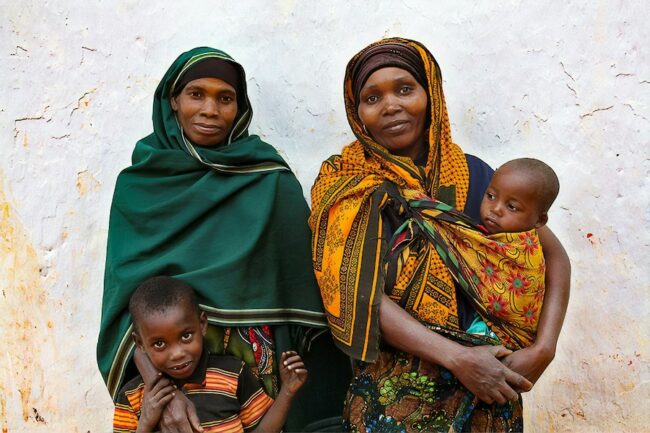
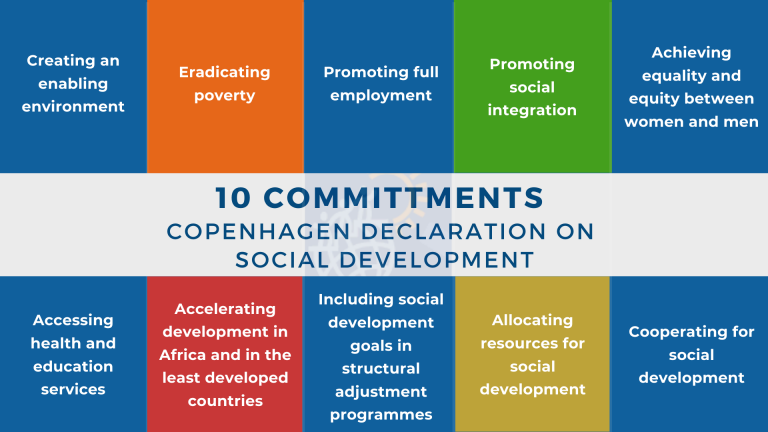
 Despite calling for placing “people at the centre of development” – recognising families and women as key agents of social development – and committing to fulfilling “our responsibility for present and future generations”, most signatory States to the 1995 Copenhagen Declaration and Programme of Action fail to acknowledge the specific contribution of mothers, and to intentionally enable their transformative potential. In today’s world, not only is mothering usually unsupported and undervalued, but it also happens in an environment of policies and social norms that often penalises mothers.
As the primary educators and caregivers of the generation to come, mothers play an essential role in ensuring social development. Their wellbeing is therefore crucial to ensure that their children grow in a safe, healthy and nurturing environment and develop to their full potential to be able to contribute to society later in life. Child-rearing, household management and caring are the backbone of a functioning society.
Yet, the inequitable distribution of the unpaid work of caring and educating children, which is mainly performed by mothers, remains a barrier to gender equity and achieving social development.
Mothers and children are amongst the most vulnerable to poverty, social exclusion, and violence. The multiple and intersecting global crises we face increase their unpaid care work and responsibilities and exacerbate these vulnerabilities. When priorities shift from providing public services to debt servicing, mothers pay the highest price. When austerity policies reduce investment in healthcare, education or social protection, mothers have to adapt and perform the work public services no longer provide. Environmental degradation and climate change also affect women disproportionately.
The Copenhagen Declaration puts at its core human wellbeing. In order to ensure communities’ sustainable wellbeing and prosperity, it is imperative to recognise that it can only be achieved if mothers, who nurture and raise the adults of tomorrow, are given proper space and means to thrive.
The right of women to fully participate in all areas of life regardless of their maternal status is also a matter of social justice. Women should not be penalised for being mothers. To create more equitable and inclusive societies, one needs to properly recognise, value and support unpaid care work, and promote a more equitable distribution of this vital work.
Although not explicit in the Copenhagen Declaration, unpaid care work is crucial to achieving its goals.
Our written statement to the Commission calls upon decision-makers to prioritise policies that recognise and support the invaluable work of caregivers, beginning with mothers. As preparations begin for a 2nd World Summit on Social Development (to be held in November 2025 in Qatar), it also offers recommendations to centre care in all policymaking towards the realisation of the 10 commitments of the 1995 Copenhagen Declaration.
 Read our full written statement – as submitted or as a UN document (ref E/CN.5/2025/NGO/44)
 Share
Share Share
Share Print
Print Email
Email
Maternal Psychological Wellbeing: A Challenge and a Unique Opportunity
13.01.26
Wednesday 28 January 2026 | 15:15 – 17:30 GMT London School of Economics & Political Science (LSE) – Live broadcast #MaternalWellbeingLSE Maternal mental health is one of the most pressing

Climate Change: A Maternal Physical and Mental Health Emergency
13.11.25
In the lead-up to the UN climate change conference in Belem, Brazil (COP30), MMM was delighted to collaborate with Dr. Saravanan Thangarajan, a Visiting Scientist & Faculty member at Harvard

Democracy on Hold: The Hidden Penalty for Parliamentarians Who Become Mothers
27.11.25
The European Parliament adopted a legislative resolution on the amendment of the European Electoral act, allowing Members to vote in plenary by proxy voting during pregnancy and after giving birth.