The Future of the Right to Education: Make Mothers Matter at UNESCO to Bring Parents’ Voices Forward
15.12.25
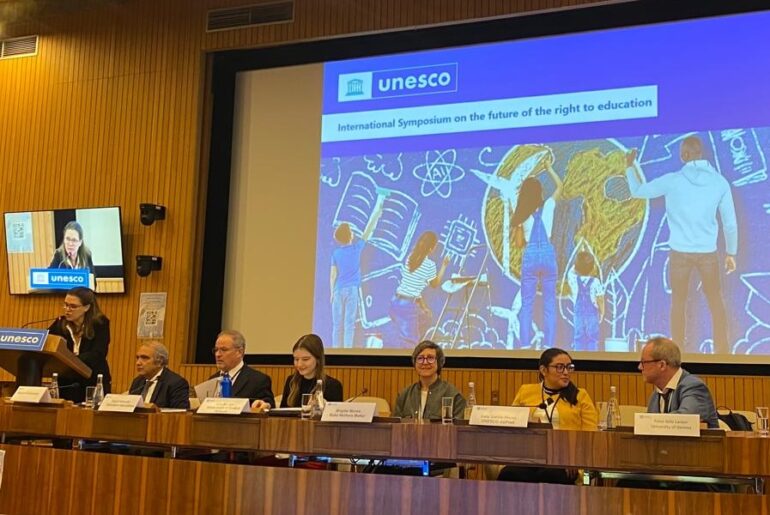
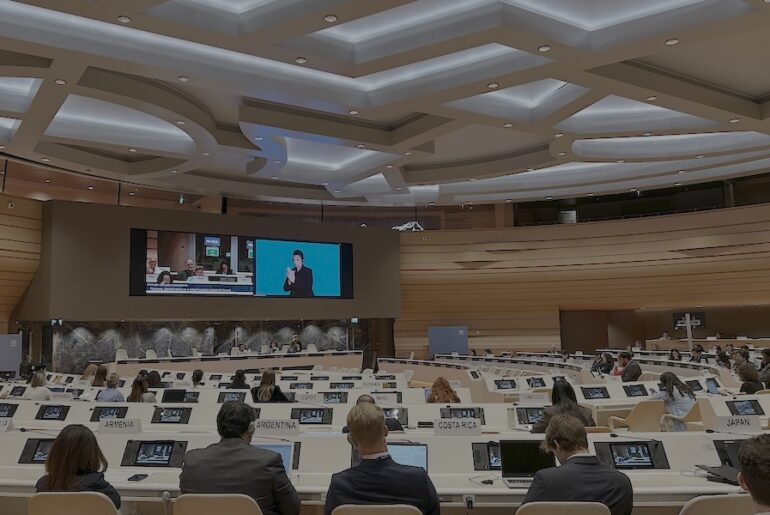
UNESCO, Paris – On the occasion of the 65th anniversary of the 1960 Convention against Discrimination in Education, UNESCO brought together the global community at an International Symposium on the Future of the Right to Education, held on 9 December 2025 at UNESCO Headquarters in Paris. Make Mothers Matter (MMM) played an active role in this event.
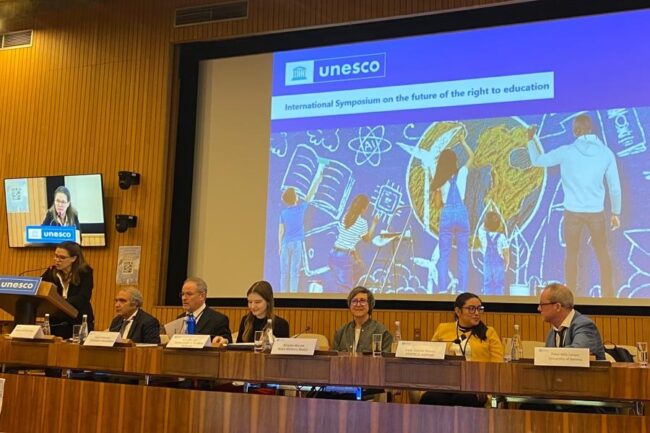
A Key Moment to Reaffirm Global Commitments
This event marked:
- The conclusion of the 11th consultation on the 1960 Convention
- The launch of the 2025 Global Report on the Right to Education
The symposium provided an opportunity to assess progress made, identify persistent gaps, and define pathways for action to strengthen a human-rights-based approach to education, through 2030 and beyond.
A Space for Global Dialogue
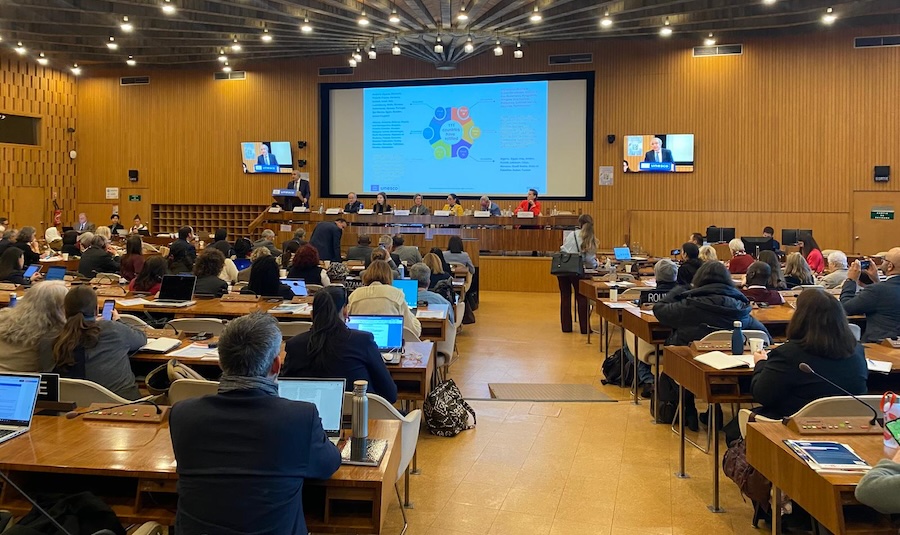
The event brought together:
- Representatives of Member States and permanent delegations
- UN agencies and intergovernmental organizations
- NGOs and civil society
- Social partners
- Young people and students
- Educators, researchers, and experts
Objective: To mobilise new commitments and strengthen partnerships to guarantee the right to education for all, in line with Sustainable Development Goal 4 (SDG 4).
MMM Brings the Voice of Parents
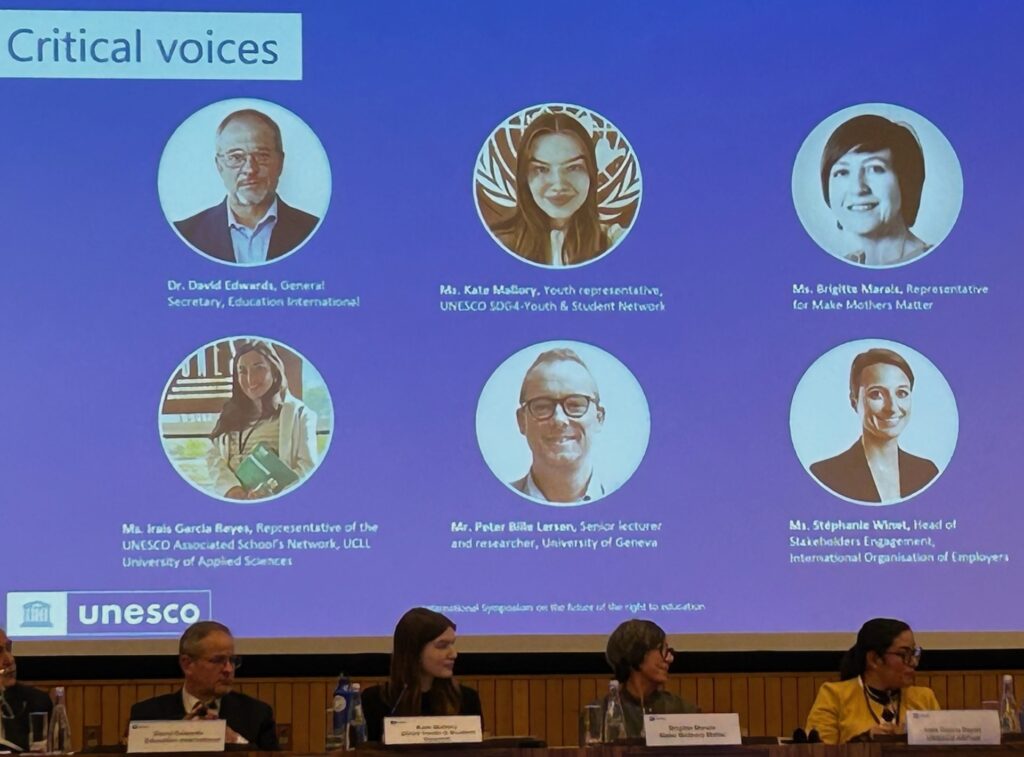
Brigitte Marais, Head of the MMM UNESCO Team, spoke to convey testimonies from MMM member associations actively working on the ground:
AJAD, EALE, Fondation Hubi & Vinciane, Life for African Mothers, Fundación Isadora Duncan, Mothers for Peace, Glow Movement NPO, Mothers at Home Matter, Mothers Matter Canada, Mulheres A Obra, Otitsara, Sœurs Augustine du Saint Esprit and Viallaite.
What Parents Are Saying: Education Must Change Now
Through a consultation conducted with parents from 13 countries across different regions, MMM relayed a unanimous message: education must adapt to today’s challenges.
- Progress, but Still Too Many Children Excluded
“School must truly become a school for everyone.”
- Education Oriented Toward Real Life
Parents want schools to develop life skills, adaptability, digital skills, and understanding of AI.
“Preparing our children for a changing world must become the priority.”
- Parents as Primary Partners in Education
Parents often detect the first signs of bullying or learning difficulties and are calling to be fully integrated into education systems.
“The future of education cannot be built without us.”
- Persistent Inequalities, especially in Africa
Lack of infrastructure, insufficient teacher training, and menstrual insecurity are major obstacles – particularly for girls.
Yet educating girls has a direct impact on future generations: an educated mother passes education on to her children.
“No girl should ever miss school – let alone drop out – due to a lack of adequate facilities.”
- Clear Priorities
– Ensure girls’ access to education
– Value and train teachers
– Modernise curricula
– Support families
– Reduce the digital divide
“Supporting families means building a stronger society. Educating girls means changing the future.”
An Important Recognition: MMM Invited by the Office of the High Commissioner for Human Rights
Following her intervention, Brigitte Marais was invited by the Office of the United Nations High Commissioner for Human Rights to contribute to the development of the Early Childhood Care and Education (ECCE) Guiding Principles – an essential recognition of the role of mothers in education from the earliest years.
 Share
Share Share
Share Print
Print Email
Email
Europe Must Listen to Mothers: Our landmark report heads to the European Parliament
28.08.25
On 22 September 2025, the voices of mothers will take centre stage in Brussels. For the first time, Make Mothers Matter (MMM) will present its State of Motherhood in Europe
Belgian Mothers Face Alarming Rates of Burnout and Perinatal Depression, New EU Survey Finds
03.07.25
Belgian mothers are facing a mental health crisis. According to the State of Motherhood in Europe 2024 survey by Make Mothers Matter (MMM) and Kantar, Belgium reports the highest rates

Parental Mental Health Takes Centre Stage at the French National Assembly
02.04.25
Paris, France – On April 2nd, Make Mothers Matter was honoured to have key findings from its State of Motherhood in Europe 2024 report cited at the French National Assembly