Enhancing Women’s Equity and Global Development
18.02.26
UN New York - Invitation to MMM side-event to the upcoming
→ Register here
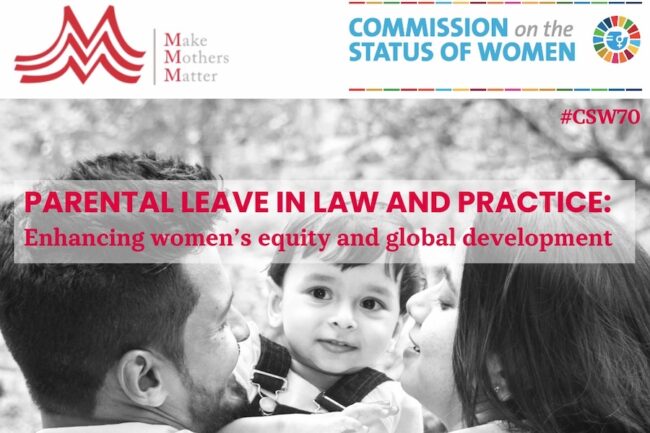
As the global community gathers for CSW70 under a renewed commitment to women’s equity and shared prosperity, one question sits at the heart of inclusive development yet remains insufficiently addressed: How can societies ensure that every parent – mother, father, and caregiver – has the legally mandated time and support needed for women’s economic equity, and to nurture the next generation?
Maternity, paternity, and parental leave policies are among the most powerful but underleveraged tools for advancing women’s economic participation, accelerating men’s involvement in caregiving, strengthening family well-being, and shaping the foundations of equitable, peaceful societies. Far beyond workplace entitlements, they are engines of human capital development and catalysts for achieving multiple SDGs – from gender equality and decent work to health, education, and reduced inequalities.
This CSW70 side event invites governments, private sector leaders, and civil society actors to engage in a timely, evidence-based discussion on why legally mandated leave is essential for global development and what it will take to expand, finance, and normalize its use worldwide. The conversation will address:
- Why maternity, paternity, and parental leave are cornerstones of gender equity, influencing women’s labour force participation, pay equity, leadership pathways, and shared caregiving norms
- Why leave is also a global development imperative, linked to early childhood outcomes, macroeconomic growth, family mental health, and intergenerational well-being
- Where the world currently stands with legal parental leave, highlighting current status across regions and income groups in the design and enforcement of legally mandated leave. Highlighting case studies of different countries, capturing the diversity of parental leave approaches
- What leave looks like in practice, including barriers such as stigma, informal work, weak enforcement, and workplace cultures that discourage uptake – especially among fathers.
- How public, private and civil society sectors can strengthen implementation, across diverse national contexts, through, inter alia, innovative partnerships and campaigns, targeted or localised efforts, supportive organisational norms, family-friendly policies, etc.
At a moment when countries are rethinking care systems, investing in human capital, and confronting widening inequality gaps, this discussion offers a rare opportunity to reimagine parental leave as a universal, strategic driver of development rather than a cost to be absorbed.
Provisional list of speakers
- Elizabeth Werner, Associate Director, Center for the Transition to Parenthood at Columbia University
- Julia Braunmiller, Women, Business and the Law Initiative at the World Bank
- Jose Campi Portaluppi, Head of Advocacy of Equimundo
- Sarah Steinberg, Global Public Policy Partnerships at LinkedIn
- Valentina Perrotta, Ph.D., Adjunct Director of the National Secretariat for Care, Ministry of Social Development of Uruguay
- Aissata Camara, Commissioner of the Office of International Affairs, City of New York
- Farah Arabe, UN Representative and Member of the Board of Directors, Make Mothers Matter & Founder, itotheN | Intergenerational Impact (Moderator)
→ Register here
 Share
Share Share
Share Print
Print Email
Email
Maternal Psychological Wellbeing: A Challenge and a Unique Opportunity
13.01.26
Wednesday 28 January 2026 | 15:15 – 17:30 GMT London School of Economics & Political Science (LSE) – Live broadcast #MaternalWellbeingLSE Maternal mental health is one of the most pressing

Climate Change: A Maternal Physical and Mental Health Emergency
13.11.25
In the lead-up to the UN climate change conference in Belem, Brazil (COP30), MMM was delighted to collaborate with Dr. Saravanan Thangarajan, a Visiting Scientist & Faculty member at Harvard
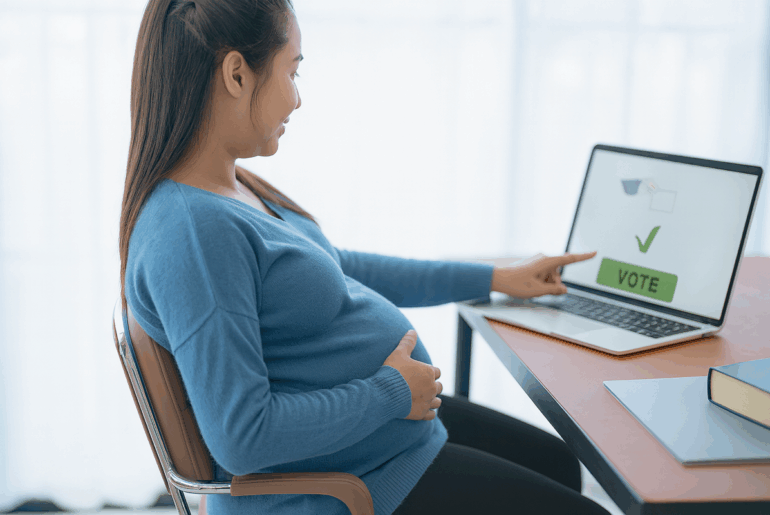
Democracy on Hold: The Hidden Penalty for Parliamentarians Who Become Mothers
27.11.25
The European Parliament adopted a legislative resolution on the amendment of the European Electoral act, allowing Members to vote in plenary by proxy voting during pregnancy and after giving birth.