A new social contract cannot ignore care
16.06.24
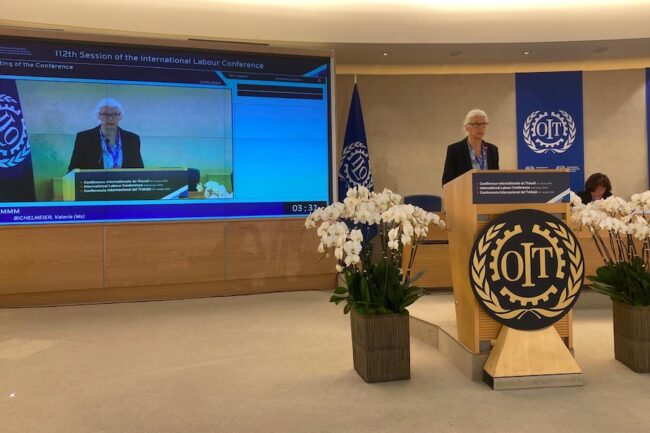
UN Geneva, 112th International Labour Conference (ILC) – MMM contributed to the discussion on the International Labour Organisation Director General’s report calling for a new social contract.
Our key messages:
- We fully agree that a new social contract is urgently needed, but it requires bold structural transformations
- A new social contract must be embedded into systemic transformations, beginning with the economy. It is time to redefine what we call development and progress, move away from the GDP growth narrative, and repurpose our economic systems and policy-making, so that the economy first serves the long-term wellbeing of people and the planet, and supports the work of caring for each other and for our natural environment. We urgently need an economy which is in the service of life and sustainable and inclusive wellbeing for all – the basis of social justice
- A new social contract must support a more equitable distribution of unpaid care and domestic work, first between men and women, but also across society. Women have long shouldered the majority of both paid and unpaid care work. The resulting costs in terms of lost income and opportunities, all too often translates into poverty, especially in old age. Care should be a collective responsibility, with every stakeholder, including the private sector taking its share of responsibility and costs. A paradigm shift is therefore also needed in the world of work, from families, mothers in particular, adapting to companies, to companies adapting to families and the realities of care
- A new social contract must ensure access to and the provision of essential services and universal access to social protection, and call for urgent implementation of social protection floors worldwide. This is particularly important for women who are mothers, who suffer specific discriminations and challenges – a “motherhood penalty”, which is at the root of social and economic injustice for many.
In summary, we called for a new social contract that kickstarts a care society as promoted by the Buenos Aires commitments, where the value of care work, whether paid or unpaid, is recognized as valuable and essential work, adequately supported and fairly distributed as per the principle of co-responsibility.
 Read MMM’s full statement, which was delivered in the 112th International Labour Conference‘s plenary on 12 June 2024 by Valerie Bichelmeier, our Vice-President.
This statement was supported by the Global Coalition for Social Protection floors, of which MMM is a member.
 Share
Share Share
Share Print
Print Email
Email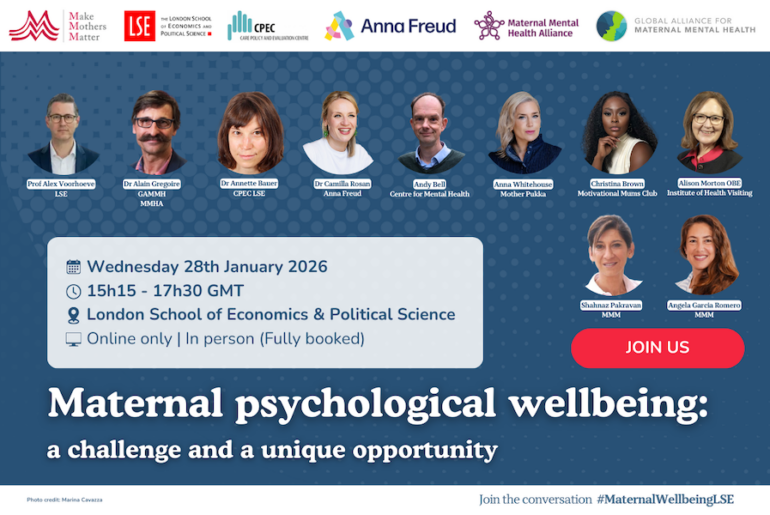
Maternal Psychological Wellbeing: A Challenge and a Unique Opportunity
13.01.26
Wednesday 28 January 2026 | 15:15 – 17:30 GMT London School of Economics & Political Science (LSE) – Live broadcast #MaternalWellbeingLSE Maternal mental health is one of the most pressing

Climate Change: A Maternal Physical and Mental Health Emergency
13.11.25
In the lead-up to the UN climate change conference in Belem, Brazil (COP30), MMM was delighted to collaborate with Dr. Saravanan Thangarajan, a Visiting Scientist & Faculty member at Harvard
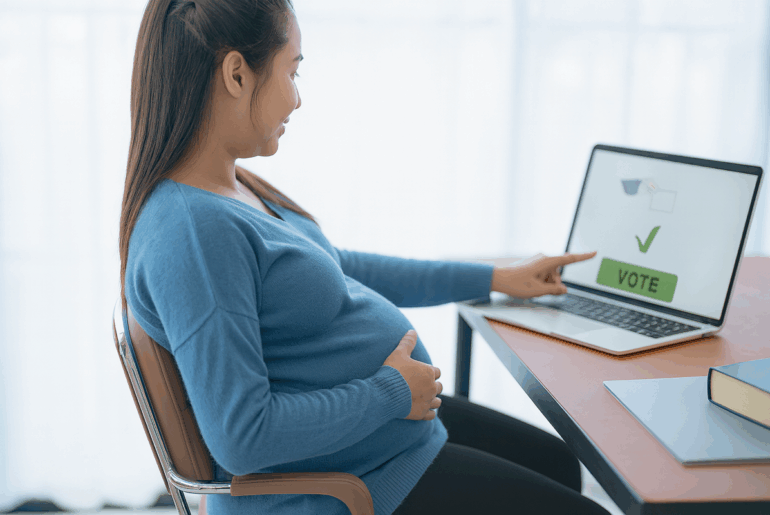
Democracy on Hold: The Hidden Penalty for Parliamentarians Who Become Mothers
27.11.25
The European Parliament adopted a legislative resolution on the amendment of the European Electoral act, allowing Members to vote in plenary by proxy voting during pregnancy and after giving birth.