Care – and mothers – must be at the center of systemic changes to our economy
15.09.20
UN Geneva, Human Rights Council - During the discussion on the impact of Covid-19 on Human Rights, MMM echoes the UN SG on the importance of Care, and calls on governments to move towards a more caring economic model.
“The pandemic has shown us who is doing the work that really matters: nurses, teachers, care workers. As we recover, we need to remember this. It is time to end the inequities of unpaid care work and create new economic models that work for everyone”
Antonio Guterres, UN Secretary-General,
Town Hall with Young Women from Civil Society Organizations on 31 August 2020
We at MMM fully agree but place MOTHERS alongside teachers, nurses and care workers. Mothers have also played a key role in keeping their children, families and communities together.
The crisis has shown what really matters: It has all been about care and education, and the people performing these duties. Whether paid or unpaid, they must be better recognized and supported
The Covid-19 crisis gives us a unique opportunity to “build back better” and it starts with our economy. We MUST move away from an economy that prioritizes GDP growth and profit-making over the wellbeing of people and the planet.
Instead we must design a new caring economic model that values, recognizes and enables the conditions for us all to care and be cared for.
A few governments have started to move to a “wellbeing economy” and are showing us the way.
We call on the UN and member States to support such a shift by establishing a new platform to discuss indicators to replace GDP and to drive us towards a caring new economic model.

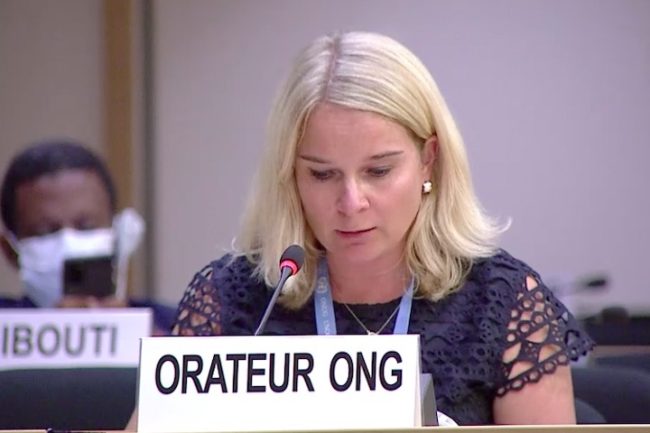
MMM Oral Statement for download
Karen Thorsen delivered this statement on behalf of MMM on 15 September during the General Debate on Item 2 of the 45th Session of the Human Rights Council.
 Share
Share Share
Share Print
Print Email
Email
Europe Must Listen to Mothers: Our landmark report heads to the European Parliament
28.08.25
On 22 September 2025, the voices of mothers will take centre stage in Brussels. For the first time, Make Mothers Matter (MMM) will present its State of Motherhood in Europe
Belgian Mothers Face Alarming Rates of Burnout and Perinatal Depression, New EU Survey Finds
03.07.25
Belgian mothers are facing a mental health crisis. According to the State of Motherhood in Europe 2024 survey by Make Mothers Matter (MMM) and Kantar, Belgium reports the highest rates

Parental Mental Health Takes Centre Stage at the French National Assembly
02.04.25
Paris, France – On April 2nd, Make Mothers Matter was honoured to have key findings from its State of Motherhood in Europe 2024 report cited at the French National Assembly