Mothers: The Missing Link in Child Rights Discussions?
01.08.25
UN New York – Following the Human Rights Council's 2025 Annual day on the rights of the child – which focussed on Early Childhood Development – a resolution on that same topic will be tabled at the 80th UN General Assembly in September. MMM has joined forces with other members of Child Rights Connect – a network of child rights organisations – to propose language and content for this resolution and has also contributed to a comprehensive report designed to inform it and promote early childhood development.
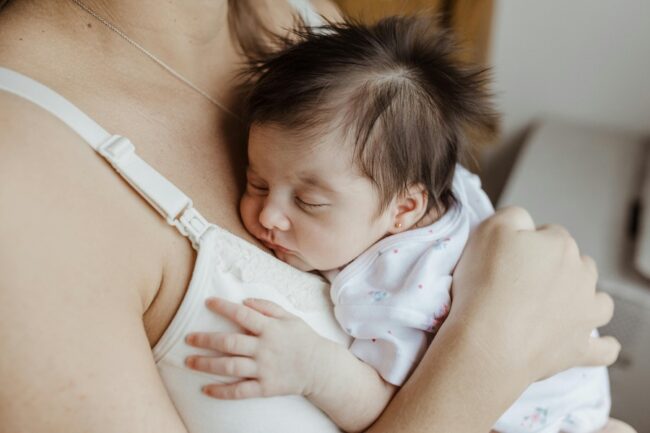
Child rights advocates often overlook the family environment and the vital role of parents – particularly mothers – even though this is crucial to protecting children’s rights especially during pregnancy and the critical early years.
Our contributions to the report aimed to redress this:
- Drawing on findings from our State of Motherhood in Europe 2024 Survey, we highlighted the prevalence of maternal mental health issues, which are widespread and have profound negative impacts on early childhood development
- We also drew attention to the motherhood penalty – the specific forms of discriminations and economic disadvantages that women face when they become mothers – which can also indirectly hinder a child’s physical, cognitive and emotional development.
Caring for a child during the early years is absolutely vital and often rewarding, but also time-consuming, strenuous work which is unpaid and unrecognised. Fathers’ limited involvement in caregiving roles, although increasing in certain geographical and cultural contexts, reinforces traditional gender stereotypes, placing most caregiving responsibilities on mothers.
This inequitable distribution of care work and responsibilities is at the root of gender inequalities: motherhood carries high cost for women, in particular in terms of lost earnings, aborted careers, financial dependence and limitations of pension rights.
It also affects their health, in particular their mental health. In a 2024 survey conducted across 11 European countries and the UK, half of the mothers surveyed reported mental health issues – a huge number that requires immediate action.
Our main recommendations:
- Early Childhood Development (ECD) policies should form part of a broader national care policy framework – one that recognises and supports unpaid care work, and redistribute it more fairly between men and women, as well as across society, with families, communities, the private sector and governments at every level sharing costs and responsibilities
- ECD policies must promote fatherhood involvement: engaging fathers from the outset is a triple win benefiting mothers, children and men themselves. Until this is widely achieved, however, ECD policies must acknowledge that in most families it is primarily the mother – often assisted by her own mother or other female relatives – who carries the main responsibility for caring for babies and young children
We hope our perspectives will be reflected in the forthcoming UN General Assembly resolution, encouraging the member states to develop cross-sectoral policies in support of early childhood development.
 Read the full report The right to a good start in life: a child’s right to a holistic early child development
 Share
Share Share
Share Print
Print Email
Email
Maternal Psychological Wellbeing: A Challenge and a Unique Opportunity
13.01.26
Wednesday 28 January 2026 | 15:15 – 17:30 GMT London School of Economics & Political Science (LSE) – Live broadcast #MaternalWellbeingLSE Maternal mental health is one of the most pressing

Climate Change: A Maternal Physical and Mental Health Emergency
13.11.25
In the lead-up to the UN climate change conference in Belem, Brazil (COP30), MMM was delighted to collaborate with Dr. Saravanan Thangarajan, a Visiting Scientist & Faculty member at Harvard
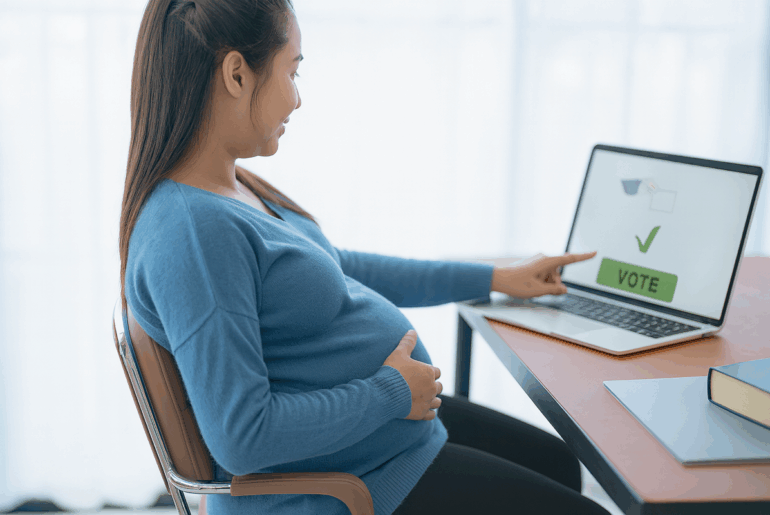
Democracy on Hold: The Hidden Penalty for Parliamentarians Who Become Mothers
27.11.25
The European Parliament adopted a legislative resolution on the amendment of the European Electoral act, allowing Members to vote in plenary by proxy voting during pregnancy and after giving birth.