Informal education must be recognized, parents better supported
05.07.20
UN Geneva, Human Rights Council - At the meeting with the Special Rapporteur on the right to education, MMM drew attention to how, In the context of the pandemic and imposed lockdown, the demand for unpaid care work and informal education has increased and reinforced pre-existing gender inequalities in sharing this essential work.
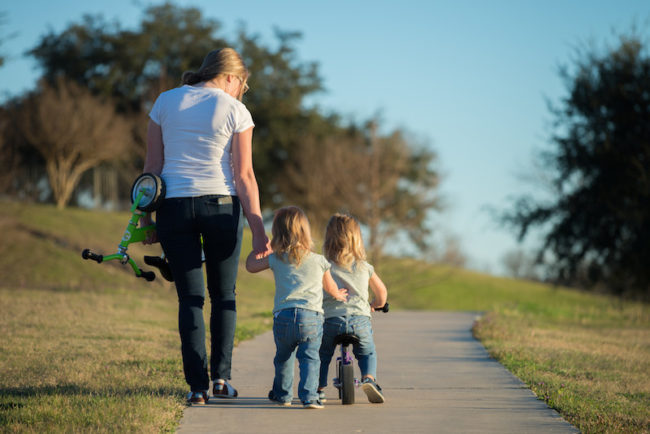
Before the lockdowns, parents, in particular mothers, were already facing difficulties raising their children under proper conditions, often juggling between their educational responsibilities and their need to make a living.
With widespread school closures, added unpaid childcare provision has disproportionally fallen on mothers. A British sociologist from Kent University even refers to a “return of the 1950’s housewife”. Home schooling has also put an additional strain on mothers.
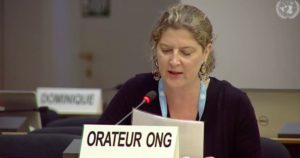
Mélanie Nédélec delivering the Statement on behalf of MMM
In addition to the health crisis, the economic hardship brings uncertainties and fears, which can feed discrimination and xenophobia. In this instance, informal education in the family is crucial. It is indeed within the family that life-skills are learned, and that the transmission of values such as respect and tolerance takes place.
In conclusion, MMM called on Member States to recognize the important role of informal education, and to support parents, especially mothers, by enabling them to fulfill this role under proper conditions.
 MMM Oral Statement for download
MMM delivered its during the Interactive Dialogue with the UN Special Rapporteur on the Right to Education, which took place on 3rd July during the 44th Session of the UN Human Rights Council.
 Share
Share Share
Share Print
Print Email
Email
Europe Must Listen to Mothers: Our landmark report heads to the European Parliament
28.08.25
On 22 September 2025, the voices of mothers will take centre stage in Brussels. For the first time, Make Mothers Matter (MMM) will present its State of Motherhood in Europe
Belgian Mothers Face Alarming Rates of Burnout and Perinatal Depression, New EU Survey Finds
03.07.25
Belgian mothers are facing a mental health crisis. According to the State of Motherhood in Europe 2024 survey by Make Mothers Matter (MMM) and Kantar, Belgium reports the highest rates

Parental Mental Health Takes Centre Stage at the French National Assembly
02.04.25
Paris, France – On April 2nd, Make Mothers Matter was honoured to have key findings from its State of Motherhood in Europe 2024 report cited at the French National Assembly