MAV: Turning the Challenges of Motherhood into Professional Opportunities
14.12.24

We are happy to announce MMM’s participation in the EU funded MAV (Mom Virtual Assistant) Project, an innovative initiative designed to empower new mothers by providing them with high-quality training in digital, transferable, and entrepreneurial skills.
Launched in November 2023, this Erasmus+ collaborative project unites four organisations—Leader Srl, The Apartment, Nantik Lum, and MMM—from Italy, Spain, and Belgium, to drive meaningful change in work-life balance and women’s employment across Europe.
Research by organisations such as the ILO, OECD, and UN Women highlights the significant challenges women face in the labour market after childbirth. These obstacles include the gender pay gap, difficulty achieving a sustainable work-life balance, limited access to the labour market post-maternity leave, and challenges in maintaining employment. Yet, through motherhood, women acquire invaluable soft skills that are particularly relevant in today’s fast-paced digital work environments. These skills deserve recognition and validation.
The MAV project seeks to address these challenges by offering high-quality training tailored to develop in-demand digital, transferable, and entrepreneurial skills. This training not only equips mothers with the tools to thrive in the labour market but also leverages the unique soft skills they have gained through motherhood to empower and elevate them professionally.
The project specifically targets working-age women with children aged 0 to 6, whose labour force participation is disproportionately affected compared to other mothers (ILO). Furthermore, the innovative methodology behind the training model ensures it is replicable across diverse contexts, enabling vocational training programs to adapt to the ever-evolving demands of the labour market.
 The MAV Project seeks to:
- Equip new mothers with digital, transferable, and entrepreneurial skills
- Empower new mothers to utilise their new skills acquired through motherhood in their professional lives
- Offer training organisations a flexible and tailored training which addresses the needs and the very busy schedule of mothers
In this regard, the MAV Project will develop:
- A Compendium, already available on the MAV website, which gathers good practices in the sector
- Training Course for mothers leveraging their motherhood skills in a digital open-source format
- Trainer Toolkit supporting the adaptation and implementation of the MAV project training model
Our role in this project is to raise awareness about the challenges faced by mothers in the labour force, and to identify and share effective practices that help eliminate barriers preventing mothers from entering or returning to the workforce.
Additionally, we advocate for the recognition in the EU of the unique soft skills developed through motherhood as essential and valuable. Much like volunteering, motherhood fosters the development of critical soft skills that should be acknowledged as a form of meaningful experience.
 Share
Share Share
Share Print
Print Email
Email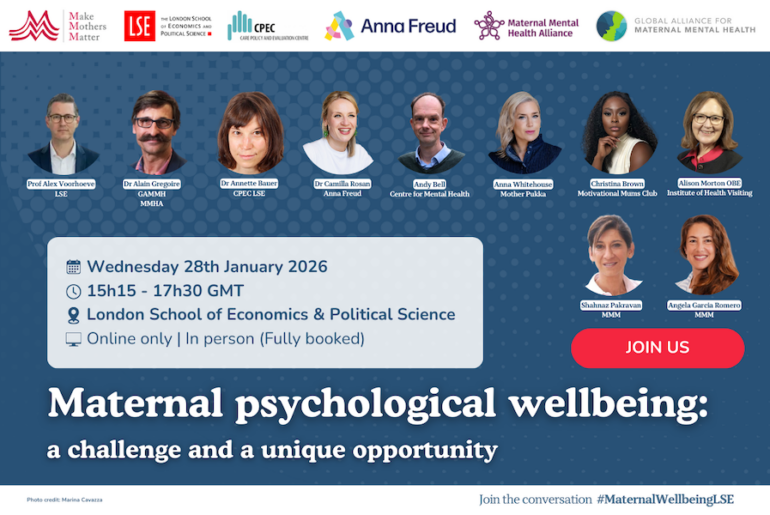
Maternal Psychological Wellbeing: A Challenge and a Unique Opportunity
13.01.26
Wednesday 28 January 2026 | 15:15 – 17:30 GMT London School of Economics & Political Science (LSE) – Live broadcast #MaternalWellbeingLSE Maternal mental health is one of the most pressing

Climate Change: A Maternal Physical and Mental Health Emergency
13.11.25
In the lead-up to the UN climate change conference in Belem, Brazil (COP30), MMM was delighted to collaborate with Dr. Saravanan Thangarajan, a Visiting Scientist & Faculty member at Harvard
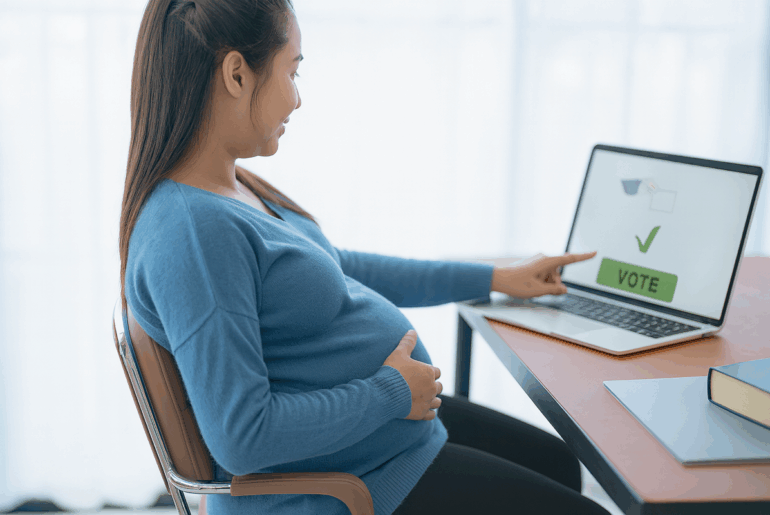
Democracy on Hold: The Hidden Penalty for Parliamentarians Who Become Mothers
27.11.25
The European Parliament adopted a legislative resolution on the amendment of the European Electoral act, allowing Members to vote in plenary by proxy voting during pregnancy and after giving birth.