MMM supports the idea of a job guarantee scheme to redress the inequities of care work
30.06.23
UN Geneva, Human Rights Council - According to the UN special Rapporteur on poverty, a job guarantee could help solve the paradox of having an insufficient number of jobs on the one hand, and un-met societal needs on the other hand - which is the case particularly in the care sector. During the discussion which followed the presentation of his report, MMM welcomed this interesting proposal as it could help address the lack of care services, and support a redistribution of unpaid care and domestic work. However, we also highlighted the need for such a job guarantee to ensure that enough men take up care jobs.
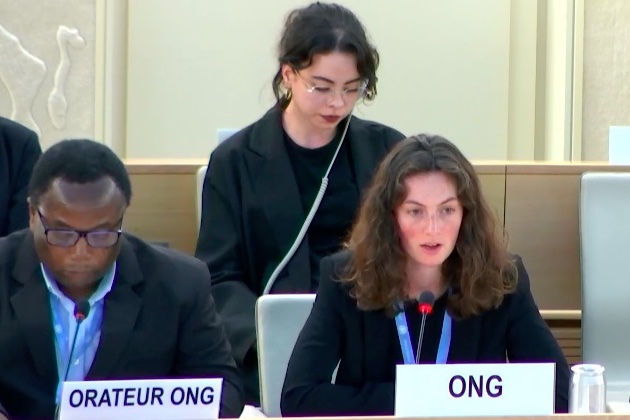
The following is the full text of our statement.
Make Mothers Matter thanks the special rapporteur for his excellent report on The employment guarantee as a tool in the fight against poverty.
As pointed out, there is a paradox between the insufficient number of jobs and un-met societal needs, in particular in the care sector.
Women, especially mothers, assume the majority of unpaid domestic and care work. This is at the root of gender inequality, and the cause of much economic hardship and poverty.
At the same time, childcare services are lacking, and, more generally, care services face serious deficiencies as they are not yet recognized as a public good or part of public provisions.
We agree that a job guarantee scheme could help solve this paradox by creating care jobs – a solution to unemployment or under employment. This would also help to recognize, reduce and redistribute women’s disproportionate share of unpaid domestic work; and enable them to devote time to activities outside the home.
However, care must be taken to avoid perpetuating gender stereotypes. The job guarantee could and should in fact boost men to take up caring jobs, thus indirectly encouraging them to shoulder their share of unpaid family work at home.
By answering societal needs, employment guarantee schemes can be the cornerstone of a new economic system that puts the wellbeing of people and the planet first.
We at MMM therefore fully support the Special Rapporteur’s proposal and recommendations. We call on governments to use this job guarantee to redress the inequities of care work and transition to wellbeing economies.

Constance Nothomb, MMM UN Representative, delivered this oral statement during the interactive dialog, which followed the presentation of the annual report of Olivier de Schutter, UN Special Rapporteur on extreme poverty and human rights on . This dialog took place on 30 June as part of the 53rd session of the Human Rights Council.
 Share
Share Share
Share Print
Print Email
Email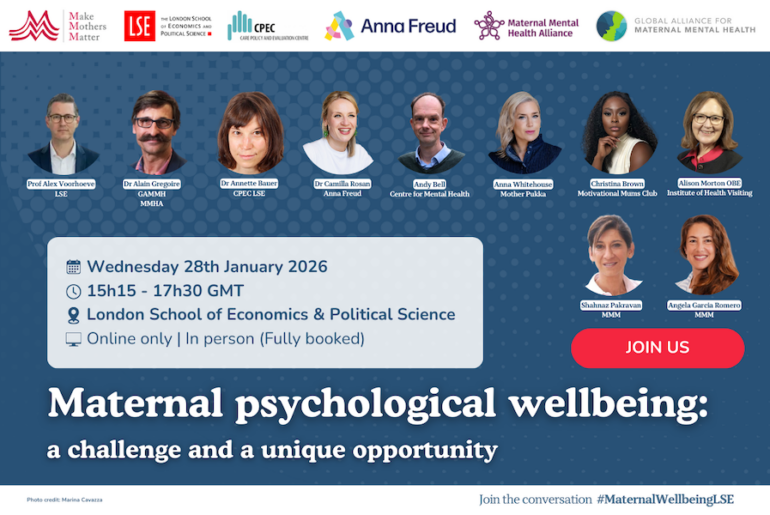
Maternal Psychological Wellbeing: A Challenge and a Unique Opportunity
13.01.26
Wednesday 28 January 2026 | 15:15 – 17:30 GMT London School of Economics & Political Science (LSE) – Live broadcast #MaternalWellbeingLSE Maternal mental health is one of the most pressing

Climate Change: A Maternal Physical and Mental Health Emergency
13.11.25
In the lead-up to the UN climate change conference in Belem, Brazil (COP30), MMM was delighted to collaborate with Dr. Saravanan Thangarajan, a Visiting Scientist & Faculty member at Harvard
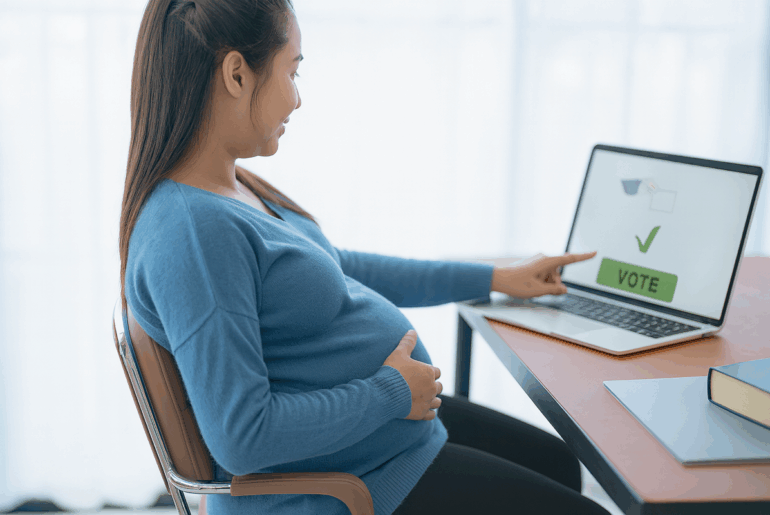
Democracy on Hold: The Hidden Penalty for Parliamentarians Who Become Mothers
27.11.25
The European Parliament adopted a legislative resolution on the amendment of the European Electoral act, allowing Members to vote in plenary by proxy voting during pregnancy and after giving birth.