MMM’s Joint contribution to the European Commission Public Consultation on the Child Guarantee
12.10.20
On 7 October 2020, MMM, together with its partners at the Alliance for Investing in Children and with the European Parents' Association, responded to the Public Consultation on the Road Map for the Child Guarantee, an initiative meant to ensure that all children in Europe who are at risk of poverty, social exclusion, or are otherwise disadvantaged, have access to essential services of good quality.

It will recommend that EU countries invest in and develop strategies and action plans to ensure that children in need have access to free or affordable services such as:
- Education, including early childhood education & care
- Healthcare, nutrition & housing
- Culture & leisure activities
 These contributions highlighted the importance of such a guarantee and welcomed the European Commission’s commitment to advancing the development of the guarantee as a Council Recommendation with an implementation and monitoring framework.
The response also called on the European Commission to incorporate a rights-based approach through the inclusion of the pillars 1 and 3 of the 2013 Investing in Children Council recommendation. This means incorporating parents’ access to resources and children’s access to decision making.
Parents’ inadequate access to resources
This point has been emphasised in the findings of the feasibility study as a main driver of child poverty. It is true that poor children grow up in poor families and although children’s access to affordable quality services and participation in culture and leisure activities are crucial for their development and for ensuring equal opportunities for all, there is a need to support parents and primary caregivers in their role and ensure they have adequate income to sustainably provide this support. Their participation in the labour market through decent jobs, fair minimum wages, access to adequate unemployment benefit and minimum income, as well as non-stigmatising in-kind support and tailored benefits are crucial components of preventing and tackling child poverty and social exclusion. This is particularly important in the context of COVID-19, which is generating increased child and family poverty and social exclusion due to reduced working, growing unemployment, low levels of income support and rising prices. The Alliance for investing in children proposed that parents’ access to resources under each service area of the Child Guarantee Recommendation is incorporated.
We underlined the need for measures that support parents in their free choices 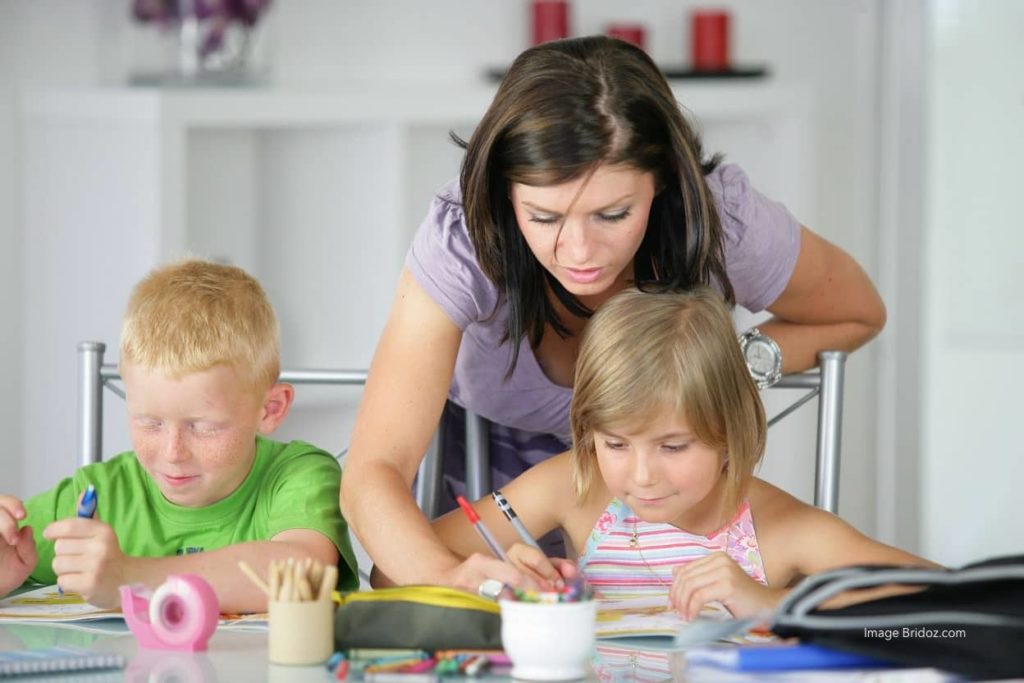 during their lifetime. Parents, particularly mothers, who will see their career development at risk if they choose to devote time to take care of their children, or whose skills are not recognised when trying to re-enter the labour market (after career breaks) or whose pension gap is going to increase exponentially if they take time to care for their children, have not been allowed to make real free choices (for mothers this is the so called ‘motherhood penalty’). Mothers have fought for many years to be able to spend time with their children at home before returning to work and only recently, has it become possible in a number of countries, for fathers to benefit from parental leave as well.
Research in neuroscience demonstrates that the early years of a child’s life are crucial in establishing good mental health, to develop their cognitive capacities and to build emotional skills. [1]All parents need to be active in this critical period. If we want a society that is inclusive and where nobody is left behind, we need to work with and accompany parents.
Families as a whole need to be given the possibility of get out of the trans generational trap of poverty.
It is important to consider families as a source of social cohesion and as a resource for society as a whole and to value and respect their role and their choices. Policy measures have to ensure that vulnerable families also make an informed choice. When a family is informed and accompanied, access to services such as health, housing, job opportunities, training, and other resources becomes easier for them. Additionally, they can then use the resources, infrastructures, and knowledge to better help all the family members to step out of precarious situations.
 In addition parents should be able to freely choose between formal or informal ECEC. The focus should not only be on improving formal care settings (which is very important) but also on establishing a supporting infrastructure for parents and families in the form of home visiting programs or other community-based ECEC where not only educators but also parents, social workers, health professionals come together to accompany children and their parents during these first years. This has been recognised as an effective way of working and improving the precarious situation of families at risk.
If we want to talk about costs, investing in families has a strong economic return!
Furthermore it is important that the voices of children growing up in poverty and social exclusion (e.g. children in institutional care, and those with disabilities) are heard in all decision-making processes that affect their lives at local, national and EU level. Children should participate as partners in the development and monitoring of the national multiannual strategies and Child Guarantee Action Plans.
We also called for the implementation of the Child Guarantee tailored to the challenges and needs of each country, increasing the national ownership of the initiative. Although we recognise that the four target groups of children in vulnerable situations identified by the Feasibility Study on the Child Guarantee (Phase I.) -children with disabilities, children in institutions, children in migration, children growing up in precarious situations – are among the most vulnerable and should therefore be particularly supported.
Access contributions Alliance4investing in Children,
Answer Pub. Consultation Child Guarantee MMM, EPA
__________
 Share
Share Share
Share Print
Print Email
Email
Maternal Psychological Wellbeing: A Challenge and a Unique Opportunity
13.01.26
Wednesday 28 January 2026 | 15:15 – 17:30 GMT London School of Economics & Political Science (LSE) – Live broadcast #MaternalWellbeingLSE Maternal mental health is one of the most pressing

Climate Change: A Maternal Physical and Mental Health Emergency
13.11.25
In the lead-up to the UN climate change conference in Belem, Brazil (COP30), MMM was delighted to collaborate with Dr. Saravanan Thangarajan, a Visiting Scientist & Faculty member at Harvard
Democracy on Hold: The Hidden Penalty for Parliamentarians Who Become Mothers
27.11.25
The European Parliament adopted a legislative resolution on the amendment of the European Electoral act, allowing Members to vote in plenary by proxy voting during pregnancy and after giving birth.