No country can get ahead without the right to education for all
02.04.21
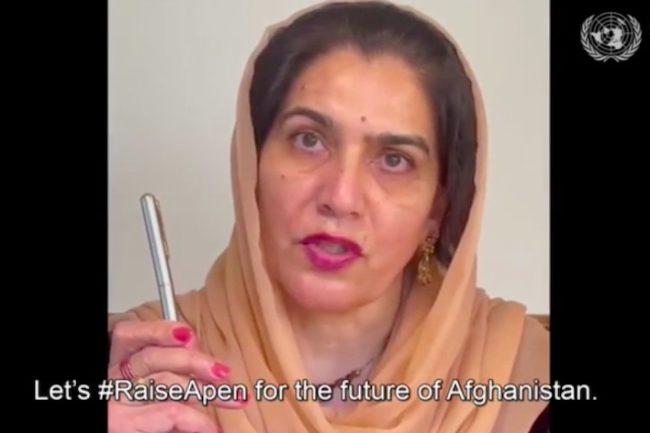
UN Geneva, HRC46 - This was the core message delivered at the UN Human Rights Council by Rahela Sidiqi, founder & Director of the Farkhunda Trust for Afghan Women's Education, an MMM associate member.
The following is the full statement.
At this moment of great urgency for Afghanistan, we at Farkhunda Trust, associate member of Make Mothers Matter, welcome the HRC report on Afghanistan with its particular emphasis on the promotion of women’s rights, and we call on the global community to prioritize the critical role that the right to education for ALL plays in protecting these rights.
The tangible gains made by Afghan women in recent years, including the right to education and employment, is in jeopardy. At the negotiating table in Doha, the Taliban are insisting that their interpretation of Islam must prevail in any future agreement. “Islamic Rights of Women and Tradition” is on the agenda but what does that entail? Does it mean going back to the days when women and girls’ rights were denied? What importance is being placed on the vital connection between the protection of women’s rights and peace and security?
No country can get ahead if half its population loses its rights to education and gets left behind.
Make Mothers Matter and the Georgetown Institute for Women Peace & Security are jointly launching a global Appeal. World leaders need to support it, as urgent action is needed now to ensure inclusive and equitable education. Without it, we risk not just an uncertain future for Afghan women and girls, but also challenges to peace, stability and development in Afghanistan, the greater region and the world.
Let’s #RaiseApen for the future of Afghanistan.

The statement was delivered during the 46th session of the UN Human Rights Council as part of the discussion on the High Commissioner’s report on the situation in Afghanistan, which in particular focused of women’s rights.
 Share
Share Share
Share Print
Print Email
Email
Europe Must Listen to Mothers: Our landmark report heads to the European Parliament
28.08.25
On 22 September 2025, the voices of mothers will take centre stage in Brussels. For the first time, Make Mothers Matter (MMM) will present its State of Motherhood in Europe
Belgian Mothers Face Alarming Rates of Burnout and Perinatal Depression, New EU Survey Finds
03.07.25
Belgian mothers are facing a mental health crisis. According to the State of Motherhood in Europe 2024 survey by Make Mothers Matter (MMM) and Kantar, Belgium reports the highest rates

Parental Mental Health Takes Centre Stage at the French National Assembly
02.04.25
Paris, France – On April 2nd, Make Mothers Matter was honoured to have key findings from its State of Motherhood in Europe 2024 report cited at the French National Assembly