Parents’ role in education must be recognized and better supported
29.06.23
UN Geneva, Human Rights Council - Speaking during the dialog with the special rapporteur on education, MMM reasserted the crucial role of parents, mothers in particular, for both formal and informal education, which happens daily within families. We also drew attention to the fact that the varying degrees of parental involvement create inequalities in education, an issue which must be addressed.
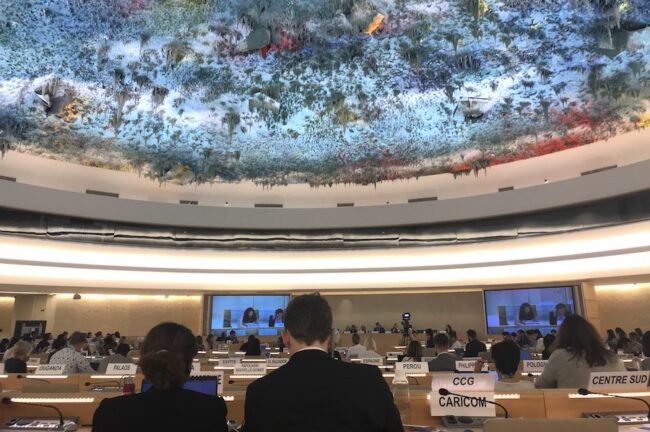
The following is the full text of our statement.
Make Mothers Matter congratulates the special rapporteur for her report on Securing the right to education : advances and critical challenges.
But we wish to emphasize that the role of parents in securing this right has been overlooked.
Parents, mothers in particular, play a pivotal role as children’s primary caregivers and educators, shaping their educational journey. Ignoring their central role undermines efforts to secure the right to education for all.
In particular:
- Parents play a crucial role in supporting their child’s formal education, notably through encouragements, coaching and homework assistance
- Parents also play a vital role in informal education through daily experience, imparting values, life skills, and supporting social-emotional development
Furthermore, the varying degrees of parental involvement create inequalities in education. Not all parents can engage in the same way due to lack of time and other reasons. Ignoring these disparities perpetuates educational inequality among children.
We therefore call on Member States and the international community to recognize and support the central role of parents, in particular mothers, in ensuring an inclusive and quality education.
This means:
- Providing comprehensive programs to enhance parents’ understanding of their crucial role in their children’s education, in particular during the early years
- Identifying and addressing barriers preventing parents’ involvement in education
- Building strong partnerships between educational institutions, governments and parents, fostering open communication and involving parents in decision-making processes
Let us empower parents as essential allies in achieving the right to education.

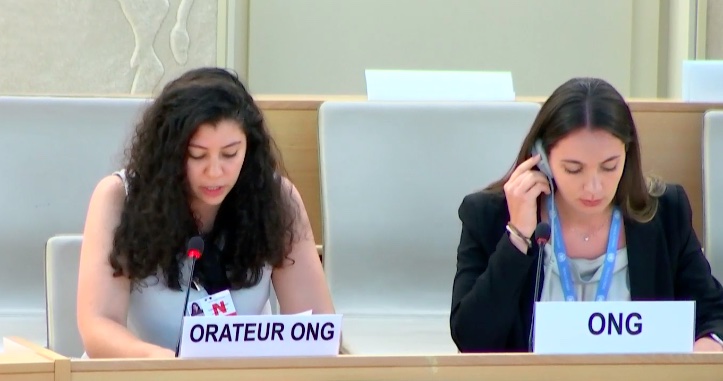
Melissa Barbottin, MMM UN Representative delivered this oral statement during the interactive dialog, which followed the presentation of the annual report of Farida Shaheed, UN Special Rapporteur on the Right to Education. This dialog took place on 27 June as part of the 53rd session of the Human Rights Council.
 Share
Share Share
Share Print
Print Email
Email
Europe Must Listen to Mothers: Our landmark report heads to the European Parliament
28.08.25
On 22 September 2025, the voices of mothers will take centre stage in Brussels. For the first time, Make Mothers Matter (MMM) will present its State of Motherhood in Europe
Belgian Mothers Face Alarming Rates of Burnout and Perinatal Depression, New EU Survey Finds
03.07.25
Belgian mothers are facing a mental health crisis. According to the State of Motherhood in Europe 2024 survey by Make Mothers Matter (MMM) and Kantar, Belgium reports the highest rates
Maternal Psychological Wellbeing: A Challenge and a Unique Opportunity
13.01.26
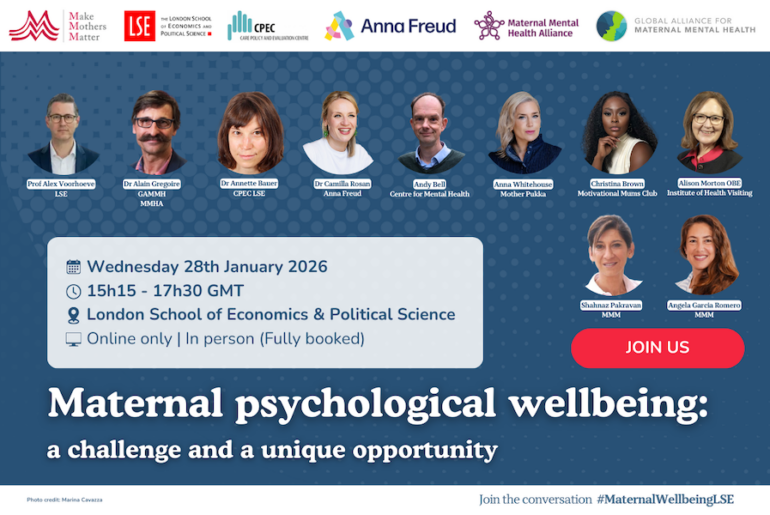
Wednesday 28 January 2026 | 15:15 – 17:30 GMT London School of Economics & Political Science (LSE) – Live broadcast #MaternalWellbeingLSE Maternal mental health is one of the most pressing