UN Chief denounces ‘the fiction that unpaid care work is not work’
26.07.20
The UN Secretary General Antonio Guterres delivered a strong and compelling message in his recent Nelson Mandela Lecture: 'Tackling the Inequality Pandemic: A new social contract for a new era’.

In his speech, he denounced amongst other “fallacies and falsehoods”, “the fiction that unpaid care work is not work”, an issue at the heart of MMM’s advocacy for over 70 years.
“COVID-19 has been likened to an x-ray, revealing fractures in the fragile skeleton of the societies we have built. It is exposing fallacies and falsehoods everywhere: The lie that free markets can deliver healthcare for all; the fiction that unpaid care work is not work; the delusion that we live in a post-racist world; the myth that we are all in the same boat. Because while we are all floating on the same sea, it’s clear that some are in super-yachts while others are clinging to drifting debris…. Inequality defines our time.”
He emphasized that COVID-19 is a human tragedy. But it has also created a generational opportunity. An opportunity to build back a more equal and sustainable world. Quoting Nelson Mandela he refers to Education as “the most powerful weapon we can use to change the world”.
By recognizing the dual importance of Care and Education, his words fuel the engine of our mission: to seek support and recognition for mothers as change makers for a better world.
It is with gratitude we receive his call to action as a powerful encouragement for our ongoing work.
 Share
Share Share
Share Print
Print Email
Email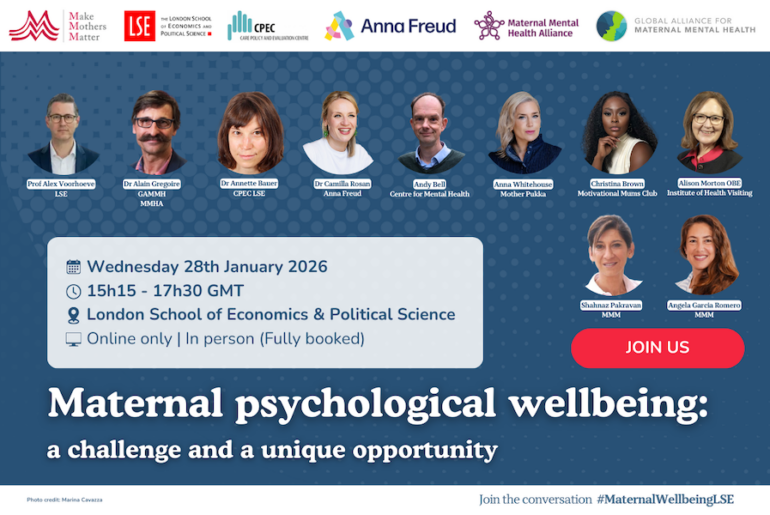
Maternal Psychological Wellbeing: A Challenge and a Unique Opportunity
13.01.26
Wednesday 28 January 2026 | 15:15 – 17:30 GMT London School of Economics & Political Science (LSE) – Live broadcast #MaternalWellbeingLSE Maternal mental health is one of the most pressing

Climate Change: A Maternal Physical and Mental Health Emergency
13.11.25
In the lead-up to the UN climate change conference in Belem, Brazil (COP30), MMM was delighted to collaborate with Dr. Saravanan Thangarajan, a Visiting Scientist & Faculty member at Harvard

Democracy on Hold: The Hidden Penalty for Parliamentarians Who Become Mothers
27.11.25
The European Parliament adopted a legislative resolution on the amendment of the European Electoral act, allowing Members to vote in plenary by proxy voting during pregnancy and after giving birth.