Democracy on Hold: The Hidden Penalty for Parliamentarians Who Become Mothers
27.11.25
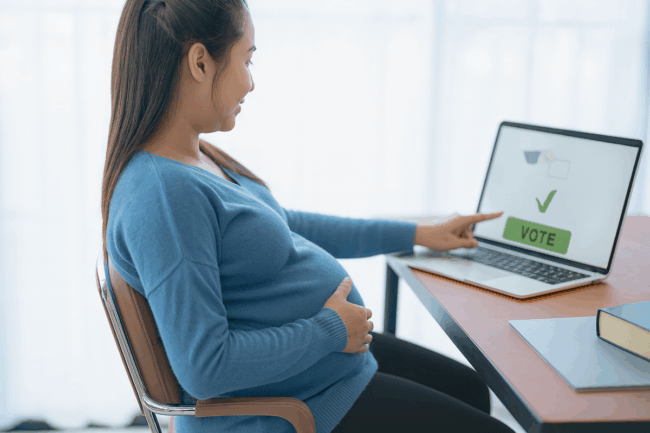
The European Parliament adopted a legislative resolution on the amendment of the European Electoral act, allowing Members to vote in plenary by proxy voting during pregnancy and after giving birth. The proposal led by the MEP Juan Fernando Lopez Aguilar from the Committee on Constitutional Affairs (AFCO) and originally initiated by Parliament President Roberta Metsola, seeks to ensure parliamentary rules reflect the needs of the elected representatives, so that no MEP loses her democratic voice during maternity.
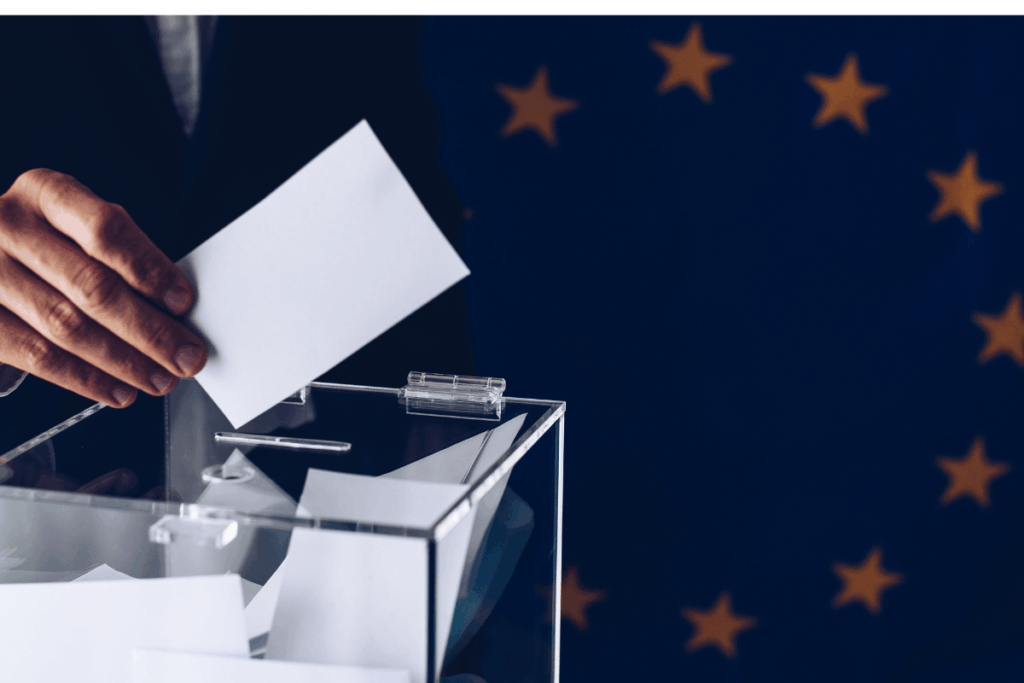
Under the proposal, an MEP could delegate their voting to a colleague for up to three months before the expected birth and six months after.
“No elected representative should ever have to choose between their vote and their child,” said López Aguilar. “Introducing proxy voting for MEPs on maternity leave strengthens democratic representation and ensures that voter’s voices continue to be heard.”
Make Mothers Matter welcomes this initiative, as it directly addresses one of the structural barriers that working mothers face in politics and beyond. By allowing MEPs to vote via proxy during pregnancy and after giving birth, the Parliament is helping to prevent discrimination linked to maternity, ensuring that women do not have to choose between fulfilling their democratic mandate and caring for their child. More broadly, this measure highlights the need to tackle workplace discrimination against mothers, promote equal opportunities, and create environments where maternity and caregiving responsibilities are recognised and supported rather than penalised.
This proposal received broad support in the AFCO Committee and was approved in plenary before being submitted to the Council, where unanimous approval from all EU Member States is required. The adoption of the proposal in full, signals a clear commitment to ensuring that no mother loses her democratic voice. This initiative represents a comprehensive commitment to advancing gender equality and facilitating work-life balance for all elected representatives, aligning parliamentary regulations with contemporary standards of professional practice.
Background: maternity leave and voting rules in the EU
Across the European Union, the rules governing maternity leave and voting procedures for parliamentarians differ significantly. The European Parliament, for example, recognises maternity-related absences as legitimate, but its rules still require every vote to be cast in person. The institution does not allow Members to vote remotely, by proxy, or through temporary substitution, meaning that an MEP on maternity leave is effectively unable to cast her vote. A similar pattern appears at national level. Most Member States offer maternity leave to parliamentarians, but few formally protect their voting rights during leave. Only Spain, Greece and Luxembourg have established systems that allow Members to vote in absence, for example through proxy arrangements.
Elsewhere, voting rights during maternity leave often depend on informal practices, such as “pairing” agreements between political groups, which offer no guaranteed protection of a Member’s vote. During the COVID-19 pandemic, several countries briefly introduced remote or hybrid voting, but in most cases these measures were temporary and have since been withdrawn. As a result, in much of Europe an elected representative who becomes a mother may lose her ability to vote for weeks or even months, leaving constituents without full representation at moments when key political decisions are being made.
In conclusion, president Metsola’s proposal seeks to update the European Electoral Act to reflect modern expectations around work-life balance and to ensure that pregnancy or childbirth no longer interrupts an MEP’s ability to fully exercise her mandate.
 Share
Share Share
Share Print
Print Email
Email
Maternal Psychological Wellbeing: A Challenge and a Unique Opportunity
13.01.26
Wednesday 28 January 2026 | 15:15 – 17:30 GMT London School of Economics & Political Science (LSE) – Live broadcast #MaternalWellbeingLSE Maternal mental health is one of the most pressing

Climate Change: A Maternal Physical and Mental Health Emergency
13.11.25
In the lead-up to the UN climate change conference in Belem, Brazil (COP30), MMM was delighted to collaborate with Dr. Saravanan Thangarajan, a Visiting Scientist & Faculty member at Harvard

State of Motherhood in Europe – key findings presented at the Congress of Women in Poland
31.10.25
Katowice, September 2025 — The State of Motherhood in Europe report was officially launched in Poland during the