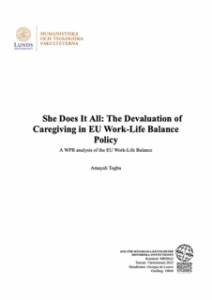
She Does It All: The Devaluation of Caregiving in EU Work–Life Balance Policy
28.11.25

Across Europe, mothers carry out vast amounts of unpaid care work that keeps families and societies functioning—yet much of this labour remains largely invisible in EU policy. A new study shared with Make Mothers Matter argues that, despite progress in parental leave and childcare provision, EU work–life balance measures continue to prioritise economic growth over the lived realities of mothers.
 At the centre of the research is a compelling concern: gender equality in the EU is still largely framed as getting more women into the labour market. While this is an important objective, current policy approaches often reduce caregiving to a means of facilitating employment, rather than recognising it as a valuable social contribution in its own right. According to the study, this narrow focus fails to reflect the lived realities of mothers, who perform continuous, skilled, and emotionally demanding work—childrearing, household organisation, and managing the mental load—that sustains families and enables all other social and economic activity.
The analysis draws on feminist theory and human-rights frameworks to highlight how this focus neglects the profound social value of unpaid care work, which is overwhelmingly carried by mothers. Mothers are often represented in relation to labour market demands rather than as individuals with diverse caregiving responsibilities and rights.
 The thesis underscores that caregiving is not a single, uniform experience. Many mothers face structural constraints, including rigid work cultures, limited access to flexible care options, financial pressures, and a lack of long-term institutional support for the unpaid care they provide. These pressures are particularly acute for single mothers, stay-at-home mothers, and working mothers navigating precarious conditions—groups whose experiences rarely appear in EU-level discussions. Such conditions limit their ability to make truly autonomous choices about work, care, and family life.
Finally, the study calls for maternal rights that go beyond pregnancy, birth, and post-partum care. It emphasises the need for long-term recognition and support for mothers’ unpaid care work as a “social good essential to society’s functioning“.
The thesis identifies several key problems in current EU approaches:
- Representation of mothers: often tied to labour-market productivity rather than caregiving realities.
- Care and work: care is valued mainly as a tool to support employment, not as a public good.
- Autonomy and choice: constrained by economic pressures and restrictive work structures.
- Rights and institutional support: many entitlements depend on employment status, income or employer discretion.
- Policy silences: intersectional inequalities affecting mothers are frequently overlooked.
As the researcher writes,
“Equality should not only mean equal access to work, pay or parental leave, it should also mean that all individuals, regardless of gender, can make autonomous choices without being limited by structural constraints. Only then can true freedom of choice and real (gender) equality be realised.”
Make Mothers Matter is grateful to Amayah Togba for dedicating her work to such an urgent and under-examined issue, and for choosing to share her findings with us.
Her thesis reinforces what mothers have long known—and what policymakers must finally recognise: caregiving is not a secondary activity but a cornerstone of social and economic wellbeing, and valuing it is essential to achieving genuine equality.
 Amayah Togba is a Human Rights graduate from the Faculty of Humanities and Theology at Lund University, Sweden.
Access the full thesis here.
 Share
Share Share
Share Print
Print Email
Email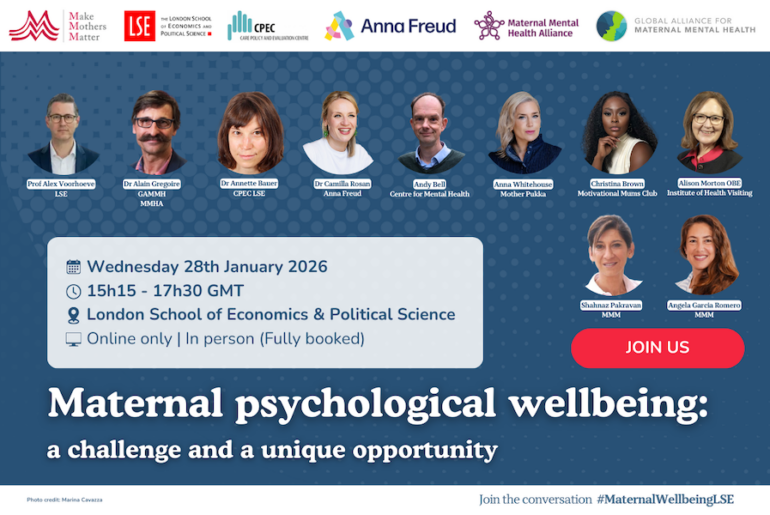
Maternal Psychological Wellbeing: A Challenge and a Unique Opportunity
13.01.26
Wednesday 28 January 2026 | 15:15 – 17:30 GMT London School of Economics & Political Science (LSE) – Live broadcast #MaternalWellbeingLSE Maternal mental health is one of the most pressing

Climate Change: A Maternal Physical and Mental Health Emergency
13.11.25
In the lead-up to the UN climate change conference in Belem, Brazil (COP30), MMM was delighted to collaborate with Dr. Saravanan Thangarajan, a Visiting Scientist & Faculty member at Harvard
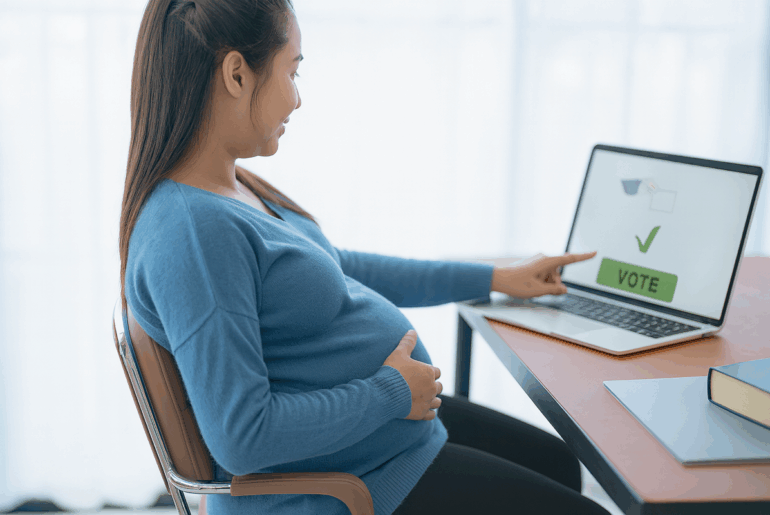
Democracy on Hold: The Hidden Penalty for Parliamentarians Who Become Mothers
27.11.25
The European Parliament adopted a legislative resolution on the amendment of the European Electoral act, allowing Members to vote in plenary by proxy voting during pregnancy and after giving birth.