A roadmap to eradicating poverty beyond growth must centre Care
15.10.25
UN Geneva – MMM welcomes the initiative led by Olivier de Schutter, the United Nations Special Rapporteur on Poverty, to establish a Roadmap for eradicating poverty beyond growth, and calls for the establishment of robust care systems as the foundation of a new economic system that prioritises the wellbeing of people and the planet.
In our written submission to this process, we highlight a fundamental reality: the care gap is a major driver of gender inequality and poverty. Unpaid care and domestic work, carried out primarily by women, in particular when they are mothers, prevents them from accessing decent work and from fully participating in society. This is economic injustice, keeping millions of women trapped in poverty.
The Covid-19 pandemic made this crystal clear: both paid and unpaid care work are essential for wellbeing, for the sustainability of life, and for the functioning of our families, communities and economies. Yet they remain undervalued and unsupported.
This is why we insist that a roadmap to eradicating poverty beyond growth must include the progressive building of strong care systems.
This means:
- Recognising care as a right and a collective responsibility shared by men and women, by governments, the private sector, and communities
- Recognising unpaid care as productive work, visible in statistics and supported by policies
- Ensuring universal social protection, including maternity protection and pension credits for unpaid carers
- Guaranteeing access to quality and affordable care services for children, older persons, and those with disabilities
- Promoting work-life balance and carers’ leave for both men and women so that families are not forced to choose between earning and caring
In our written submission, we also provide many concrete examples, from national laws to regional strategies, that show how care systems can be built in practice at both the national and local levels. These demonstrate that valuing and supporting care is not only possible, but transformative.
And care systems should not be seen as costs. They are investments with multiple returns:
- Better wellbeing and healthier child development, with long-term gains for education and employment
- Job creation in the care sector, which also contributes to public revenues through taxes and social security
- Increased women’s participation in the workforce, improving family incomes and strengthening economic autonomy for mothers
Our message is simple and urgent: care must be at the heart of the Roadmap. Without care, there is no economy, no wellbeing, and no future. But with strong care and equitable systems, we can truly eradicate poverty beyond growth and move towards a society that values and sustains life.
 Read here our full contribution
The initiative follows the Special Rapporteur’s 2024 report ‘Eradicating poverty beyond growth’ presented to the UN Human Rights Council, which challenged the prevailing growth-centric development model and traditional poverty reduction strategies that have failed to deliver on their promises, and advocated for a shift to a human rights economy ‒ an economic system that places the well-being of people and the planet at the heart of economic policies, investment decisions, consumer choices, and business models.
The objective of the initiative is to move from the why to the how.
MMM has participated in the initial call for input and fully supports this important initiative of the Special Rapporteur, which is still ongoing.
 Share
Share Share
Share Print
Print Email
Email
Maternal Psychological Wellbeing: A Challenge and a Unique Opportunity
13.01.26
Wednesday 28 January 2026 | 15:15 – 17:30 GMT London School of Economics & Political Science (LSE) – Live broadcast #MaternalWellbeingLSE Maternal mental health is one of the most pressing

Climate Change: A Maternal Physical and Mental Health Emergency
13.11.25
In the lead-up to the UN climate change conference in Belem, Brazil (COP30), MMM was delighted to collaborate with Dr. Saravanan Thangarajan, a Visiting Scientist & Faculty member at Harvard
Democracy on Hold: The Hidden Penalty for Parliamentarians Who Become Mothers
27.11.25
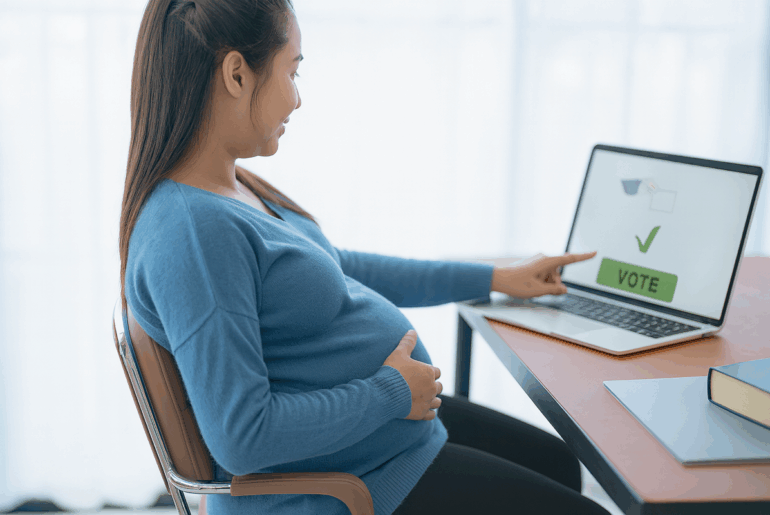
The European Parliament adopted a legislative resolution on the amendment of the European Electoral act, allowing Members to vote in plenary by proxy voting during pregnancy and after giving birth.