Supporting Families to end Child Poverty
19.05.26
Policymakers, researchers, and civil society organisations gathered at the European Parliament to discuss how stronger support for families can help tackle child poverty and inequality across Europe.
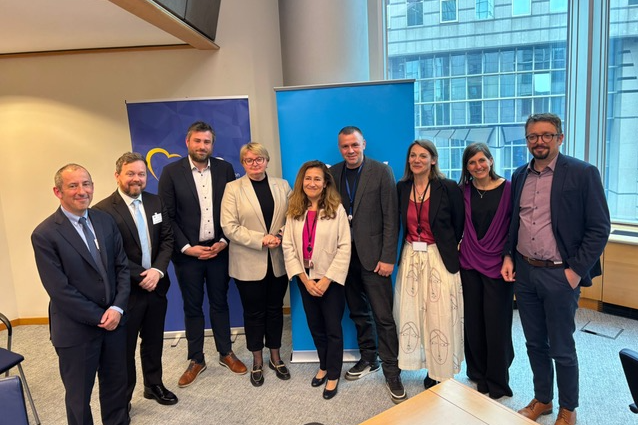
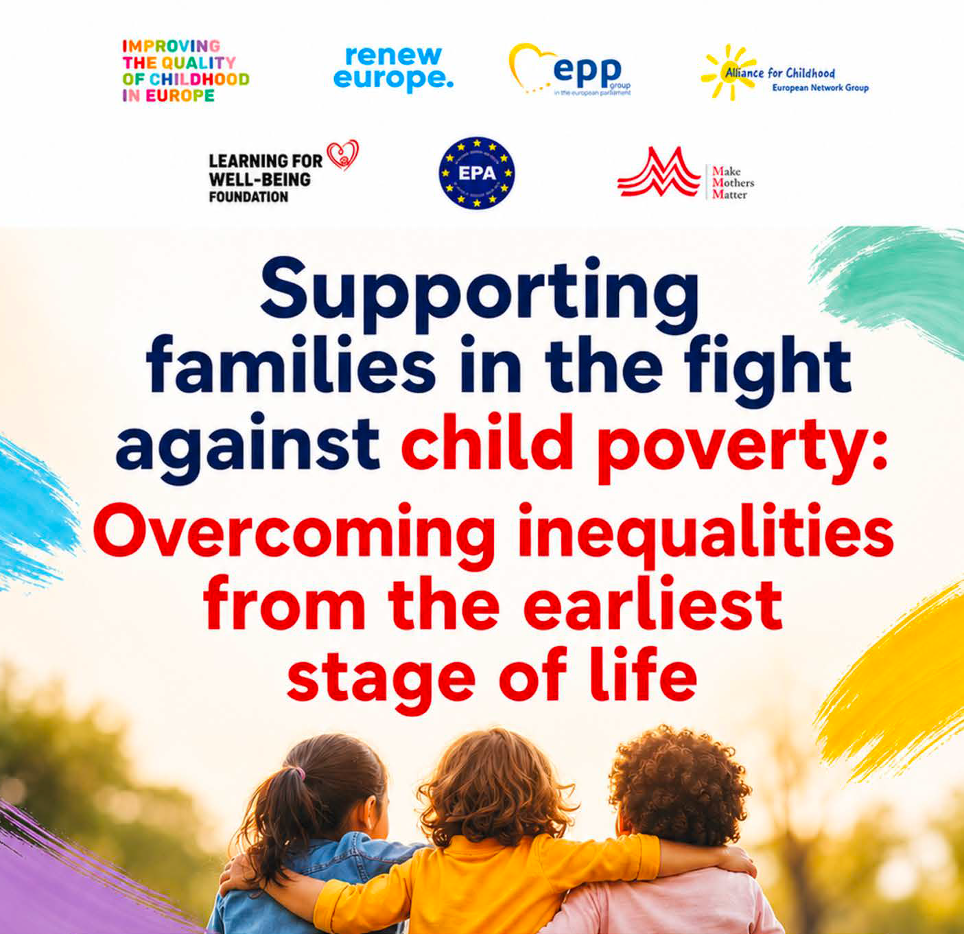
As part of the 99th Quality of Childhood (QoC) series, MMM, joined partners of the Alliance for Childhood, including Learning for Wellbeing and the European Parents’ Association (EPA), for the event, “Supporting Families in the Fight Against Child Poverty: Overcoming Inequalities from the Earliest Stage of Life”.
Co-hosted by MEPs Hristo Petrov (Renew Europe) and Niels Geuking (EPP), the discussion explored practical solutions to address this vital issue.
The event took place shortly after the European Commission presented its new EU Anti-Poverty Strategy and Communication on Strengthening the European Child Guarantee on 6th May. Participants agreed that the focus must now shift from identifying problems to implementing concrete family-centred solutions.
Families Under Growing Pressure
Speakers warned that families across Europe are facing multiple overlapping pressures, including rising living costs, economic uncertainty, labour market insecurity, geopolitical instability, digital transformation, and growing social isolation. These challenges affect vulnerable households most severely and increase the risk of poverty and exclusion for children.
MEP Hristo Petrov told us that “a Europe that allows its children to grow up in poverty is a Europe that fails its people.” He stressed that Europe already has the evidence and policy tools to address child poverty, but that stronger political action is now required.
He noted that the proportion of children at risk of poverty or social exclusion in the EU rose from 23.6% in 2019 to 24.2% in 2024. Single-parent households – particularly those headed by women – remain among the most vulnerable. He also stressed that children should never be separated from their families because of poverty and called for stronger prevention and family support services.
Supporting Families as a Whole
Katarina Ivankovic-Knezevic, Director for Social Rights and Inclusion at the European Commission’s DG Employment, emphasised that tackling child poverty requires supporting families as a whole.
She identified access to quality employment, adequate income support, affordable housing, childcare, healthcare, education, and extracurricular activities as essential to breaking cycles of disadvantage.
She highlighted the strengthened European Child Guarantee as an important tool for improving children’s access to essential services and equal opportunities. According to Ivankovic-Knezevic, the initiative places greater attention on parents and caregivers, recognising that investing in families is key to reducing child poverty.
The updated approach also aims to strengthen links between the Child Guarantee and the Youth Guarantee in order to provide continuity of support from childhood into early adulthood.
She also highlighted another major concern: the growing pressures children are facing, including stress, social isolation, and online and offline threats to wellbeing.
Universal family and child benefits
Dominic Richardson and David Harris, from Learning for wellbeing stressed the importance of investing in early childhood as a long-term social investment that can reduce inequality and prevent poverty. Harris made a call to move from “Warfare to Welfare”.
Drawing on research evidence, they argued that support during the earliest years of life is fundamental for children’s healthy and holistic development. They also highlighted the importance of stronger parental support systems, quality early childhood education and care, mental health services, and universal family and child benefits.
 Breaking the Cycle of Poverty
MEP Niels Geuking, noted that children whose parents have a low level of education face a poverty risk of 39.1%, compared to just 5.6% for children of highly educated parents.
He argued that poverty is often passed from one generation to the next unless early intervention helps break the cycle.
Geuking also stressed the economic cost of inaction, warning that children who miss out on early education or leave school early often carry those disadvantages throughout life. This, he said, can reduce productivity, increase welfare costs, and place long-term pressure on social protection systems.
Supporting Parents and Caregivers
Petra Kogelnig, of the European Parents’ Association, highlighted the importance of strong relationships between children and parents for healthy development and wellbeing.
She pointed to the increasing pressures many families face in balancing work, caregiving, and educational responsibilities, particularly in a rapidly changing digital environment. She called for policies that better support work-life balance and for parents to be more directly involved in policymaking processes.
Kogelnig also stressed that anti-poverty strategies should promote dignity, empowerment, and participation for families experiencing hardship.
Johanna Schima, from MMM, reminded participants that child poverty is often associated with material deprivation including inadequate housing, poor nutrition, and limited access to education and childcare. However, she stressed that poverty also leaves emotional and psychological scars that can affect children from the earliest stages of life.
She argued that supporting families in poverty must begin with supporting caregivers – especially mothers – who continue to carry most caregiving responsibilities while often facing financial insecurity, mental overload, and career disadvantages linked to motherhood.
Schima also emphasised that care should not be viewed as a “burden,” but recognised as an essential contribution to the wellbeing and sustainability of society.
Strengthening the European Child Guarantee
MEP Brando Benifei (S&D) one of the first supporters of the Child Guarantee, reflected on the development of the European Child Guarantee and described it as an important shift in EU social policy.
He noted that the initiative introduced a more integrated and preventive approach to tackling child poverty by focussing specifically children’s access to essential services and equal opportunities.
Several years after its adoption, he said the Child Guarantee has already encouraged stronger political attention and national initiatives across Europe, while warning that further implementation and investment remain necessary to fully achieve its goals.
A Shared Conclusion
The discussion ended with a shared conclusion: if Europe wants children to thrive, it must create the conditions for families and caregivers to thrive as well.
Participants agreed that supporting families is not only a social policy priority, but also a long-term investment in Europe’s future.
 Share
Share Share
Share Print
Print Email
Email
Maternal Psychological Wellbeing: A Challenge and a Unique Opportunity
13.01.26
Wednesday 28 January 2026 | 15:15 – 17:30 GMT London School of Economics & Political Science (LSE) – Live broadcast #MaternalWellbeingLSE Maternal mental health is one of the most pressing

Climate Change: A Maternal Physical and Mental Health Emergency
13.11.25
In the lead-up to the UN climate change conference in Belem, Brazil (COP30), MMM was delighted to collaborate with Dr. Saravanan Thangarajan, a Visiting Scientist & Faculty member at Harvard

Democracy on Hold: The Hidden Penalty for Parliamentarians Who Become Mothers
27.11.25
The European Parliament adopted a legislative resolution on the amendment of the European Electoral act, allowing Members to vote in plenary by proxy voting during pregnancy and after giving birth.