Care systems at the heart of the roadmap to eradicating poverty beyond growth
29.09.15
Following it report on
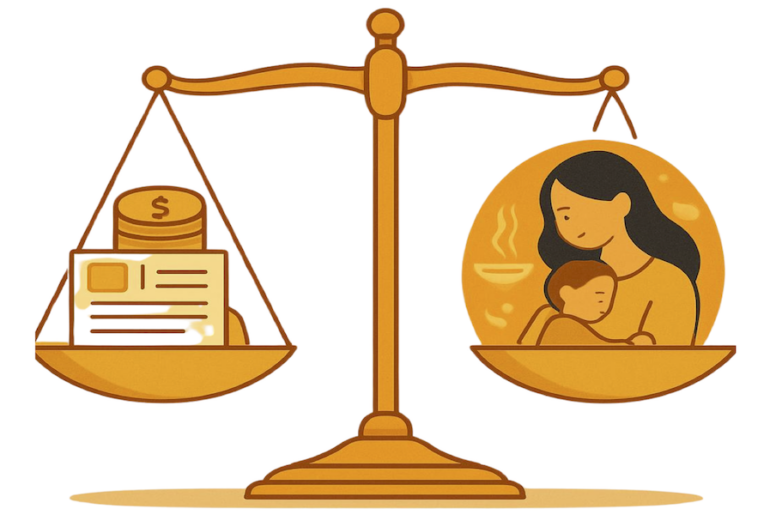
In our answer to the consultation, we highlight a fundamental reality: the care gap is a major driver of gender inequality and poverty. Unpaid care and domestic work, carried primarily by women and especially mothers, prevents them from accessing decent work and from fully participating in society. This is economic injustice, and it keeps millions of women trapped in poverty.
The Covid-19 pandemic made this crystal clear: both paid and unpaid care work are essential for wellbeing, for the sustainability of life, and for the functioning of our families, communities and economies. Yet they remain undervalued and unsupported, taken for granted.
A roadmap to eradicating poverty beyond growth must therefore include the progressive building of strong care and equitable care systems.
This means:
- Recognising care as a right and a collective responsibility shared by men and women, by governments, the private sector, and communities
- Recognising unpaid care as productive work, visible in statistics and supported by policies
- Ensuring universal social protection, including maternity protection and pension credits for unpaid carers
- Guaranteeing access to quality and affordable care services for children, older persons, and those with disabilities
- Promoting work-life balance and carers’ leave so that persons with caregiving responsibilities, in particular motehrs, are not forced to choose between earning and caring.
In our written contribution, we also provided many concrete policy examples, from national laws to regional strategies, that show how care systems can be built in practice. These demonstrate that valuing and supporting care is not only possible, but transformative.
And care systems should not be seen as costs. They are investments with multiple returns:
- Better wellbeing and healthier child development, with long-term gains for education and employment.
- Job creation in the care sector, which also contributes to public revenues through taxes and social security.
- And increased women’s participation in the workforce, improving family incomes and strengthening economic autonomy for mothers.
In conclusion, our message is simple and urgent: care must be at the heart of the Roadmap. Without care, there is no economy, no wellbeing, and no future. But with strong care and equitable systems, we can truly eradicate poverty beyond growth and move towards a society that values and sustains life.
Read our answer to the call for input
 Share
Share Share
Share Print
Print Email
Email
Breaking the Cycle: Gender Equality as a Path to Better Mental Health
18.03.25
The Council of the European Union has taken a decisive step in recognising the vital connection between gender equality and mental health.
Europe Must Listen to Mothers: Our landmark report heads to the European Parliament
28.08.25
On 22 September 2025, the voices of mothers will take centre stage in Brussels. For the first time, Make Mothers Matter (MMM) will present its State of Motherhood in Europe
Belgian Mothers Face Alarming Rates of Burnout and Perinatal Depression, New EU Survey Finds
03.07.25
Belgian mothers are facing a mental health crisis. According to the State of Motherhood in Europe 2024 survey by Make Mothers Matter (MMM) and Kantar, Belgium reports the highest rates