Maternal Mental Health in Europe Make Mothers Matter Calls for Greater Recognition and Action
10.03.26
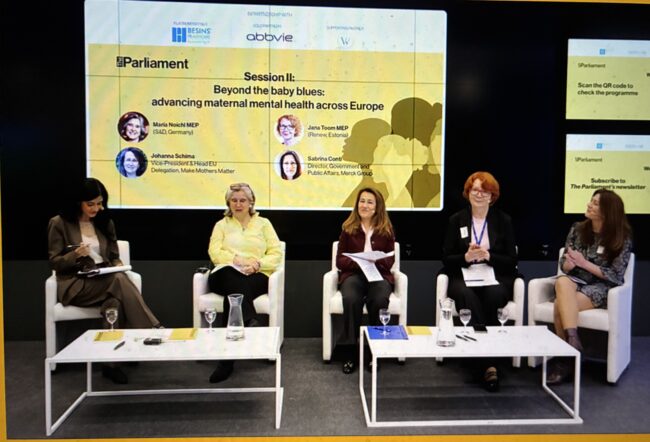
Make Mothers Matter participated in an event organised by The Parliament Magazine on the occasion of International Women’s Day, which explored how maternal mental health can be better addressed across Europe.
During the discussion, MMM highlighted the scale of maternal mental health challenges and stressed the need to recognise motherhood as a structural issue affecting women’s health, employment and social equality across Europe.
Maternal mental health problems affect nearly one in five women globally during pregnancy or in the first year after birth. In Europe, postpartum depression affects around 12% of mothers. Despite these numbers, maternal mental health remains largely invisible in policy and public debate. Depression is now considered the most common complication of maternity and, tragically, also the leading cause of maternal death in many contexts. Without early intervention, up to 70% of affected mothers may experience persistent symptoms extending well beyond the first postpartum year.
Maternal mental health challenges have far-reaching consequences not only for women but also for children and families. Research shows that children whose mothers experience anxiety or depression during or after pregnancy face a significantly higher risk of emotional and behavioural difficulties later in life. These conditions can also affect mother–child bonding and increase the likelihood of future mental health episodes for mothers.
Findings from the 2024 Make Mothers Matter survey highlight the scale of the issue in Europe. Among nearly 10,000 mothers surveyed, 50% reported mental health problems such as depression, anxiety, burnout or peripartum depression, and 67% reported feeling chronically overloaded. Mental health strain was particularly high among single mothers and women in low-income households. National variations also emerged, with particularly high levels of overload reported in Portugal, Spain and Ireland, and elevated rates of anxiety, depression and burnout reported in several other countries.
Structural barriers to care remain significant. According to a European Parliament public survey on women’s health in 2025, half of women reported insufficient support for postpartum mental health. Vulnerable groups often face additional barriers to accessing care, including language barriers, discriminatory attitudes, limited information and inadequate funding for maternal health services.
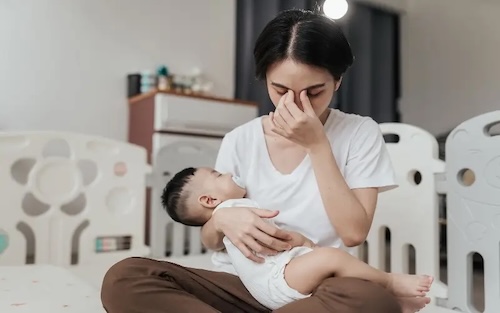 Maternal mental health also has broader social and economic implications. Research shows that the gender gap in sick leave emerges after the birth of the first child, largely due to mental health issues, and can persist for many years.
These challenges are closely linked to the structural realities of motherhood at work. European labour law and occupational safety frameworks have historically focused on pregnancy protection, particularly through the Pregnant Workers Directive (92/85/EEC). While essential, this framework treats motherhood primarily as a temporary biological condition rather than a long-term life-course reality.
In practice, motherhood often involves sustained caregiving responsibilities combined with rigid labour-market structures. This contributes to unequal unpaid care responsibilities, career interruptions, involuntary part-time work, chronic time pressure, lower lifetime earnings and pension gaps. Data from the European Institute for Gender Equality show that women in the EU earn on average only 77% of men’s annual earnings, contributing to a gender pay gap of 12.7% and a pension gap of 26%.
MMM’s survey also shows that motherhood significantly affects employment patterns. Many mothers reduce working hours, change employment status or face barriers to career progression. Workplace flexibility remains limited, and childcare costs represent a major financial burden for many families. Single mothers are particularly vulnerable: although they represent a minority of households, they face a much higher risk of poverty and social exclusion.
During the event we cited the good example of the UK. Recently, Baroness Merron, the UK Minister for Women’s Health, launched a taskforce to address gaps in maternal healthcare services. The initiative aims to invest in maternal health services while conducting a nationwide consultation to develop recommendations and a national action plan based on lived experience. This illustrates how acknowledging systemic gaps affecting women and mothers can lead to meaningful policy action.
During our intervention we called stronger policy responses, including improved access to perinatal mental health services, greater investment in maternal healthcare, and better integration of mental health support into general health systems. Broader structural reforms are also needed, including stronger parental leave policies, improved childcare provision, recognition of caregiving periods in pension systems and workplace policies that support work–life balance.
Ultimately, maternal health is not only about childbirth. It includes physical recovery, mental wellbeing and long-term support. Including the full integration of perinatal mental health services into general healthcare systems We simply cannot afford to look away because mothers make up a significant segment of our population, and their mental health affects the wellbeing of their children, families, communities, and ultimately our entire society.
Because, beyond the “baby blues”, maternal mental health conditions are real, common and deserve timely recognition, support and quality care.
 Share
Share Share
Share Print
Print Email
Email
Maternal Psychological Wellbeing: A Challenge and a Unique Opportunity
13.01.26
Wednesday 28 January 2026 | 15:15 – 17:30 GMT London School of Economics & Political Science (LSE) – Live broadcast #MaternalWellbeingLSE Maternal mental health is one of the most pressing

Climate Change: A Maternal Physical and Mental Health Emergency
13.11.25
In the lead-up to the UN climate change conference in Belem, Brazil (COP30), MMM was delighted to collaborate with Dr. Saravanan Thangarajan, a Visiting Scientist & Faculty member at Harvard
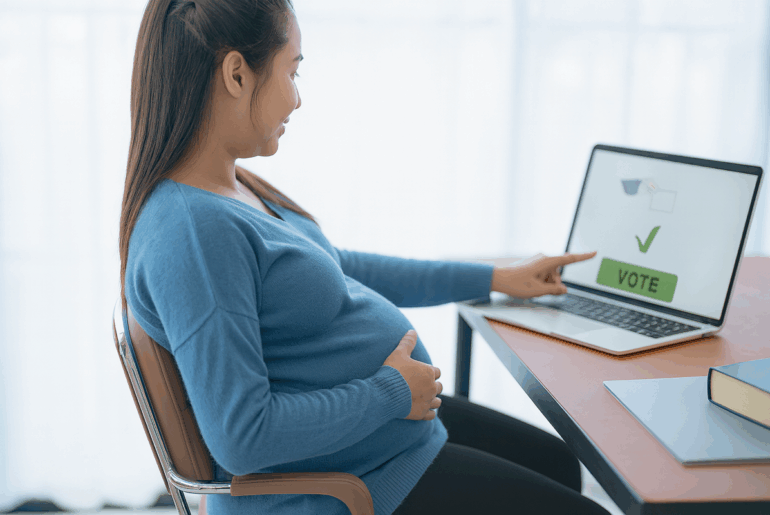
Democracy on Hold: The Hidden Penalty for Parliamentarians Who Become Mothers
27.11.25
The European Parliament adopted a legislative resolution on the amendment of the European Electoral act, allowing Members to vote in plenary by proxy voting during pregnancy and after giving birth.