Elevating the voices of our grassroots members at the UN HRC
01.03.25
UN Geneva, Human Rights Council – Two of our associate members, Irish Maternity Support Network, represented by founder and director Liz Kelly, and Child Nepal, headed up by Executive Director Mohan Dangal, were among the 4 Civil Society speakers selected to address the High Level segment of the 58th session of Human Rights Council. They called for for respectful maternity care and prioritising the right to education.
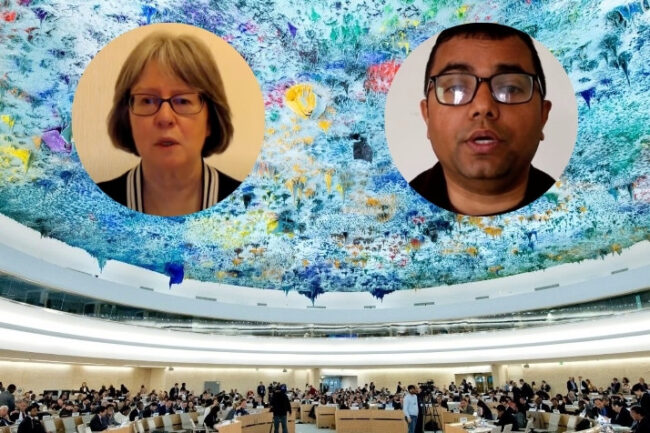
They both seized the opportunity to deliver strong statements through video messages, which were broadcast on 26 February at the end of the High Level Segment of the 58th Session of the Human Rights Council. (Recording available here)
A call for respectful maternity care
“Women should never face neglect, abuse, or violence during childbirth,” said Liz, reiterating what a vulnerable moment this is in a woman’s life. Yet far too many experience mistreatment when they need care and compassion the most. Dignity in childbirth, respectful maternity care for the more than 140 million women who give birth globally each year are fundamental rights, not a privilege.
Her vision for change: “Maternity Care must be woman-centred, consent-based, and evidence-based. Women must be actively involved in the design, planning and evaluation of their services.”
 Read her full statement or watch her video message below
A call to prioritise the human right to education
Education is a fundamental right that remains unfulfilled for 251 million children across the world.
Mohan stressed that “Without education, children face heightened risks of exploitation, forced labor, and early, child and forced marriage, perpetuating cycles of poverty, violence and inequality”. He added: “Education is not just about classrooms—it is about ensuring that every child, regardless of gender, ethnicity, or socioeconomic status, has access to quality and inclusive learning opportunities.”
He went on to call upon governments to prioritise education, including in funding, to support teacher training and curriculum development, to champion innovative solutions using technology to bridge education gaps, and last but not least to hold governments accountable to fulfil their commitments to education under international frameworks.
Read his full statement or watch his video message below
 Share
Share Share
Share Print
Print Email
Email
Europe Must Listen to Mothers: Our landmark report heads to the European Parliament
28.08.25
On 22 September 2025, the voices of mothers will take centre stage in Brussels. For the first time, Make Mothers Matter (MMM) will present its State of Motherhood in Europe
Belgian Mothers Face Alarming Rates of Burnout and Perinatal Depression, New EU Survey Finds
03.07.25
Belgian mothers are facing a mental health crisis. According to the State of Motherhood in Europe 2024 survey by Make Mothers Matter (MMM) and Kantar, Belgium reports the highest rates
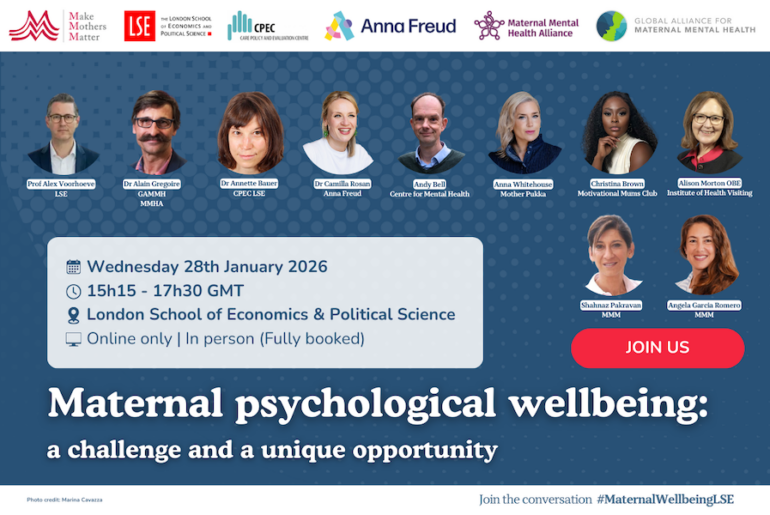
Maternal Psychological Wellbeing: A Challenge and a Unique Opportunity
13.01.26
Wednesday 28 January 2026 | 15:15 – 17:30 GMT London School of Economics & Political Science (LSE) – Live broadcast #MaternalWellbeingLSE Maternal mental health is one of the most pressing