The Motherhood Penalty: The Equality Challenge We Must Address – MMM @ ILC114
11.06.26
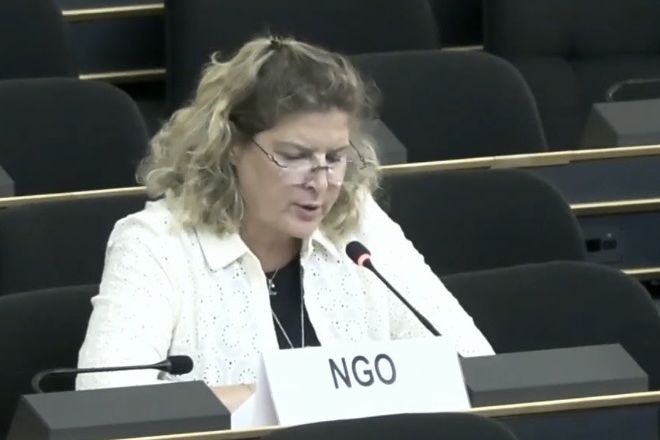
At the 114th International Labour Conference (ILC114), MMM delivered a clear message: achieving genuine gender equality in the workplace requires looking beyond traditional measures of inequality and addressing a challenge that continues to shape women’s lives — the motherhood penalty.
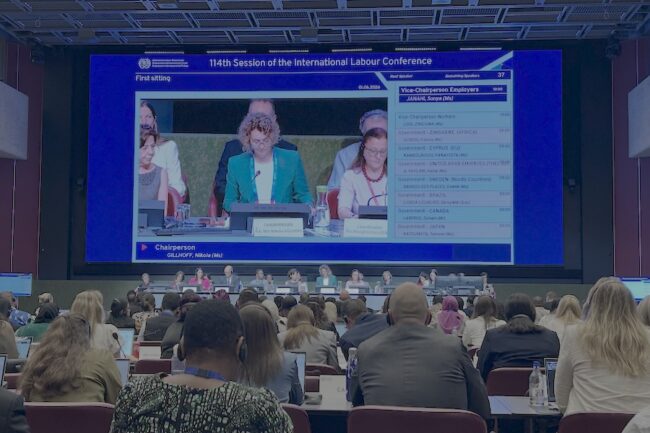
Presenting MMM’s intervention, Head of UN Advocacy Valerie de Bichelmeier stressed that without recognising and addressing the specific disadvantages associated with motherhood, efforts to achieve equality at work will remain incomplete.
Across the world, women continue to carry a disproportionate share of unpaid domestic and care work, an invisible labour that supports families, communities and economies. Yet the unequal distribution of caregiving responsibilities remains one of the key drivers of persistent gender inequalities.
While women’s participation in the labour market has increased significantly, the expected transformation in the sharing of care responsibilities has not kept pace. Mothers, in particular, often find themselves navigating the difficult balance between professional expectations and caregiving responsibilities, shaped by long-standing social norms about who should provide care.
Beyond the pay gap: understanding the motherhood penalty
 Commenting on the report prepared by ILO for the General Discussion on a Transformative agenda for gender equality at work (item 6 of the ILC114 agenda), MMM stressed that the challenges faced by mothers cannot be reduced to differences in pay alone.
The motherhood pay gap is only one aspect of a much broader reality: the motherhood penalty.
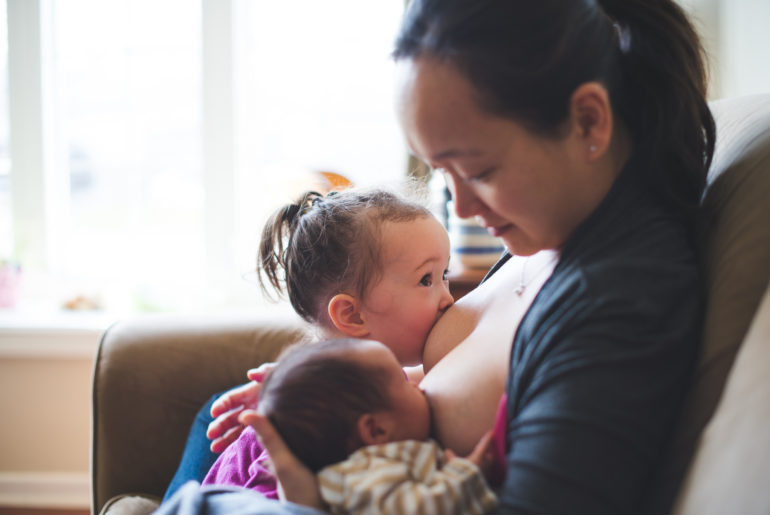
The motherhood penalty describes the cumulative impact motherhood can have on women’s careers, economic security and well-being. It includes discrimination in recruitment and promotion, pregnancy- and maternity-related harassment, interrupted career paths, assumptions that mothers are less committed or less capable in the workplace, and limited access to leadership opportunities.
These barriers are often reinforced by workplace structures that fail to accommodate caregiving responsibilities adequately. Limited access to childcare, inflexible working arrangements, and workplace cultures that expect employees to prioritise work above family life can force mothers into difficult choices — including reducing working hours or stepping away from employment altogether.
The human impact behind the statistics
Evidence from MMM’s 2024 State of Motherhood in Europe report highlights the scale of the challenge. Among surveyed mothers, many reported changes in their employment after having children, including reduced working hours and negative impacts on career progression. The research also revealed significant pressures on mental health, with many mothers describing feelings of overload, anxiety, burnout and related difficulties.
Building workplaces where families can thrive
Maternity protection, parental leave and childcare policies remain essential foundations for supporting mothers and families.
However, a truly transformative agenda requires acknowledging and addressing the motherhood penalty in all its dimensions.
This means recognising motherhood as a specific ground of discrimination that can intersect with other forms of disadvantage; collecting better data to understand the scale of the problem; challenging persistent gender stereotypes; and encouraging men’s equal participation in caregiving.
Workplaces also have a crucial role to play. Family-friendly policies, flexible working arrangements, supportive transitions back to work after parental leave, and opportunities such as quality part-time work or job-sharing can help ensure that caregiving responsibilities do not become barriers to women’s professional lives.
Importantly, caregiving can foster transferable competencies such as leadership, organisation, resilience and problem-solving.
It is time for the world of work to adapt to the realities of care
For decades, women have adapted to the demands of the workplace while carrying much of the responsibility for family care. The next step towards genuine equality is for workplaces, policies and societies to adapt to the lived realities of motherhood and others caregiving realities.
Supporting mothers and families is not only a matter of fairness – it is a collective responsibility. By addressing the motherhood penalty, empowering all parents as caregivers and creating workplaces designed around real human lives, we can move closer to a future where gender equality is not merely an aspiration, but a reality.
 Read here the full Statement that MMM delivered in plenary. A more concise version of this statement was also delivered during the first meeting of the General Discussion Committee on a Tranformative agenda for fender equality at work.
Our impact
Our message was heard, albeit only partially. The Committee’s resolution, adopted at the end of the ILC, incorporates several of the points MMM raised.
It notably states: “Measures that strengthen maternity protection, parental and care leave policies, as part of integrated care and work-life balance policies that support workers with care responsibilities, facilitate women’s entry, retention and advancement in the labour market, promote a more equal sharing of care responsibilities, and help prevent poverty and discrimination related to pregnancy, maternity, parenthood, and care responsibilities.”
Despite the growing body of evidence and the concerns raised during the discussions, the resolution stops short of explicitly recognising the motherhood penalty.
The conversation has moved forward, but the work is not yet complete. Naming the motherhood penalty is an essential step towards addressing it — and MMM will continue advocating until the realities faced by mothers are fully recognised in international labour policy.
 Share
Share Share
Share Print
Print Email
Email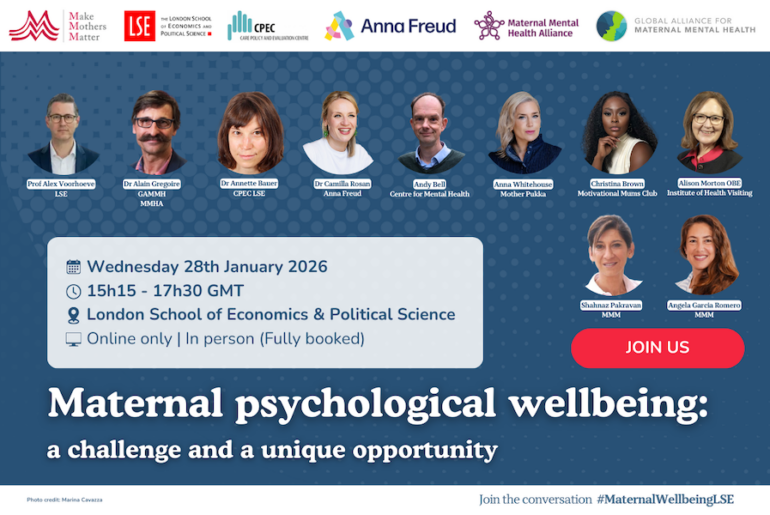
Maternal Psychological Wellbeing: A Challenge and a Unique Opportunity
13.01.26
Wednesday 28 January 2026 | 15:15 – 17:30 GMT London School of Economics & Political Science (LSE) – Live broadcast #MaternalWellbeingLSE Maternal mental health is one of the most pressing

Climate Change: A Maternal Physical and Mental Health Emergency
13.11.25
In the lead-up to the UN climate change conference in Belem, Brazil (COP30), MMM was delighted to collaborate with Dr. Saravanan Thangarajan, a Visiting Scientist & Faculty member at Harvard
Democracy on Hold: The Hidden Penalty for Parliamentarians Who Become Mothers
27.11.25
The European Parliament adopted a legislative resolution on the amendment of the European Electoral act, allowing Members to vote in plenary by proxy voting during pregnancy and after giving birth.