Making social protection work for and with mothers
28.02.19
UN New York , 63rd Commission on the Status of Women - MMM Statement highlights that the 2 main pillars of social protection, health and income security, are particularly relevant for mothers and their children. But, when adequately supported, mothers also do contribute to social protection.
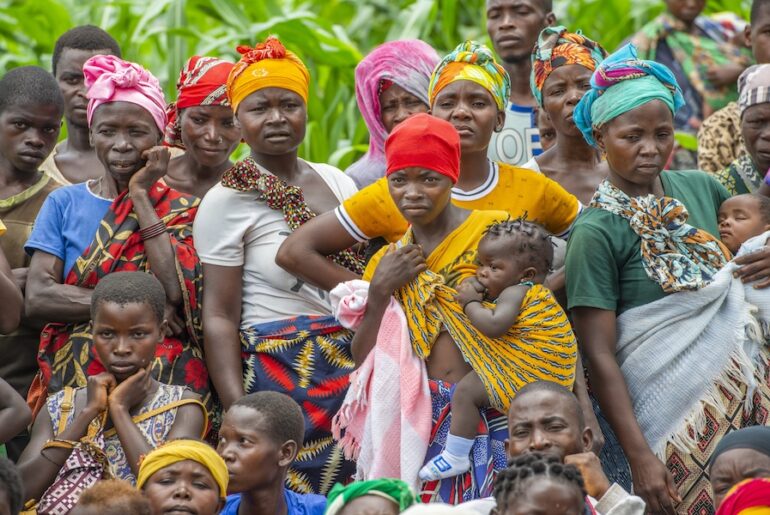
Social protection, supported by well-designed and functioning public infrastructure and services, is essential to empower women, especially when they are in vulnerable situations (e.g. single mothers, disabled women, mothers of disabled children, older women, widows, teenage mothers, etc.).
In its most basic form, social protection includes the provision of essential health care, as well as income security along the life course – two pillars which are especially relevant to women in their role as mothers:
- Universal health coverage and maternity protection is the cornerstone of a social protection system that works for women;
- Beyond cash transfers: addressing the unequal distribution of unpaid family care work is key to empower women and lift them out of poverty.
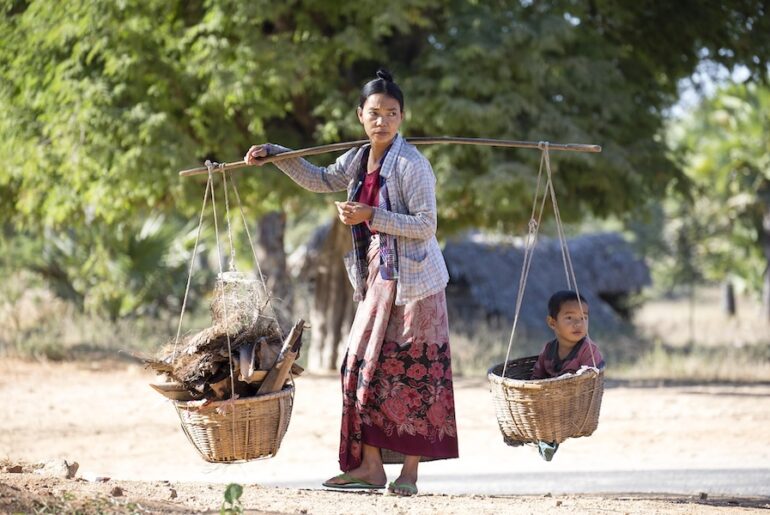
But women, especially mothers, are not only recipients of social protection: they produce and process food for the family; they are the primary educators of children and the first caregivers of dependent family members, including older persons; they actually provide basic health and care services, thus largely contributing to social protection.
By raising the next generation of citizens and workers, they also support human development and contribute to building the future society and economy.
They must be recognized as powerful economic and social actors – who deserve to be better equipped and supported. Social protection is a human right that must be supported by universal public infrastructure and services. It must also be seen as an investment with high returns, especially when targeting the most vulnerable women and their children.
 Read the full Statement as submitted
MMM Statement as a UN Document Ref. E/CN.6/2019/NGO/61
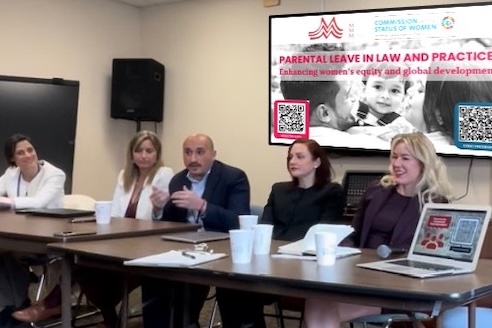
This written Statement was submitted ahead of the next Commission on the Status of Women (CSW63), which will take place at the United Nations in New York 11-21 March 2019. Its priority theme: Social protection systems, access to public services and sustainable infrastructure for gender equality and the empowerment of women and girls.
MMM Statement is supported by 10 other NGOs:
– Afro European Medical Research Network (AEMRN)
– Federation of American Women’s Club Overseas (FAWCO)
– Foundation for Gaia
– Graduate Women International (GWI)
– Inter African Committee on Practices Affecting the Health of Women and Girls (IAC)
– International Alliance of Women (IAW)
– Organisation pour la Communication en Afrique et de Promotion de la Cooperation Economique Internationale – OCAPROCE Internationale
– The Internation Union for Land Value Taxation
– Widows for Peace through Democracy )WPD)
– World Federation of Ukrainian Women’s Organizations (WFUWO).
 Share
Share Share
Share Print
Print Email
Email
Europe Must Listen to Mothers: Our landmark report heads to the European Parliament
28.08.25
On 22 September 2025, the voices of mothers will take centre stage in Brussels. For the first time, Make Mothers Matter (MMM) will present its State of Motherhood in Europe
Belgian Mothers Face Alarming Rates of Burnout and Perinatal Depression, New EU Survey Finds
03.07.25
Belgian mothers are facing a mental health crisis. According to the State of Motherhood in Europe 2024 survey by Make Mothers Matter (MMM) and Kantar, Belgium reports the highest rates

Parental Mental Health Takes Centre Stage at the French National Assembly
02.04.25
Paris, France – On April 2nd, Make Mothers Matter was honoured to have key findings from its State of Motherhood in Europe 2024 report cited at the French National Assembly