MMM and AJAD changing communities and lives in UNESCO funded initiative
20.05.19
“Great things are not done by impulse but by a series of small things brought together” - Vincent Van Gogh
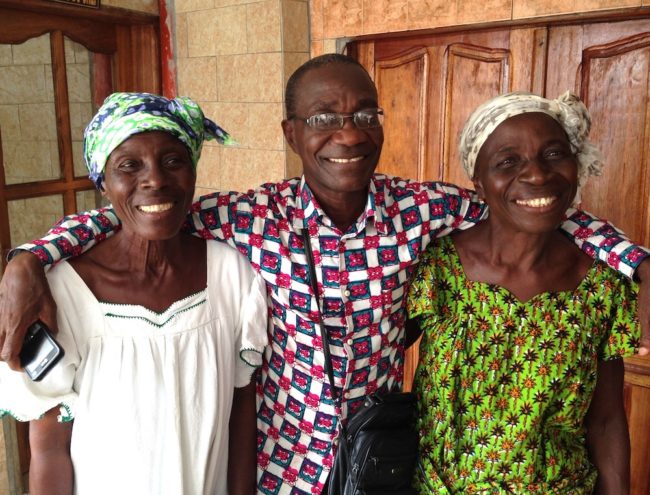
Songon, a suburb of Abidjan, Cote d’Ivoire, is composed of many villages made of basic concrete houses and in which live a great number of families. Most of the mothers are illiterate and bring up their children whilst meeting basic community needs such as water chores – the well is 10 km away – and collecting and selling firewood in the markets.
Jean Bolly Kouassi, brought up by his mother just like his other many siblings, is a man who has always admired the determination of women, and mothers in particular.
This is what led him to create an association called Aide à la Jeunesse Africaine Défavorisée (AJAD) (help to the underprivileged African Youth), to provide young people with perspective, relying on the main force of community action: mothers.
His first struggle was to fight against early pregnancies, after he had had to care for a 12-year-old girl who arrived pregnant in one of the villages. He then decided to address high-risk behavioral patterns stemming from the lack of information on reproductive health and to improve the pregnancy monitoring of very young mothers who are further faced with the impossibility of attending school.
Jean Bolly also committed to reducing the high child mortality rate, due to insufficient baby care.
MMM decided to help by appealing to UNESCO funds that enabled the organization in 2017 to host two conferences and two mother training seminars with a gynecologist, a midwife and a pediatrician.
Six hundred people, a majority of whom were mothers and young girls and boys, attended these conferences, one on educating on reproductive health and the prevention of early pregnancies, the other on educating on childhood development and protection.
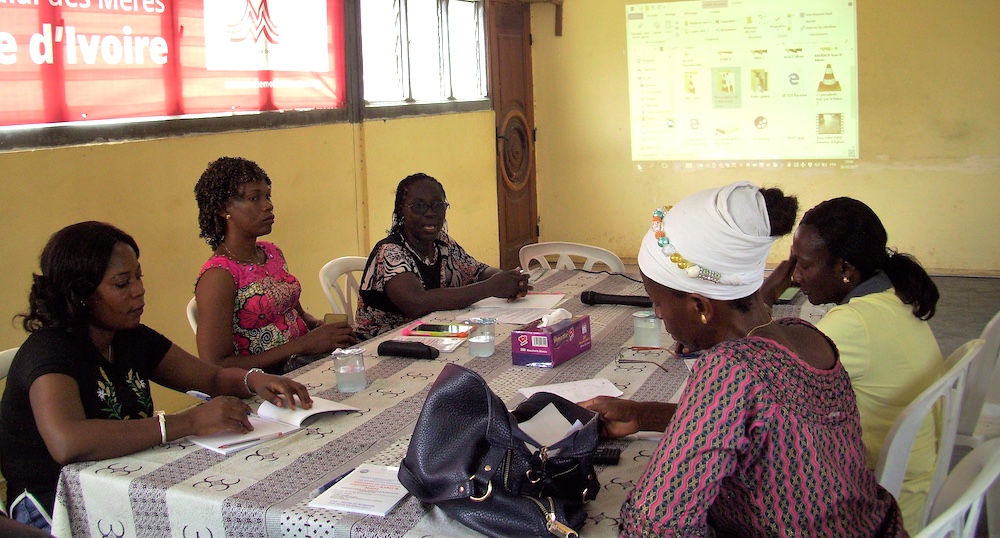 Six mothers were specially trained as health and protection monitors for young pregnant girls.
And lastly, a total of forty-four mothers, two per village, were trained to deal with the health and protection of children and tasked with training other mothers in their neighborhood.
The results:
– a 30% drop in early pregnancies,
– a 40% increase in prenatal visits,
– a decrease of 15% in child mortality.Young boys are learning to respect young girls; young girls now make the effort of going to the doctor despite long distances or ask advice from the trained mothers. Communities look after the children to allow young mothers to go to school.
Thanks to these results, the State of Ivory Coast has engaged and is supporting AJAD MMM. It asked and received financial UNESCO support to extend this initiative to other areas. The implementation of this new project is entrusted to AJAD MMM and will take place in 2019 with the help of the Education Ministry, in order to allow teachers and students to participate.
This experience shows that supporting the mobilization of mothers and rallying fathers and decision makers to their cause, mentalities can change and living conditions of a whole community can be improved – And this could apply anywhere in the world.
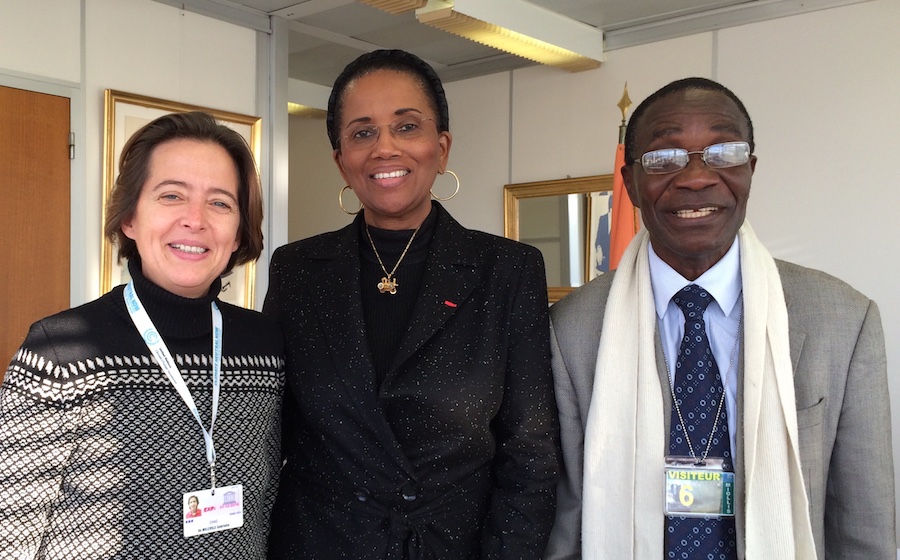
Gabrielle de Melleville, MMM Representative to UNESCO, with Bolly Kouassi, President and Founder AJAD and Her Excellency Mrs. Denise Houphouet Boigny
 Share
Share Share
Share Print
Print Email
Email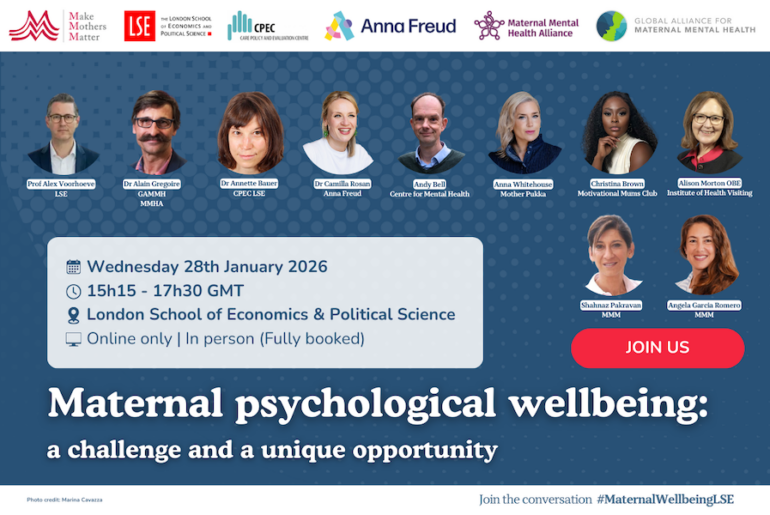
Maternal Psychological Wellbeing: A Challenge and a Unique Opportunity
13.01.26
Wednesday 28 January 2026 | 15:15 – 17:30 GMT London School of Economics & Political Science (LSE) – Live broadcast #MaternalWellbeingLSE Maternal mental health is one of the most pressing

Climate Change: A Maternal Physical and Mental Health Emergency
13.11.25
In the lead-up to the UN climate change conference in Belem, Brazil (COP30), MMM was delighted to collaborate with Dr. Saravanan Thangarajan, a Visiting Scientist & Faculty member at Harvard
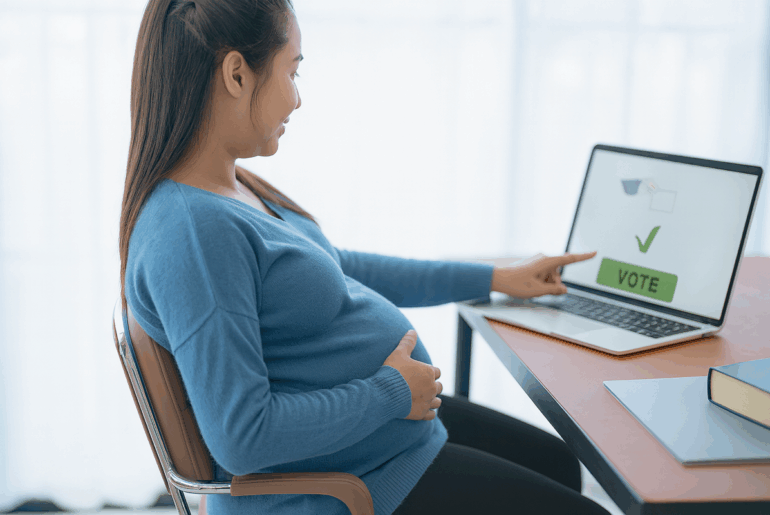
Democracy on Hold: The Hidden Penalty for Parliamentarians Who Become Mothers
27.11.25
The European Parliament adopted a legislative resolution on the amendment of the European Electoral act, allowing Members to vote in plenary by proxy voting during pregnancy and after giving birth.