Mothers are at the center of Early Childhood Development – But need recognition and support
23.05.18
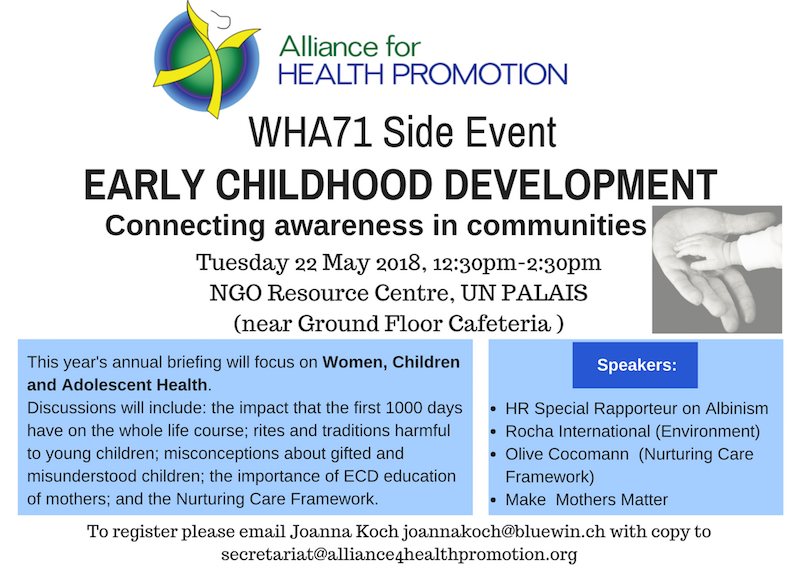
UN Geneva / World Health Assembly - In a side-event on Early Childhood Development, Make Mothers Matter highlighted some of the challenges that mothers face to ensure that their child develops to their full potential.
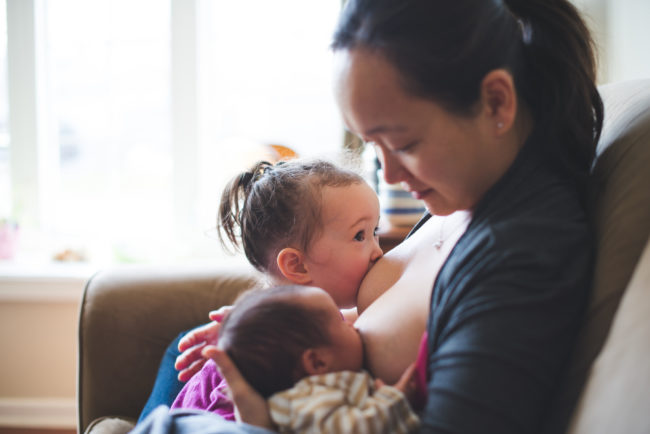
Thanks to advances in developmental neurosciences, we know that the early life experiences shape the future capacity of the brain, and have a direct – positive or negative – influence on the physical, cognitive and emotional health of a child. What children experience during their early years, including in utero, sets a critical foundation for their entire life course.
Moreover, while both parents are the child’s first caregivers and educators and fathers have a very important supporting role to play, it is mothers who are at the forefront of Early Childhood Development during pregnancy and the early years of childhood.
However, mothers must face a number of challenges which do not concern health alone and cut across other sectors like social welfare, education, and labour:
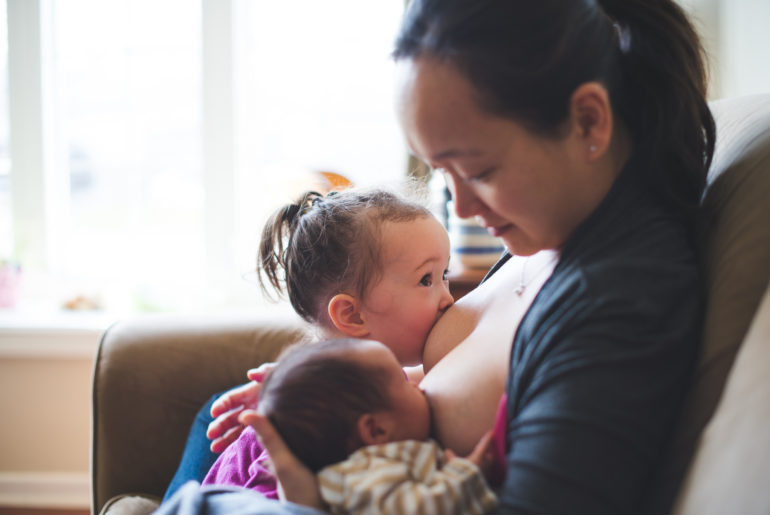
- Barriers to breastfeeding
- Multiple stress on the family
- Violence against women and children
- Overlooked maternal mental health problems
- Parenting skills.
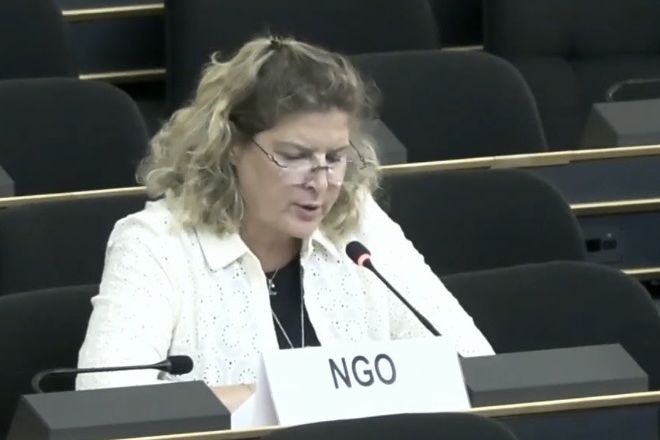
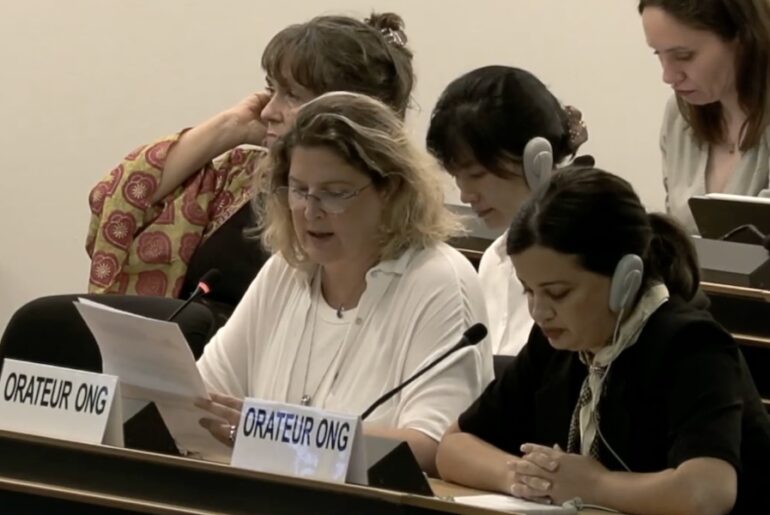
Karen Thorsen, a representative of MMM at the United Nations in Geneva, delivered MMM intervention and answered questions based on her own experience of a health professional in Norway.
During its intervention at a side-event to the 71st World Health Assembly on Early Childhood Development, MMM developed these issues and provided recommendations for a cross-sectorial / multistakeholder approach to ensure that every child develops to their full potential through adequate Early Childhood Education and Care.

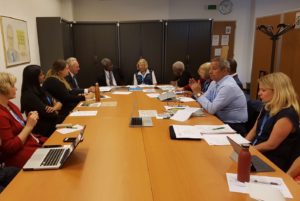
The event was organized by the Alliance for Health Promotion:
It is also at this year’s World Health Assembly that the World Health Organisation (WHO) and its partners launch “Nurturing Care for Early Child Development: A Framework for Helping Children SURVIVE and THRIVE to TRANSFORM Health and Human Potential.” – the result of a large multi-stakeholder consultation in which MMM also participated.
 Share
Share Share
Share Print
Print Email
Email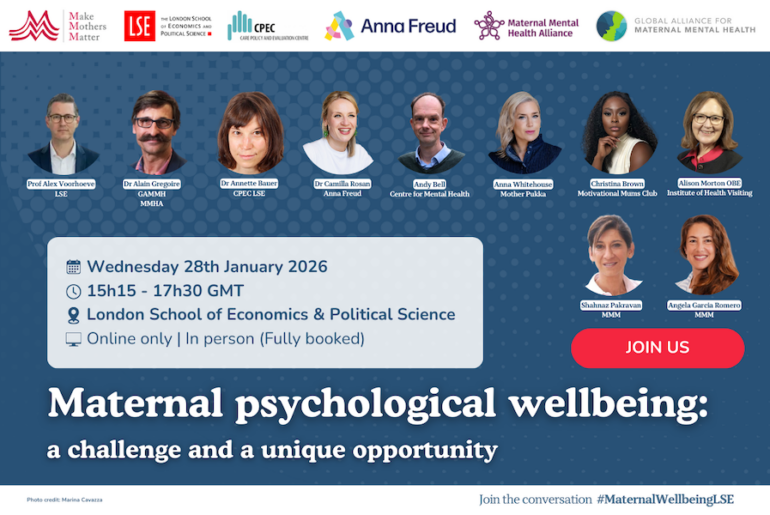
Maternal Psychological Wellbeing: A Challenge and a Unique Opportunity
13.01.26
Wednesday 28 January 2026 | 15:15 – 17:30 GMT London School of Economics & Political Science (LSE) – Live broadcast #MaternalWellbeingLSE Maternal mental health is one of the most pressing

Climate Change: A Maternal Physical and Mental Health Emergency
13.11.25
In the lead-up to the UN climate change conference in Belem, Brazil (COP30), MMM was delighted to collaborate with Dr. Saravanan Thangarajan, a Visiting Scientist & Faculty member at Harvard
Democracy on Hold: The Hidden Penalty for Parliamentarians Who Become Mothers
27.11.25
The European Parliament adopted a legislative resolution on the amendment of the European Electoral act, allowing Members to vote in plenary by proxy voting during pregnancy and after giving birth.