Non-take up of social protection benefits: what it means for mothers
01.07.22
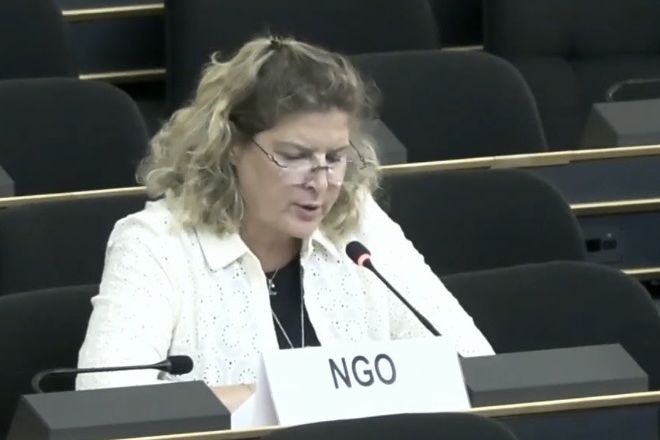
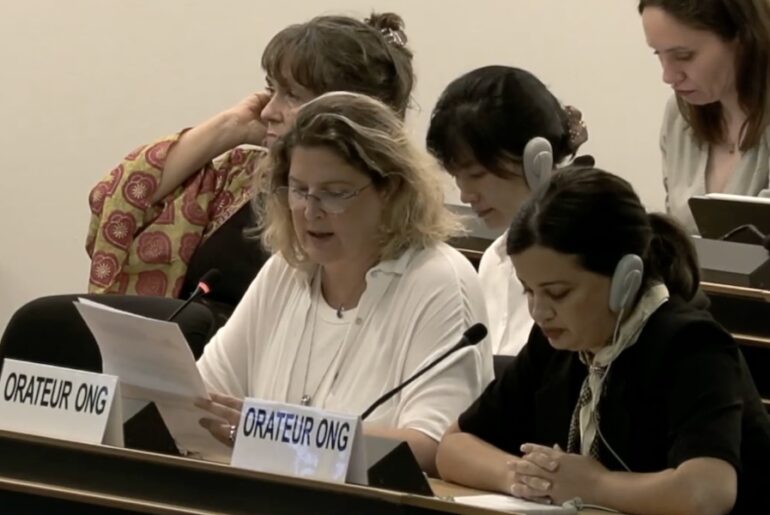
UN Geneva, Human Rights Council - MMM welcomes the call by the Special Rapporteur on Poverty to address non take-up of social protection benefits, providing avenues for reflection in the case of mothers and their children in relation to Early Childhood Development.
The June 2022 report of the SR on poverty on ‘Non-take-up of rights in the context of social protection’ raises a critical question: ‘what good is social protection when precisely those it is destined to uplift are prevented from enjoying it?’
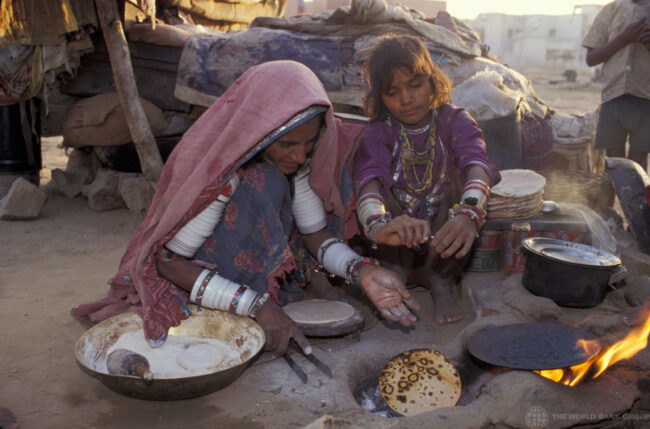
This question is particularly relevant for mothers and other unpaid caregivers. Child poverty can have a long-term impact on children’s health and education, and be costly in the long run. It is therefore crucial to address non-take-up by poor families, especially single mothers.
The aim of MMM’s statement was to complement the report with 2 additional points.
- The time poverty suffered by parents, mothers in particular, who have to juggle unpaid domestic and care work with paid work, can also be a cause of non-take-up and must be considered and addressed. Access to child benefits and other social protection benefits for families should be as much as possible facilitated – or even better, made universal
- Cross-sectorial approaches could help address non-take-up, in particular in the case of social protection supporting early childhood development – including maternity protection and child benefit. The moment of birth is key, not only to sensitise parents on child health issues, but also on the importance of birth registration and availability of social protection benefits. Since globally, 83% of births are now attended by a skilled health worker, these professionals could be trained to do so. Child health books can be another useful tool, not only to record child health data and give key child nutrition and healthcare information to parents, but also to provide guidance on birth registration and social protection benefits for families
We at MMM fully support the call to governments by the Special Rapporteur to urgently address non-take-up; but would urge non-take-up by families with children to be prioritised.
As reminded in the report, social protection is an investment, not an expense to be minimized – and in the case of children, it is the best investment a country can make.

The UN Special Rapporteur on extreme poverty and Human Rights presented his annual report during the 50th session of the Human Rights Council, which took place in June 2022 at the UN in Geneva.
➔ See also our answer to the call for input to the report of the UN Special Rapporteur on human Rights and Poverty on ‘Social protection: a reality check’.
 Share
Share Share
Share Print
Print Email
Email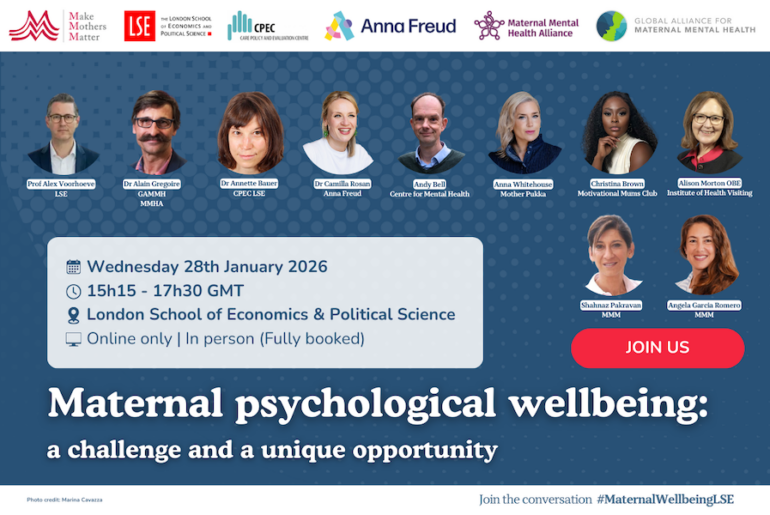
Maternal Psychological Wellbeing: A Challenge and a Unique Opportunity
13.01.26
Wednesday 28 January 2026 | 15:15 – 17:30 GMT London School of Economics & Political Science (LSE) – Live broadcast #MaternalWellbeingLSE Maternal mental health is one of the most pressing

Climate Change: A Maternal Physical and Mental Health Emergency
13.11.25
In the lead-up to the UN climate change conference in Belem, Brazil (COP30), MMM was delighted to collaborate with Dr. Saravanan Thangarajan, a Visiting Scientist & Faculty member at Harvard
Democracy on Hold: The Hidden Penalty for Parliamentarians Who Become Mothers
27.11.25
The European Parliament adopted a legislative resolution on the amendment of the European Electoral act, allowing Members to vote in plenary by proxy voting during pregnancy and after giving birth.