State of Motherhood in Europe – key findings presented at the Congress of Women in Poland
31.10.25
Katowice, September 2025 — The State of Motherhood in Europe report was officially launched in Poland during the Congress of Women in Katowice, one of the largest gatherings of women leaders and advocates in Europe, which brought together nearly 10,000 participants.

The report provides an in-depth look at how motherhood shapes women’s lives across Europe — their economic security, mental health, and participation in the workforce — based on survey data collected in 11 European countries.
A partnership for shared care and equality

In Poland, MMM has partnered with the Share the Care Foundation to broadcast the results of its survey and promote gender equality and partnership in parenthood.
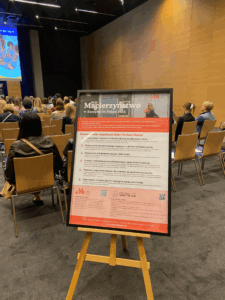
At the economic section of the Congress, posters presented both European and Polish results from the State of Motherhood in Europe report, allowing participants to visualize striking data on mothers’ well-being and challenges.
The report provides an in-depth look at how motherhood shapes women’s lives across Europe — their economic security, mental health, and participation in the workforce — based on survey data collected in 11 European countries.
Panel on Women’s Economic Security
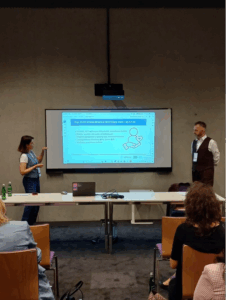
A panel discussion on women’s financial independence and security, moderated by Karolina Andrian, member of the Management Board of Share the Care Foundation, shed light on the gender pension gap and the long-term economic impacts of unpaid care work.
The discussion revealed alarming data:
- The average pension for women in Poland is 30% lower than for men, a difference of about 1,500 PLN.
- Women represent 80% of those receiving minimum or symbolic pensions.
- Projections indicate that by 2050, women’s pensions could fall to just 27.4% of the average wage.
Experts and participants highlighted the need for financial education for women, stronger social awareness about financial independence, and a fairer division of caregiving responsibilities between men and women.
Motherhood and Mental Well-being
The State of Motherhood in Europe report also draws attention to the heavy emotional and psychological toll of motherhood, particularly in Poland.
- 61% of Polish mothers feel overwhelmed (compared to 51% across Europe)
- The same share, 61%, report experiencing mental health challenges, with 35% suffering from anxiety
- Up to 70% of household and caregiving duties continue to be carried out exclusively by women — wether they work outside the home or not
This imbalance has deep implications for women’s mental well-being and overall quality of life.
Women Returning to the Workforce
Poland’s system is characterized by long maternity and parental leave periods, most often taken by women, and by a high rate of sick leave during pregnancy. These factors contribute to career breaks averaging 1.5 to 2 years.
While these measures aim to protect families, they also create barriers to women’s professional reintegration. Many mothers describe returning to work after a long break as a period of stress and uncertainty.
According to MMM’s State of Mothrhood in Europe report, 37% of Polish mothers identify job loss as the main negative consequence of motherhood — compared to an average of 22% across the 11 countries studied.
There is a clear need for programs that maintain contact between employers and employees during parental leave and for systemic solutions to support a smooth return to work.
According to Eurostat, women in Poland are twice as likely as those in other EU countries to cite caregiving responsibilities as the reason for professional inactivity.
A Call for Coordinated Action
The findings from State of Motherhood in Europe reveal a consistent pattern:
- Motherhood still limits women’s professional and financial opportunities
- The unequal division of care and domestic work undermines mothers’ mental health and economic security
- Coordinated efforts — at the level of governments, employers, and society — are urgently needed to promote equality in parenthood and employment
Through this report and the discussions it sparked in Katowice, Make Mothers Matter together with the Share the Care Foundation, continues to advocate for a Europe where motherhood is valued, supported, and never a source of inequality.
 Share
Share Share
Share Print
Print Email
Email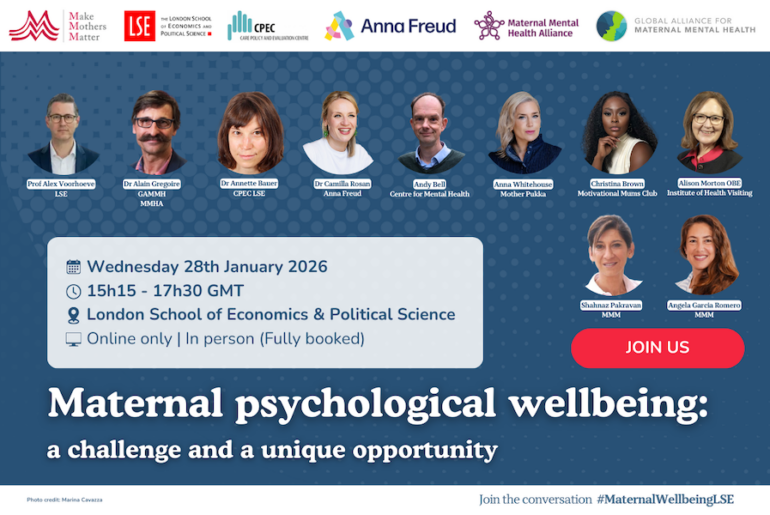
Maternal Psychological Wellbeing: A Challenge and a Unique Opportunity
13.01.26
Wednesday 28 January 2026 | 15:15 – 17:30 GMT London School of Economics & Political Science (LSE) – Live broadcast #MaternalWellbeingLSE Maternal mental health is one of the most pressing

Climate Change: A Maternal Physical and Mental Health Emergency
13.11.25
In the lead-up to the UN climate change conference in Belem, Brazil (COP30), MMM was delighted to collaborate with Dr. Saravanan Thangarajan, a Visiting Scientist & Faculty member at Harvard
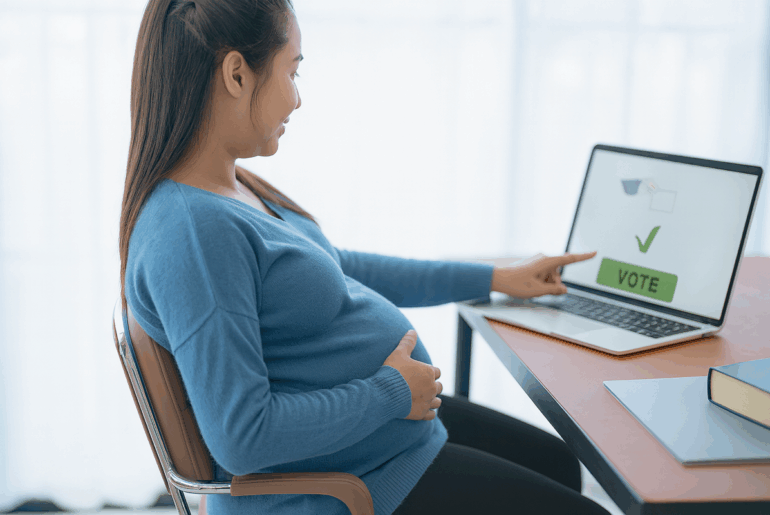
Democracy on Hold: The Hidden Penalty for Parliamentarians Who Become Mothers
27.11.25
The European Parliament adopted a legislative resolution on the amendment of the European Electoral act, allowing Members to vote in plenary by proxy voting during pregnancy and after giving birth.