Motherhood at the heart of women’s financial insecurity in old age
06.07.26
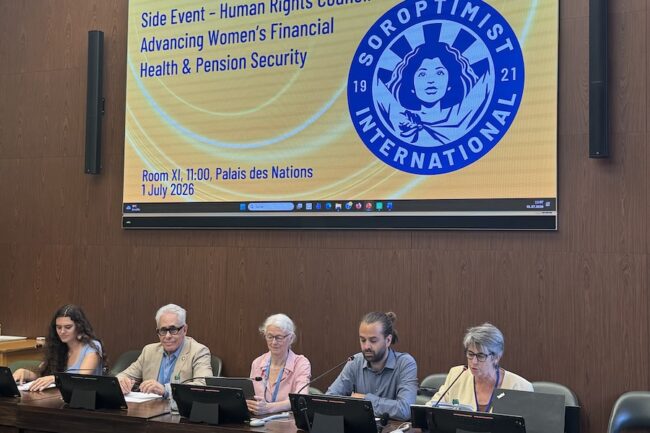
UN Geneva – Promoting women’s financial health and pension security was the theme of a side event organised by Soroptimist International on 1 July, on the margins of the 62nd session of the United Nations Human Rights Council.
Globally, women face significantly higher rates of financial insecurity in old age than men. The gender pension gap is not a consequence of old age itself, but the cumulative result of a lifetime of inequality, discrimination and constrained choices – with motherhood at the heart of this issue
Setting the scene
In her introduction, Stacy Ciulik, representative of Soroptimist International and moderator of the session, reminded participants that globally, in 2023, 79.6% of people above pensionable age received a pension (82.6% of men and 77.2% of women). However, these pensions are often inadequate, particularly for women, who are more likely to rely on tax-financed pensions that provide relatively low benefits. In many countries, especially where informal employment is widespread, expanding contributory pension schemes remains a major challenge.
Even across the Organisation for Economic Co-operation and Development (OECD) countries, women’s pension income is, on average, 25–30% lower than men’s. At the same time, women tend to live longer, requiring greater financial resources to sustain them throughout retirement.
Equal pay is where it starts
Opening the discussion, Aurélien from Equal Salary Foundation, followed one woman through her career: a small pay gap at 25, a missed promotion at 30, an unpaid care break at 35, a pension forecast that “doesn’t add up” at 55, and a retirement income up to 30% lower at 70.
→ The gender pension gap begins with a woman’s first payslip. Closing the gender pay gap is the first step towards closing the pension gap.
A lifetime of transitions
Alejandro Bonilla, Chair of the NGO Committee on Ageing, drew on his career as an actuary to frame the lives of women as a chain of transitions: education, employment, marriage, motherhood, returning to work, retirement and widowhood, with each transition reshaping the odds of the next. Widowhood does not create inequality, he argued; it reveals inequalities accumulated since childhood. Pension reform alone addresses only the symptom, not the cause.
→ Real change requires a life-course approach built on equal opportunity from birth.
Motherhood: the missing piece
Representing Make Mothers Matter, Valerie Bichelmeier built on Alejandro’s framework to highlight one life transition deserving particular attention: motherhood.
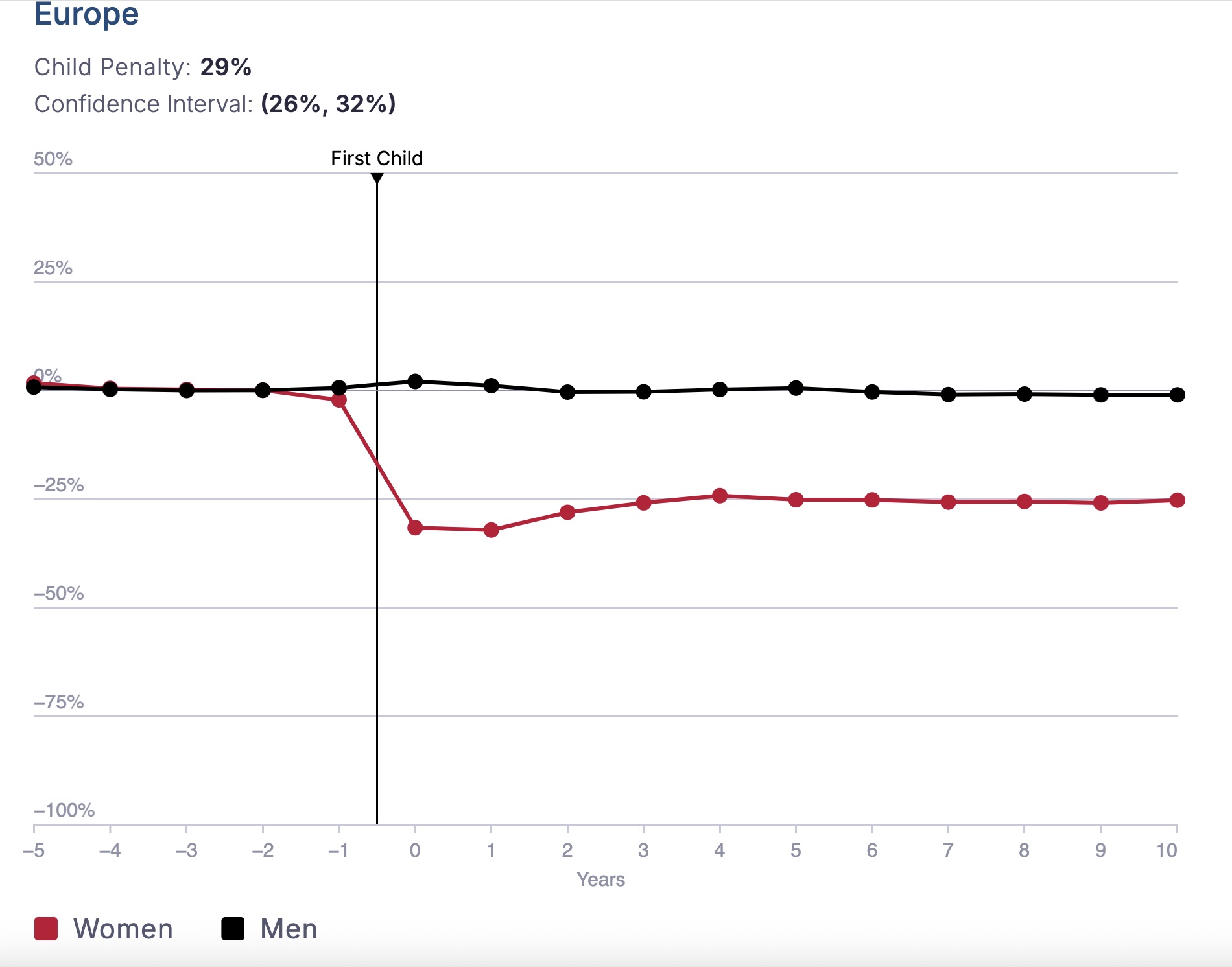
Change in employment after the birth of a child (for men and women in Europe) – Source: LSE Child Penalty Atlas
Citing London School of Economics research across 134 countries, she noted that mothers face a sharp, and often permanent, drop in employment and earnings after childbirth. The same research shows that motherhood accounts for around 80% of the gender earnings gap in high-income countries.
Maternity related career interruptions, non-choosen part-time employment, informal work, and slower career progression all accumulate over time, resulting in gender pension gaps that are larger than those of childless women and widen with each additional child.
→ Motherhood – and the unequal distribution of unpaid care work that accompanies it – is at the heart of gender inequality and a major driver of the pension gap.
Care credits, implemented in several European countries to protect pension rights linked to caregiving leave, help reduce contribution gaps. However, they cannot offset lost lifetime earnings; the EU’s gender pension gap still averages 25% despite these measures.
True prevention requires affordable childcare, paid parental leave and flexible working arrangements – but also a deeper shift: engaging men, starting with fathers, as equal caregivers. This means addressing gender stereotypes and entrenched social norms. Employers also have a role to play by making caregiving a shared and valued responsibility and by supporting parents and other workers with care responsibilities.
→ Fairly redistributing unpaid care work and caring responsibilities between women and men, and across society, is essential to closing the gender pension gap.
The view from Switzerland
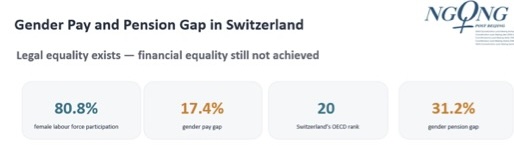
Cordula Niklaus, Co-President of NGO Coordination Post Beijing Switzerland, grounded the discussion in national data. Despite constitutional equality since 1981, Swiss women continue to face occupational segregation, part-time work penalties and unequal recognition of care work. She called for regular equal-pay audits, sex-disaggregated data and the full implementation of CEDAW and the Beijing Platform for Action.
Individual empowerment also matters
Concluding the session, Martina Bo from the Young Ambassadors Society (YAS) addressed prevention. Alongside the structural reforms needed to reduce the gender pay gap and better recognise care in pension schemes, she asked how women can be empowered to strengthen their financial security. She called for young people to receive better financial education and to better understand the long-term impact that life transitions and personal decisions can have on their earnings and financial security in old age.
→ Young women in particular must be empowered through financial literacy to achieve life-long financial independence.
A shared call to action
One message ran through all the interventions: financial security in old age is determined decades earlier through choices about education, employment, pay and – above all – who cares for whom. Recognising motherhood and unpaid care as a collective, not private, responsibility is central to gender equality.
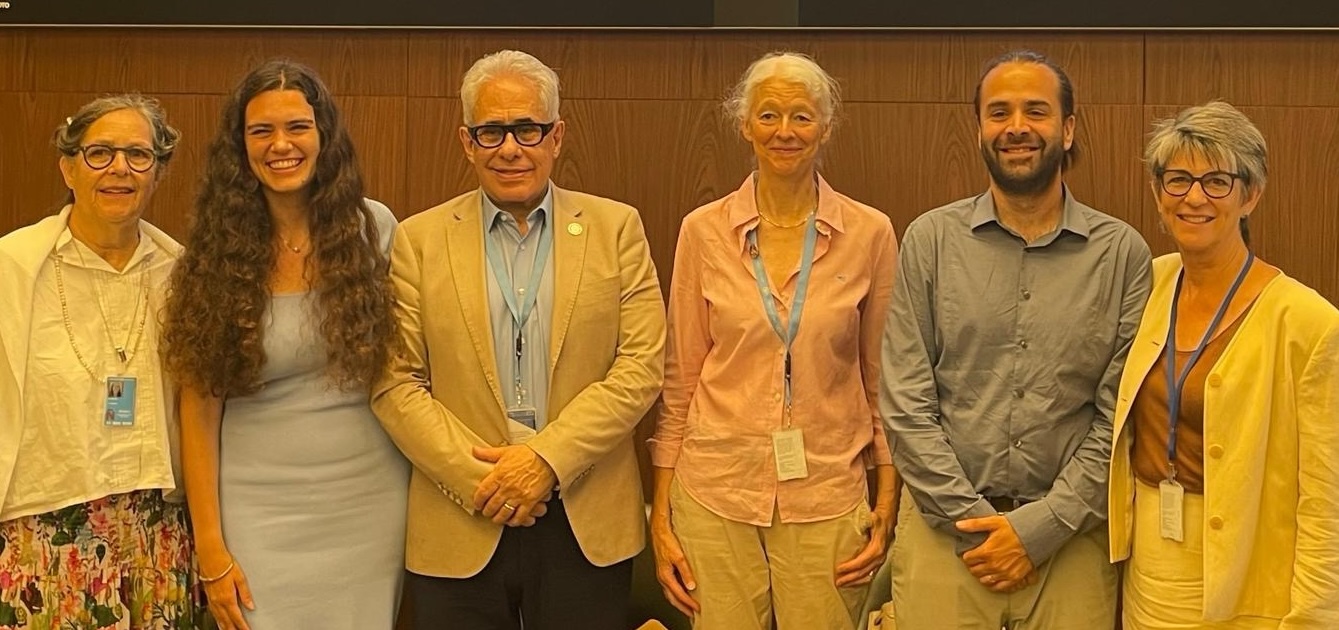
From right to left: Stacy Ciulik (Soroptimist International), Aurélien Joly (Equal Salary Foundation), Valerie Bichelmeier (MMM), Alejandro Bonilla (NGO Committee on Ageing Geneva), Martina Bo (YAS)
 Share
Share Share
Share Print
Print Email
Email
Maternal Psychological Wellbeing: A Challenge and a Unique Opportunity
13.01.26
Wednesday 28 January 2026 | 15:15 – 17:30 GMT London School of Economics & Political Science (LSE) – Live broadcast #MaternalWellbeingLSE Maternal mental health is one of the most pressing

Climate Change: A Maternal Physical and Mental Health Emergency
13.11.25
In the lead-up to the UN climate change conference in Belem, Brazil (COP30), MMM was delighted to collaborate with Dr. Saravanan Thangarajan, a Visiting Scientist & Faculty member at Harvard
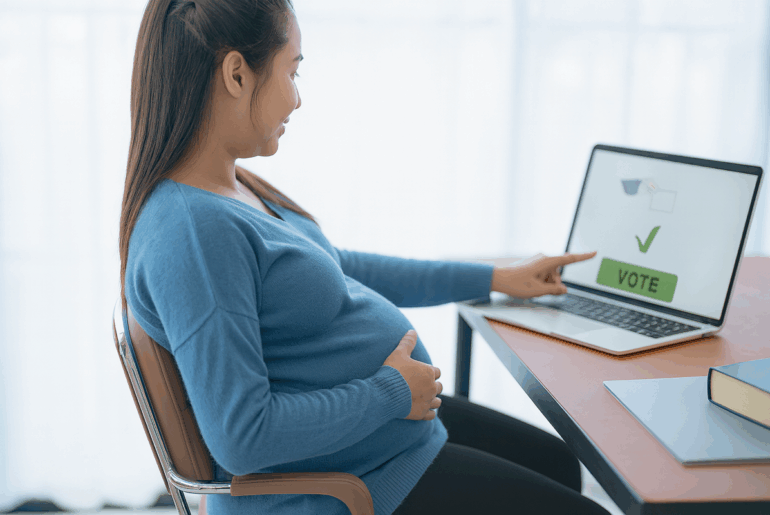
Democracy on Hold: The Hidden Penalty for Parliamentarians Who Become Mothers
27.11.25
The European Parliament adopted a legislative resolution on the amendment of the European Electoral act, allowing Members to vote in plenary by proxy voting during pregnancy and after giving birth.