Why Care Must Shape the Cities of Tomorrow
09.07.26
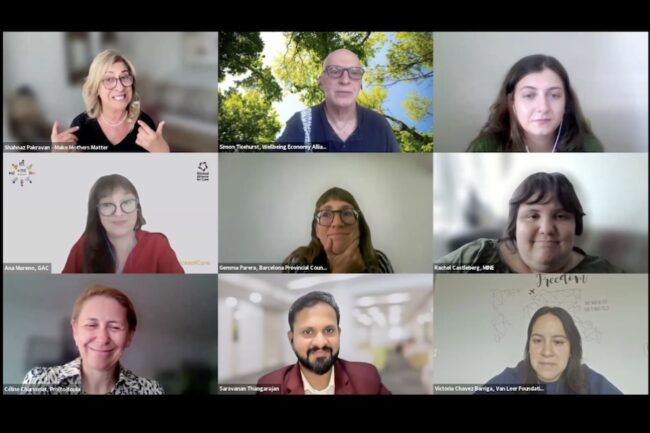
UN New York – At the online event Rethinking Cities Through Care: People, Planet and the 2030 Agenda which we hosted on the margins of the UN High Level Political Forum (HLPF), experts and practitioners explored why and how cities can become more caring, by prioritising people’s needs, human rights, and well-being in policymaking. They also discussed how this approach can advance gender equality, foster child development, and create powerful synergies across sectors and goals to support the achievement of the 2030 Agenda.
Key takeaways
- Unpaid care work, predominantly performed by women, is foundational to urban functioning and sustainable development but remains undervalued. Reframing care as a public investment rather than a private cost is essential to achieving transformative urban futures.
- Building caring cities requires bottom-up approaches and participatory definitions of care that prioritise social, ecological, and psychological wellbeing. Policies must also address time poverty, enabling caregivers to care for themselves, others, and the environment.
- Municipalities should adopt feminist perspectives that recognise the gendered nature of care work and its systemic undervaluation. This includes expanding accessible, local care services while promoting more equitable gender norms and improving caregivers’ quality of life.
- Early childhood development, together with the health and well-being of caregivers, should be a central lens for urban planning and policymaking, given the profound influence of caregiving environments on brain development, mental health, and community resilience.
- Care policy models built on multi-pillar frameworks and cross-sector collaboration offer replicable pathways for embedding care into municipal agendas. These approaches emphasise redistribution, recognition, equity, empowerment, and reducing time poverty.
- Community-based caregiving spaces, such as mother centers, strengthen social capital and democratic participation, making them valuable municipal investments that contribute to more sustainable and inclusive communities.
- Climate change intensifies caregiving challenges, making urban climate resilience inseparable from care resilience. Integrating caregiving needs into climate adaptation plans helps protect maternal health, mental well-being, and broader social resilience.
- Caring cities can accelerate progress towards the Sustainable Development Goals by integrating care into urban governance, breaking down policy silos, and aligning health, gender, climate, and social policies to better support caregivers and communities.
- Indicators of caring cities include more inclusive public spaces, stronger community connections, and everyday practices that enhance the visibility and well-being of caregivers. Together these reflect a deeper cultural and systemic shift rather than superficial interventions.
The growing global momentum behind care-sensitive urban policies depends on stronger alliances across social and environmental agendas. Local governments have a critical role to play as democratic institutions responsible for embedding care into urban planning, legislation, and the social contract.
 Read the event’s report for key insights from each speaker
Watch the recording
Thank you to our speakers
- Simon Ticehurst, Movements and Advocacy Lead, Wellbeing Economy Alliance (Moderator)
- Celine Charveriat, Founder and Director, Pro(to)topia / Forum for caring societies – PowerPoint presentation
- Ayşe Göç Yalçınkaya, Expert of International Affairs and Projects, Marmara Municipalities Union (Türkiye)
- Gemma Parera Álvarez, Technical advisor, Social Sustainability, Life Cycle and Community Area, Barcelona Provincial Council
- Victoria Chavez Barriga, Senior Urban95 Expert, Bernard van Leer Foundation – PowerPoint Presentation
- Rachel Castleberg, Project Coordinator, Mother centres International Network for Empowerment (MINE) – PowerPoint presentation
- Saravanan Thangarajan, Founder, CliMent; Public Health Systems & Global Health Delivery Consultant; Mittal Associate, Harvard University
- Ana Moreno, Technical Secretary, Global Alliance for Care (Closing remarks)
- Shahnaz Pakravan, Communication Manager, Make Mothers Matter (Welcome & introduction)
Further reading
General Resource on Caring cities:
- UN Women Asia Pacific: Towards Caring Cities, Research-in-Action Report Series
- ‘Cities that care’: A blueprint for feminist cities
- Economies of Equality and Care, the final report of a research initiative of United Cities and Local Governments (UCLG)
From WEAll:
- Blog Post: UTOPÍAS: Reimagining Wellbeing in Mexico City’s Neighbourhoods. Turning utopia into everyday reality
From Prototopia:
From the Marmara Municipalities Union
From the van Leer Foundation
- Urban 95: Creating healthy, safe and vibrant cities where babies, toddlers and their families thrive
From Mother centres International Network for Empowerment – MINE
- Policy Brief: Transition into a caring Europe
On the impact of Climate Change on mothers and children:
- MMM & Saravanan Thangarajan Joint Policy Brief: Climate Change: A Maternal Physical and Mental Health Emergency
→ See also our invitation article with additional background information, speakers’ bios and more.
 Share
Share Share
Share Print
Print Email
Email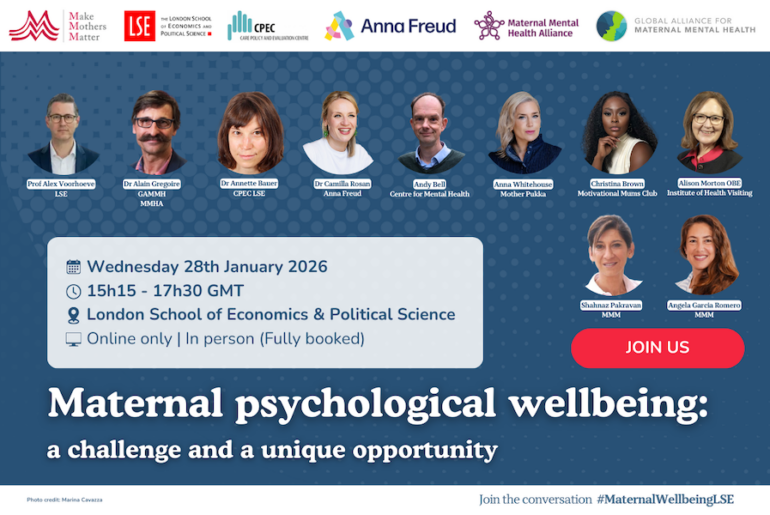
Maternal Psychological Wellbeing: A Challenge and a Unique Opportunity
13.01.26
Wednesday 28 January 2026 | 15:15 – 17:30 GMT London School of Economics & Political Science (LSE) – Live broadcast #MaternalWellbeingLSE Maternal mental health is one of the most pressing

Climate Change: A Maternal Physical and Mental Health Emergency
13.11.25
In the lead-up to the UN climate change conference in Belem, Brazil (COP30), MMM was delighted to collaborate with Dr. Saravanan Thangarajan, a Visiting Scientist & Faculty member at Harvard
Democracy on Hold: The Hidden Penalty for Parliamentarians Who Become Mothers
27.11.25
The European Parliament adopted a legislative resolution on the amendment of the European Electoral act, allowing Members to vote in plenary by proxy voting during pregnancy and after giving birth.