Stop using women and girls as weapons of war says MMM member
27.02.24
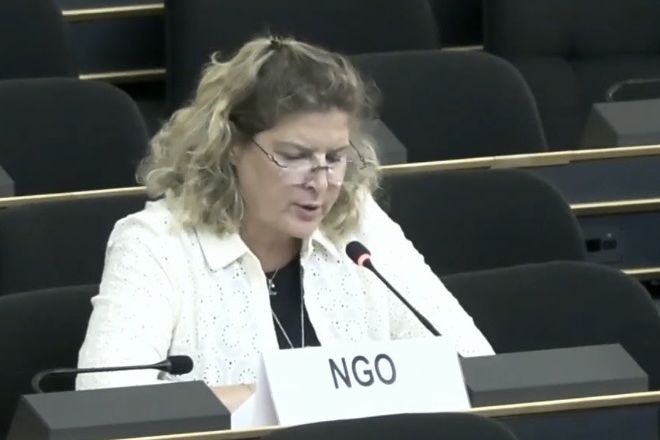
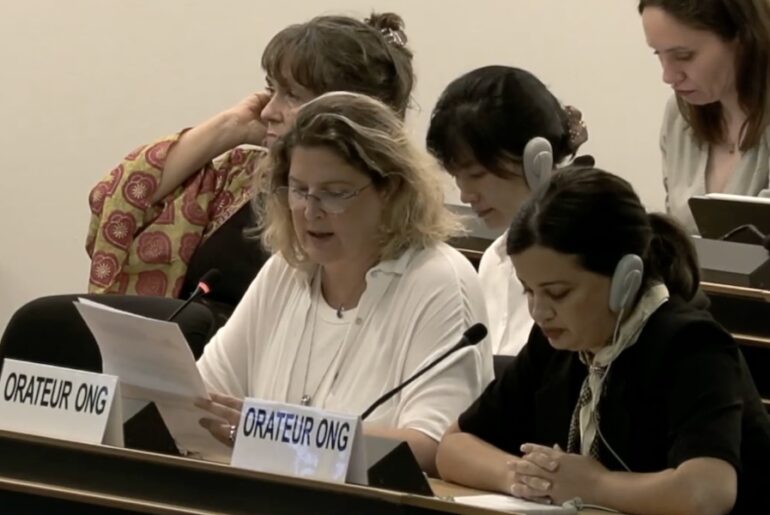
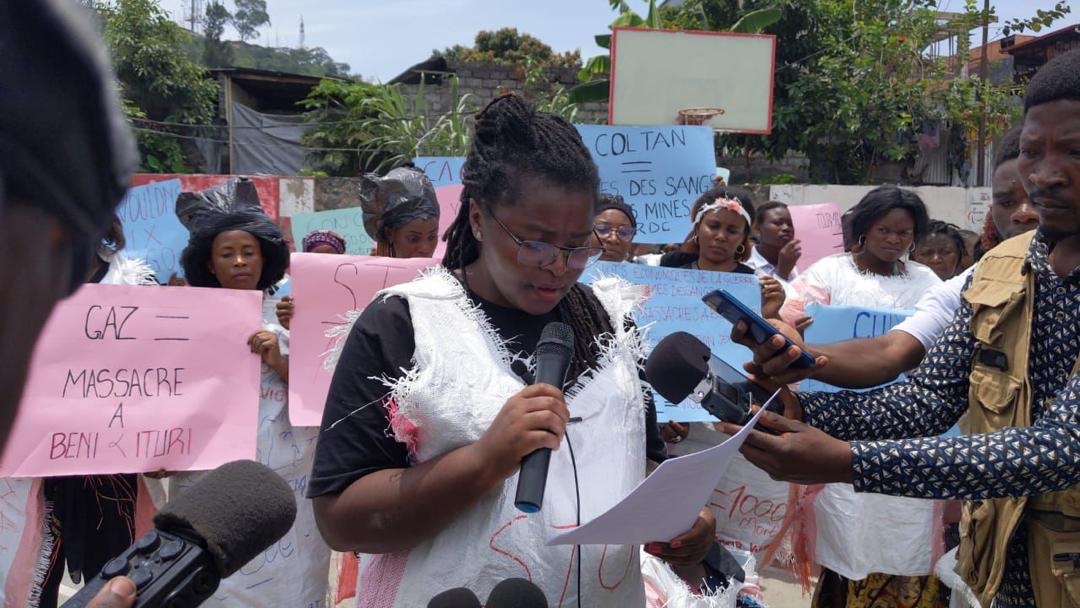
UN Geneva, Human Rights Council - Passy Mubalama, Activist and Executive Director of Aidprofen, our associate member in the Democratic Republic of Congo, was one of the 4 Civil Society speakers selected to address the 55th session of Human Rights Council. She seized the opportunity to denounce the impact of conflict and insecurity on women, girls and small children, and the silence that surrounds this violence. She also made an impassioned plea to Member States to address the root causes of conflicts, and to put an end to the violence and the needless destruction of women and girls' lives.
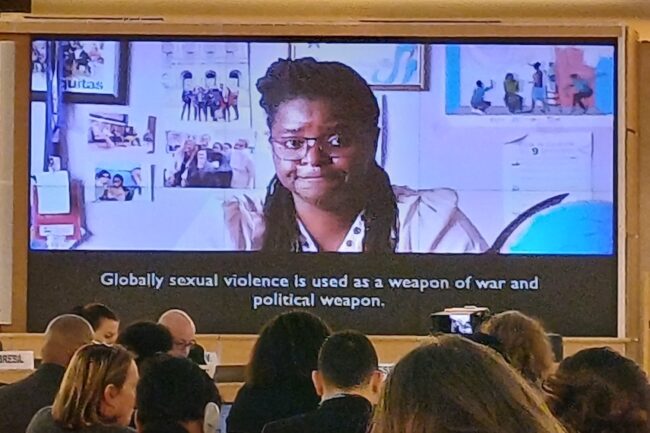
 The following is the full text of Passy’s statement, which was delivered on 28 February by video during the High Level Segment of the 55th session Human Rights Council – viewable on our YouTube Channel or on UN WebTV (at 02:43:18).
▶️ Today, I will share with you Zawadi’s story. Zawadi is a mother of 9. But she doesn’t know the father of her 8th child. She was raped by rebels while fleeing clashes in her village. For fear of reprisals, she never told anyone what happened. The perpetrators were 3 unidentified armed men.
Every year, millions of women around the world, particularly in sub-Saharan Africa, fall victim to armed conflict. These violent conflicts, sometimes linked to extremism, do not spare women, young girls and even young children. The women we accompany are victims of arbitrary executions, arrests, rape, sexual assault and many other gender based violence. Others are caught up in sexual slavery, enrolled in forced displacement. Sexual violence against women, young girls and even children is widespread in conflict situations, and is used as a tactic of war. Globally sexual violence is used as a weapon of war and a political weapon.
Many actions are being taken around the world, but the majority of actors are working on the consequences of war rather than on the prevention and root causes of conflict.
The worldwide silence surrounding these atrocities, these war crimes and crimes against humanity, the silence in the face of these women, these young girls and even young children who lose their dignity and whose lives are often shattered, is unimaginable and unacceptable.
Today we call on the UN and member states to take urgent action, to collectively mobilise their resources to put an end to the conflicts and violence that are destroying the lives of women and girls, and tragically reinforcing inequalities between men and women.
We cannot wait until tomorrow. Tomorrow may be too late.
 Passy Mubalama’s statement for download
The 55th session UN Human Rights Council takes place from 26 February to 5 April 2024 at the UN in Geneva.
 Share
Share Share
Share Print
Print Email
Email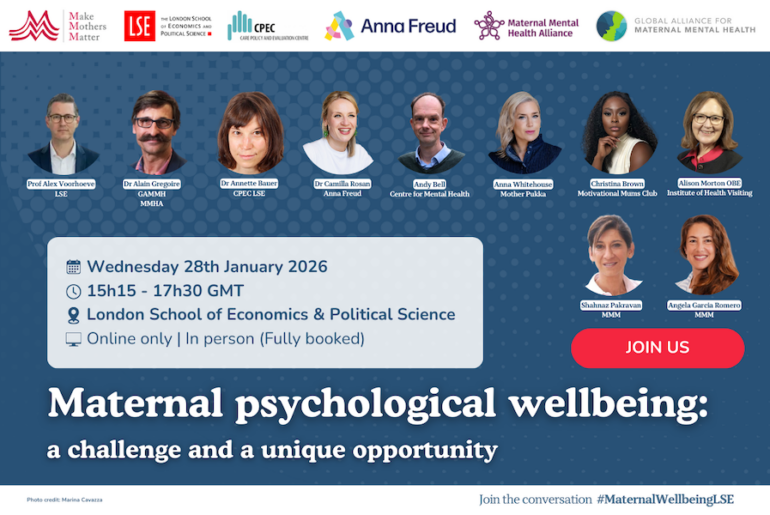
Maternal Psychological Wellbeing: A Challenge and a Unique Opportunity
13.01.26
Wednesday 28 January 2026 | 15:15 – 17:30 GMT London School of Economics & Political Science (LSE) – Live broadcast #MaternalWellbeingLSE Maternal mental health is one of the most pressing

Climate Change: A Maternal Physical and Mental Health Emergency
13.11.25
In the lead-up to the UN climate change conference in Belem, Brazil (COP30), MMM was delighted to collaborate with Dr. Saravanan Thangarajan, a Visiting Scientist & Faculty member at Harvard
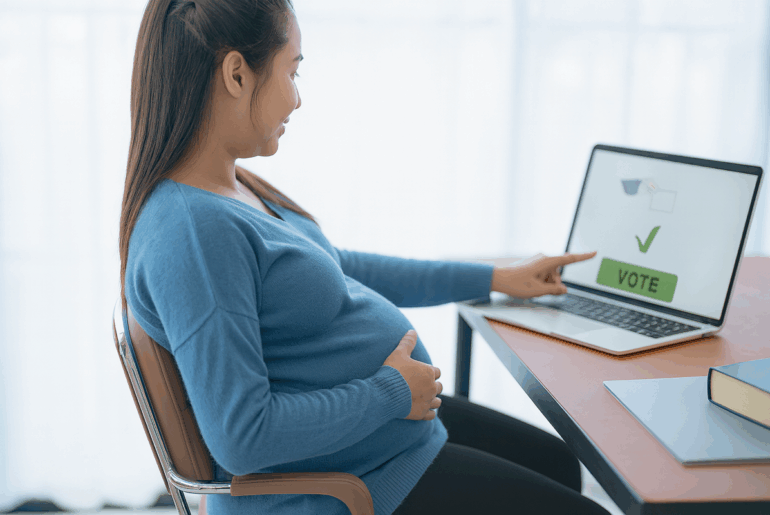
Democracy on Hold: The Hidden Penalty for Parliamentarians Who Become Mothers
27.11.25
The European Parliament adopted a legislative resolution on the amendment of the European Electoral act, allowing Members to vote in plenary by proxy voting during pregnancy and after giving birth.