When the World Changes
03.04.20
In just a few short weeks, our daily life as we know it has been turned upside down, changing everything.
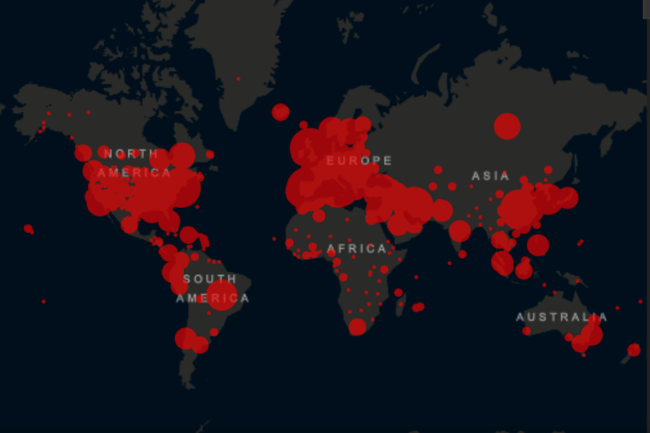
The COVID-19 pandemic which is hitting us with a force unlike anything we have experienced in recent memory, is taking its toll on ALL of us, regardless of our circumstances: where we live, our economic situation, our education, our nationality, our religion…
Make Mothers Matter is, as ever, primarily concerned with mothers. They are living through this period in very different ways. For, while we are all concerned, our individual circumstances mean that the consequences are far from uniform: this crisis also exacerbates inequalities.
What we are going through reveals the importance of the role of mothers. Never before has the word ‘mother’ been so widely used in the media. Because when our lives are refocused with emphasis shifting to our basic most fundamental needs, the role of a mother, as well as that of a father, become more critical.
While frontline health care workers unite in the fight against COVID-19, parents, especially mothers, take on a crucial role as well. In addition to their usual domestic and educational responsibilities, parents must, in this period of global confinement, supplement schools and nurseries, and more generally the educational communities that are active with children in normal times – while trying, as far as possible, to continue working to provide an income.
This crisis highlights the essential role of care work that is most often poorly paid or underpaid or not paid at all.
Strengthening the basis of our social fabric and ensuring the health, well-being and education of populations must be the priority for governments. In particular, the protection of mothers and fathers who are fundamental to our existence and development. We see today how vital it is to take measures to support them in their caring and educative role.
We will have to remember this… afterward, and act accordingly: revise our political and budgetary priorities and rethink our economies and its objectives.
MMM will advocate for this as we have always done for more than seventy years.
Take care of yourself and others.
Anne-Claire de Liedekerke
President, on behalf of all MMM Teams

 Share
Share Share
Share Print
Print Email
Email
Europe Must Listen to Mothers: Our landmark report heads to the European Parliament
28.08.25
On 22 September 2025, the voices of mothers will take centre stage in Brussels. For the first time, Make Mothers Matter (MMM) will present its State of Motherhood in Europe
Belgian Mothers Face Alarming Rates of Burnout and Perinatal Depression, New EU Survey Finds
03.07.25
Belgian mothers are facing a mental health crisis. According to the State of Motherhood in Europe 2024 survey by Make Mothers Matter (MMM) and Kantar, Belgium reports the highest rates

Parental Mental Health Takes Centre Stage at the French National Assembly
02.04.25
Paris, France – On April 2nd, Make Mothers Matter was honoured to have key findings from its State of Motherhood in Europe 2024 report cited at the French National Assembly