Children at the heart of World Conference on Early Childhood Care & Education
26.11.22
Following the September 2022 Transforming Education Summit (TES) held in New York, the UNESCO World Conference on Early Childhood Care and Education (WCECCE) took place on November 14th in Tashkent, Uzbekistan. MMM participated in this global four-day event by organizing a panel discussion with partners active in the Early Childhood Development field.
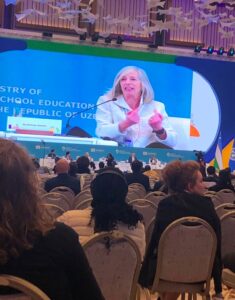 UNESCO Assistant Director General for Education, Stefania Giannini, speaking at the pre-conference session, stressed the importance of putting children at the heart of policies:
“If we are to achieve the SDGs, we must put children at the core of our policies. This is our responsibility. To address the learning crisis, we don’t have a second chance, and we’ll require much deeper collaboration between all stakeholders… we must all be champions.
2022 is very important for education. We have a momentum to build. And early childhood care and education (ECCE) is the first brick.”
The WCECCE, represented by over 140 countries and more than 2600 people, was an opportunity for UNESCO Member States, civil society (NGOs, researchers, donors, educators…) and many other ECCE leaders, to reaffirm the right of every young child to inclusive quality and equitable early childhood care and education.
While the international community unanimously recognizes the benefits of ECCE, half of the world’s young children, at least 175 million, are not enrolled in pre-primary programs.
During the Conference, about twenty sessions and 16 side events were held to highlight ECCE challenges; share knowledge, innovations, good practices and recall the importance of multi-sectoral partnerships.
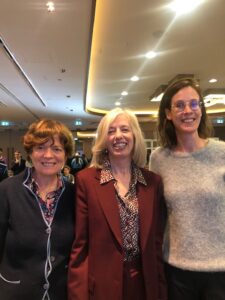
Make Mothers Matter co-organized a side-event initiated by Suna Hanöz-Penney, Anne Çocuk Eğitim Vakfı from AÇEV. The panel discussion called “Gender Transformative parenting – why it matters for our future” featured other key ECD supporters – ECPC, Plan International, ISSA – International Step by Step Association and MenCare Global.
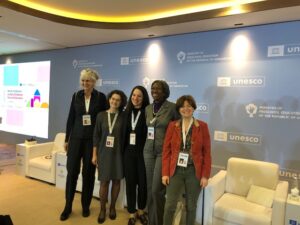 The panel spotlighted how the involvement of fathers – alongside mothers – with their children, from the earliest age, is crucial for their proper development and the achievement of their full potential.
The Conference ended with the adoption of the Tashkent Declaration, a commitment from State members to ensure the implementation of concrete actions, solutions, and partnerships to achieve the goals of SDG 4.2 (ensure that all girls and boys have access to quality early childhood development, care and pre-primary education), through :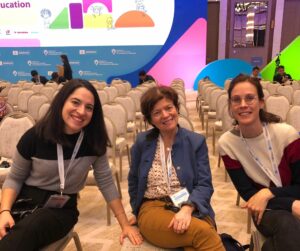
- Ensuring quality, and inclusive ECCE services for all children by allocating at least 10% of education expenditures to pre-primary education
- Strengthening the education and training systems of ECCE personnel
- Transforming ECCE practices, by putting innovation at the heart of the practices and by relying on neurosciences discoveries
- Ensuring a whole-of-government, multi-sectorial and integrated approach to ECCE policy
- Increasing financing to ECCE, given it has historically been underfunded
The Declaration also emphasises the importance of engaging and supporting parents and families in their children’s education.
Next steps include:
- The launch by UNESCO and its partners, of an Early Childhood Care and Education (ECCE) report in November 2023.
- The publication by UNESCO of a report on ECCE every two years, with the support of the World Bank, to assess progress and remaining challenges.
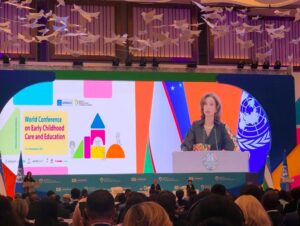 Audrey Azoulay, Executive Director of UNESCO, in her closing speech underlined UNESCO’s commitment to ensuring that pre-primary education is considered as a fundamental right. She also linked early childhood care and education to the gender equality issue:
“ECCE is a powerful tool to promote gender equality. A strong signal to women and mothers, who must be supported; so that having children should not interrupt their career, if they choose to have one.”
At MMM, we are calling on all parties to act together to make the Declaration a transformative lever for early childhood. We believe this is a great opportunity to make a definitive change benefitting all children no matter where they are.
See also:
- More information on our WCECCE side-event
- our article on why gender equal parenting can be transformative
 Share
Share Share
Share Print
Print Email
Email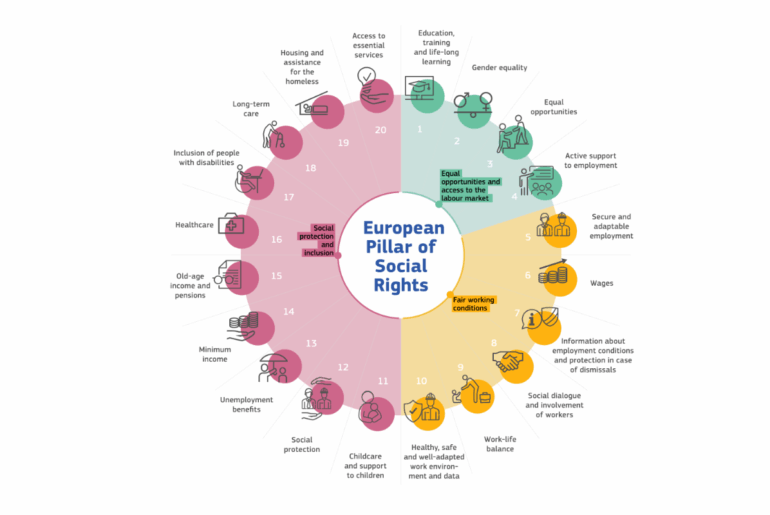
The European Pillar of Social Rights Action Plan
Strengthening Support for Mothers
12.09.25
Our 2024 State of Motherhood in Europe survey of 9,600 mothers across 11 EU Member States and the UK paints a clear picture: motherhood is still not properly recognised or
Europe Must Listen to Mothers: Our landmark report heads to the European Parliament
28.08.25
On 22 September 2025, the voices of mothers will take centre stage in Brussels. For the first time, Make Mothers Matter (MMM) will present its State of Motherhood in Europe
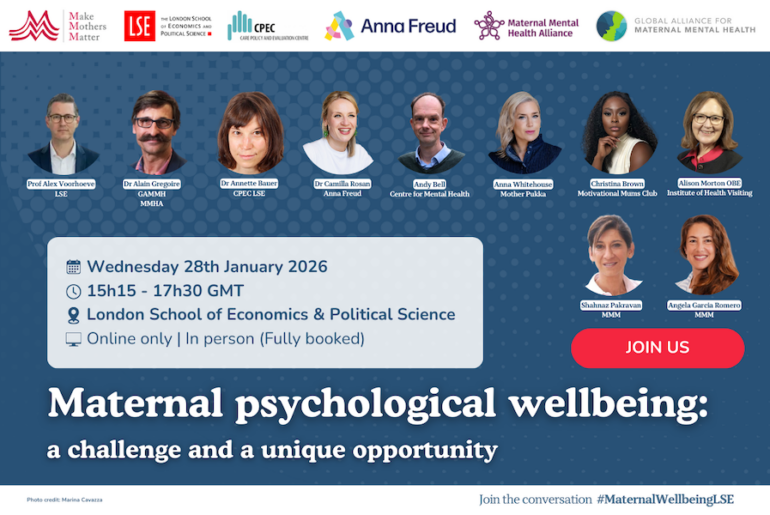
Maternal Psychological Wellbeing: A Challenge and a Unique Opportunity
13.01.26
Wednesday 28 January 2026 | 15:15 – 17:30 GMT London School of Economics & Political Science (LSE) – Live broadcast #MaternalWellbeingLSE Maternal mental health is one of the most pressing