Covid-19: ‘We need a Care & education-led recovery’ says MMM President
18.11.20
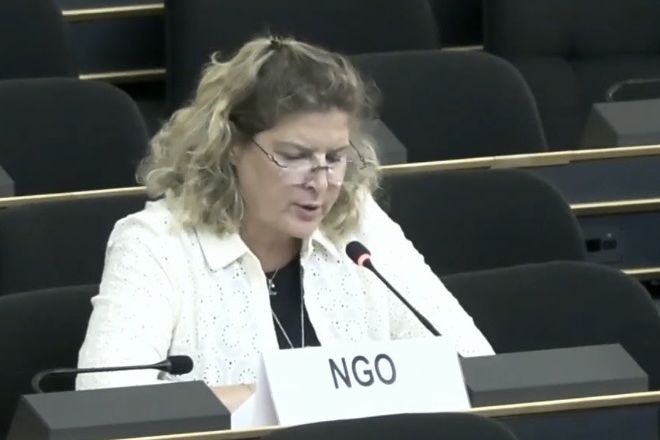
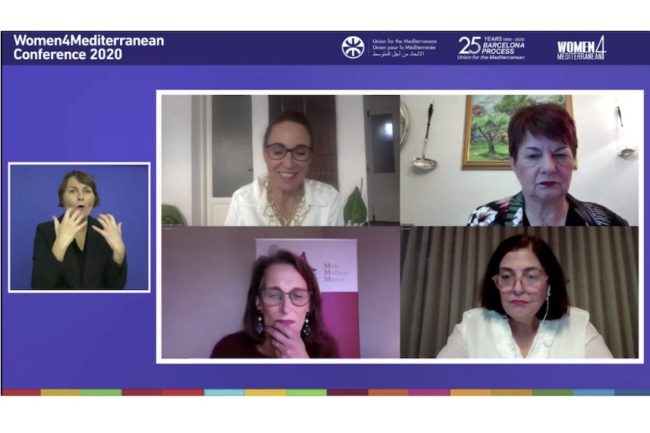
Speaking at the UfM Women4Mediteranean Conference 2020, MMM President Anne-Claire de Liedekerke also called for radical change in the way we perceive and value Care, education, and those who are responsible for it.

Anne-Claire de Liedekerke’s full speech
Key messages:
- Care is a necessity: we all need care; and at certain times in our lives our survival depends on care.
Care is a treasure: caring for each other is not only necessary it is also the one thing that makes us happy.
Care is a resource, indispensable to support the world’s economies. But at the same time care, and particularly unpaid care work mostly performed by women (mothers) is not accounted for in GDP and is at the chore of gender inequalities. - The pandemic has exacerbated inequalities. When inequalities concern care and education, a part of the world’s population is excluded from their future and that will have a direct impact on all of us.
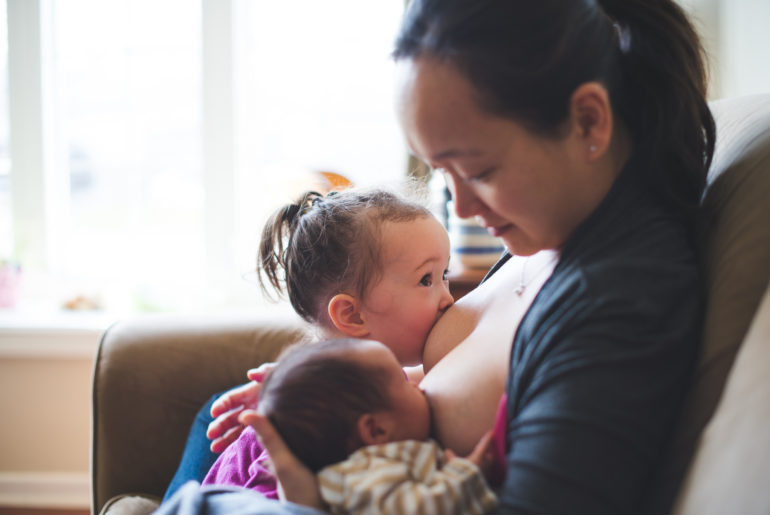
- Vulnerable people, including children, pay the highest price for the pandemic. But mothers also pay a high price.
Care is costly and its cost is unfairly distributed. Mothers are generally paying an unfair share and that has been dramatized by the effect of the pandemic. During confinements parents had to care for their children while doing their job from home. This has had a greater impact on mothers’ employment than on fathers’ employment, thereby reinforcing the aptly called “motherhood penalty” - Paradoxically one of the very few good side about the pandemic is that it has made more visible how important care and education are. People have actually seen care upfront. It has shown men and women, but also their employers, that care is a responsibility that concerns us all and cannot be ignored.
- The pandemic gives all governments an opportunity to take stock of what really matters and implement measures which reflect that. That will require courage and imagination. but it is a matter of priorities.
- We need care and education-led recovery measures. All policy decisions should be “care & education proofed”; in other words their implications on care and education must be assessed.
- Spending on care and education must be seen as investments not expenses.
In particular, cost benefit analysis have consistently shown that investing in Early Childhood Development is the most powerful investment a country can make. - Our current economic system fails to recognize the essential role of care and education, especially of unpaid care work. Governments need to be creative and move beyond GDP to prioritize care and education for wellbeing, sustainability and equity in our economy, using indicators more related to the human wellbeing.
- Children, women, men, mothers, fathers and families can be the driving force for change. The importance of parents must be recognized and Family Laws enacted and enforced to uphold their rights.
- The other driving force is education. MMM is in particular committed to girls’ right to education – as exemplified by its #RaiseAPen campaign.
Building back better is the responsibility of all governments but it is also our collective and individual responsibility to care. Another positive effect of the pandemic is that in many families, parents and children have actually enjoyed spending more time together.
Creativity and imagination will be needed to build back better and pursue the common good.
Caring for each other will make a difference and particularly caring for children because their future is in our hands and our future is in their hands.
The Women4Mediteranean Conference 2020 was organized by the Union for Mediterranean (UfM) on 16-20 November 2020. Recordings of all the conference sessions are available the UfM website. See also the full report of the conference.
Anne-Claire de Liedekerke made her speech at the plenary session 1 on ‘Women on the Frontline of COVID-19’, which took place on 17 November. To watch the video recording please see below; her intervention starts at 58:48.
 Share
Share Share
Share Print
Print Email
Email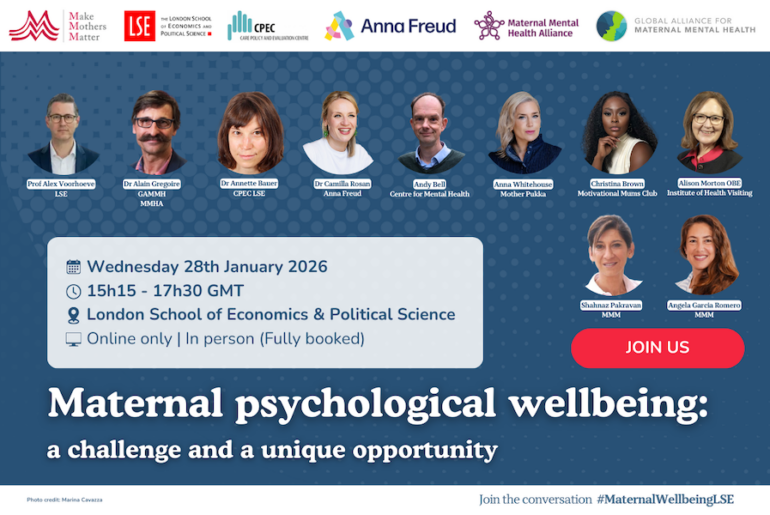
Maternal Psychological Wellbeing: A Challenge and a Unique Opportunity
13.01.26
Wednesday 28 January 2026 | 15:15 – 17:30 GMT London School of Economics & Political Science (LSE) – Live broadcast #MaternalWellbeingLSE Maternal mental health is one of the most pressing

Climate Change: A Maternal Physical and Mental Health Emergency
13.11.25
In the lead-up to the UN climate change conference in Belem, Brazil (COP30), MMM was delighted to collaborate with Dr. Saravanan Thangarajan, a Visiting Scientist & Faculty member at Harvard
Democracy on Hold: The Hidden Penalty for Parliamentarians Who Become Mothers
27.11.25
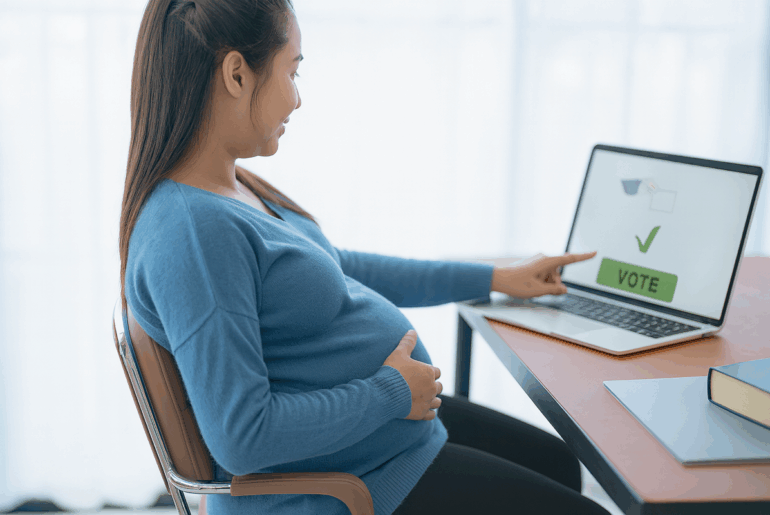
The European Parliament adopted a legislative resolution on the amendment of the European Electoral act, allowing Members to vote in plenary by proxy voting during pregnancy and after giving birth.